

Monday 24 March 2025
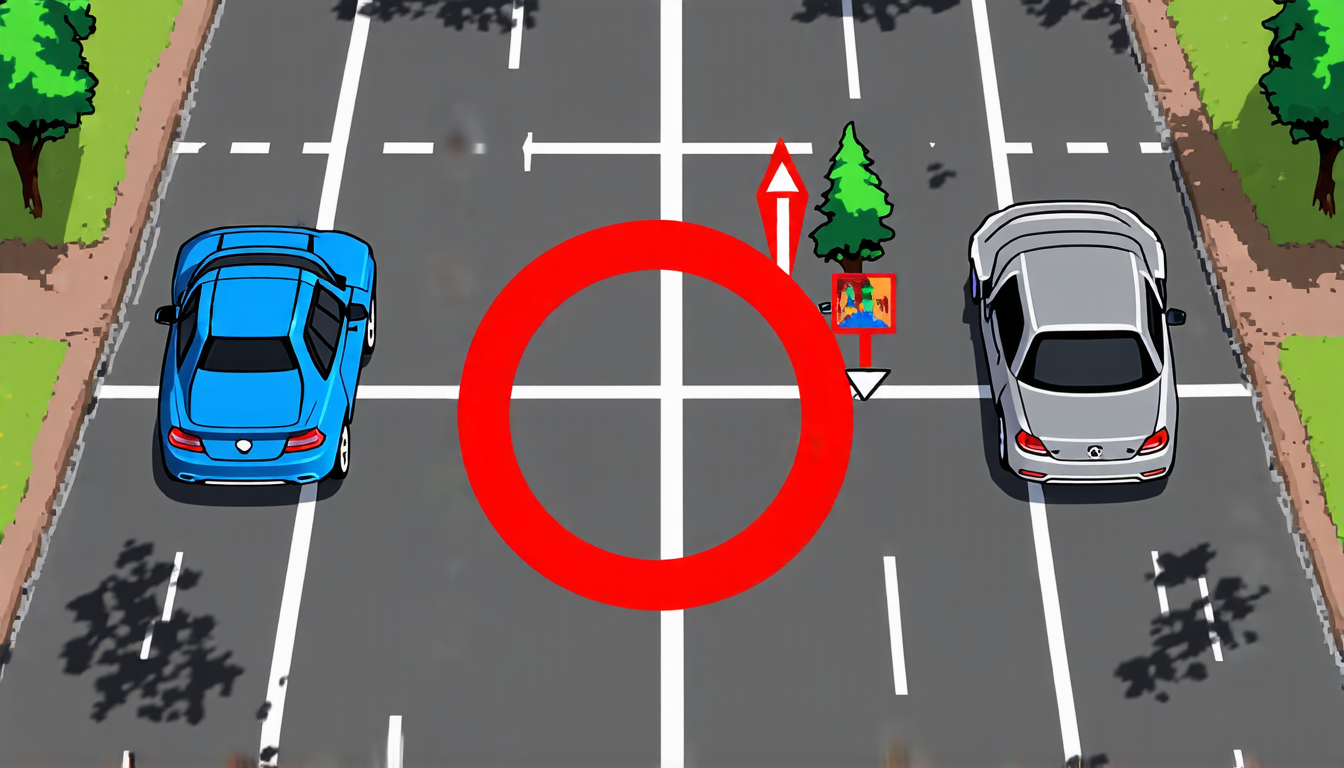
A team of researchers has developed a new way to predict collisions on roads, which could significantly improve safety for drivers and pedestrians alike. The method, known as second-order time-to-collision (TTC), takes into account the acceleration and turning movements of vehicles, providing a more accurate estimate of when a collision is likely to occur.
Traditional TTC methods only consider the speed and direction of vehicles, but this new approach recognizes that real-world driving involves complex maneuvers like turns and accelerations. By incorporating these factors, the second-order TTC method can better account for the unpredictable nature of human behavior on roads.
The researchers tested their method using data from a publicly available dataset of real-world traffic scenarios. They found that the second-order TTC method produced more accurate predictions of collision risk than traditional methods, particularly in situations where vehicles were turning or accelerating.
One of the key benefits of this new approach is its ability to distinguish between safe and risky scenarios. In many cases, traditional TTC methods would flag a situation as high-risk when it’s actually not dangerous at all. The second-order method, on the other hand, can identify when a vehicle is simply making a normal turn or accelerating from a stop.
The implications of this research are significant for the development of autonomous vehicles and advanced driver-assistance systems (ADAS). These technologies rely heavily on accurate predictions of collision risk to make informed decisions about steering and braking. By incorporating the second-order TTC method, these systems could become even safer and more reliable.
In addition to improving road safety, this research has broader implications for our understanding of complex systems like traffic flow. The study’s authors used a combination of mathematical modeling and data analysis to develop their method, which could have applications in other fields where predicting the behavior of complex systems is crucial.
The next step for the researchers will be to further validate their method using real-world testing and to explore its potential applications in different contexts. As traffic safety continues to be a major concern around the world, the development of more accurate and effective collision prediction methods like this one could make a significant difference in the years to come.
Cite this article: “Accurate Collision Prediction Method Developed for Road Safety”, The Science Archive, 2025.
Road Safety, Traffic Collisions, Second-Order Time-To-Collision, Ttc Method, Autonomous Vehicles, Advanced Driver-Assistance Systems, Adas, Mathematical Modeling, Data Analysis, Complex Systems.





