
Monday 24 March 2025
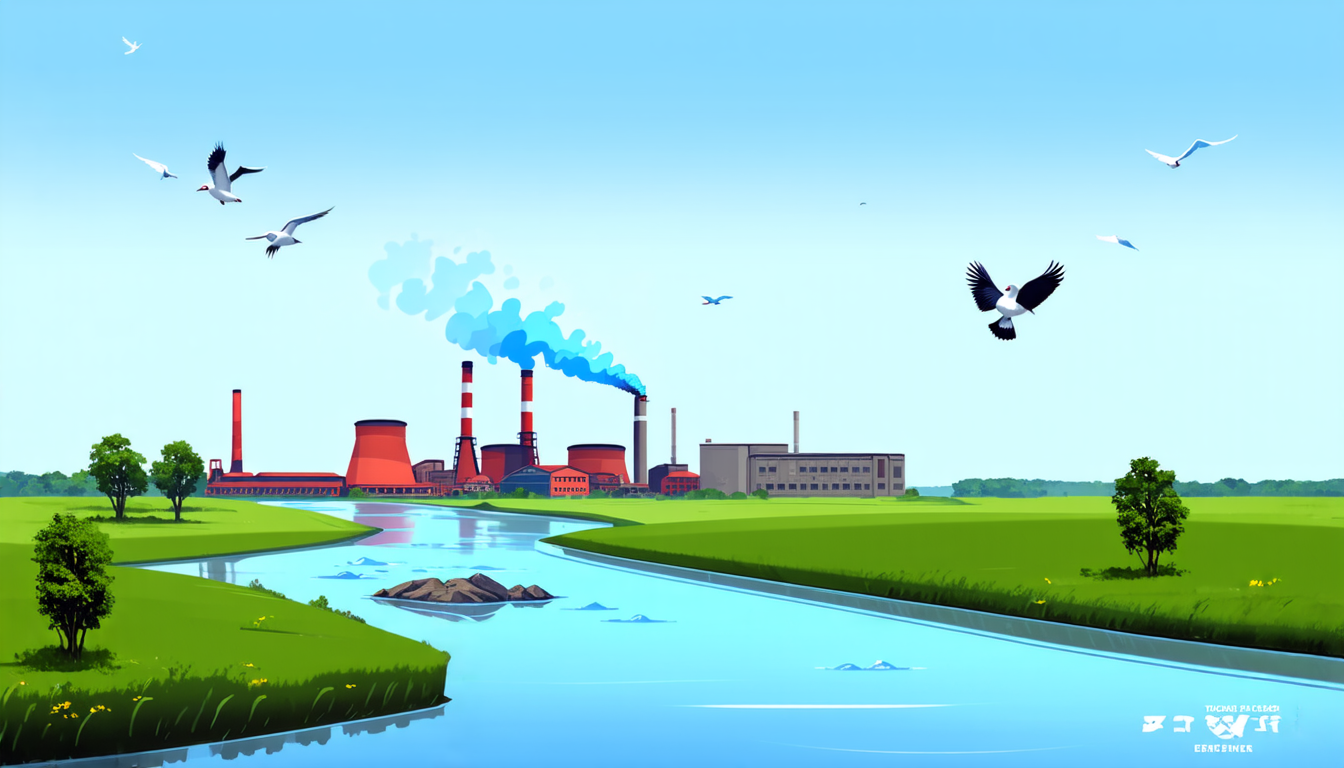
The researchers behind a recent study on India’s water pollution have made some striking discoveries about the impact of trade liberalization on environmental quality. By analyzing data from over 1,000 monitoring stations across the country, they found that when tariffs were lowered, water pollution levels increased significantly.
The study’s authors used a clever statistical trick to isolate the effect of trade policy changes on water quality. They compared districts with varying exposure to tariff reductions, controlling for other factors that might influence pollution levels. Their results suggest that a 1% increase in tariff exposure led to a 0.12 standard deviation increase in water pollution.
But what does this mean for India’s environment? In short, it’s not good news. The country is already notorious for its poor air and water quality, and these findings suggest that the economic liberalization efforts of the 1990s may have made things worse.
The researchers also conducted a series of robustness tests to ensure their results weren’t just a fluke. They tried using different measures of pollution, controlling for different factors that might influence the data, and even looked at the relationship between tariff changes and water quality over time. And in each case, they found similar evidence of a positive correlation between trade liberalization and increased pollution.
So why does this matter? For one thing, it highlights the need for policymakers to consider the environmental impacts of their decisions. Trade agreements are often touted as a way to boost economic growth, but if they come at the expense of public health, that’s a trade-off worth reconsidering.
The study also underscores the importance of monitoring and enforcing environmental regulations. In India, many industrial facilities operate with little oversight or accountability, leading to widespread pollution. Strengthening these regulations could help mitigate some of the negative effects of trade liberalization on water quality.
Finally, the findings serve as a reminder that economic development and environmental protection are not mutually exclusive goals. In fact, some of the most environmentally conscious countries in the world – like Sweden and Denmark – have also been among the most economically successful. It’s time for policymakers to start prioritizing both goals equally.
The study’s results may not be surprising to those familiar with the literature on trade and environment, but they do provide valuable new evidence to inform policy debates. As India continues to grapple with the challenges of economic development and environmental protection, this research offers an important reminder that these two goals are intertwined – and that progress on one front will likely depend on progress on the other.
Cite this article: “Trade Liberalizations Hidden Cost: A Study of Indias Water Pollution”, The Science Archive, 2025.
India, Water Pollution, Trade Liberalization, Environmental Quality, Tariffs, Pollution Levels, Economic Growth, Public Health, Environmental Regulations, Economic Development.
Reference: Malin Niemi, Nicklas Nordfors, Anna Tompsett, “Trade and pollution: Evidence from India” (2025).