

Tuesday 25 March 2025
The quest for better generalization in machine learning has led researchers to explore innovative ways to improve model performance. A recent paper proposes an AI-in-the-loop approach that optimizes communication and sensing resources to enhance edge intelligence, enabling more accurate predictions.
The problem of overfitting is a long-standing challenge in machine learning, where models become too specialized to the training data and fail to generalize well to new inputs. To address this, researchers have developed various regularization techniques, such as dropout and L1/L2 penalties, which aim to reduce model complexity and prevent overfitting.
However, these approaches often come with a trade-off: they can limit the model’s ability to capture complex patterns in the data. In contrast, the proposed AI-in-the-loop approach takes a different tack by optimizing both the communication and sensing resources used during training.
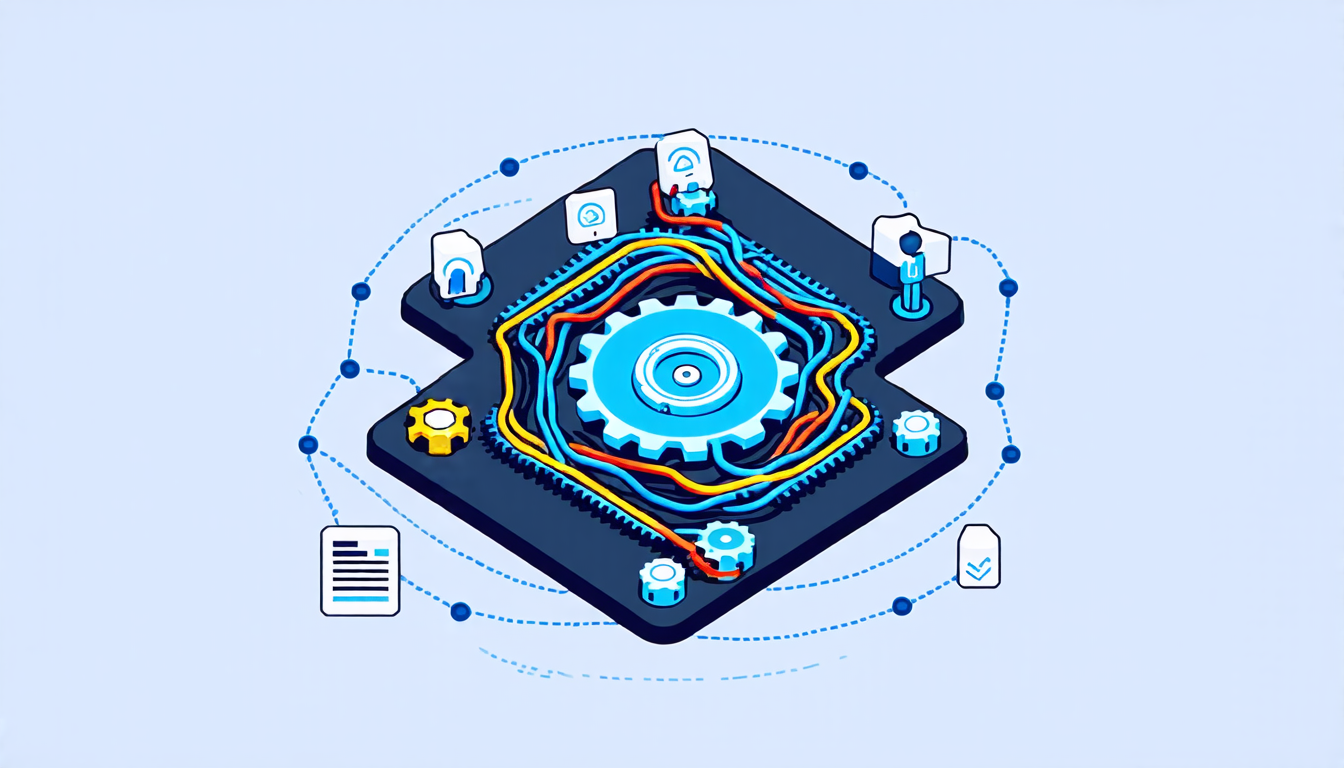
The researchers developed a framework that integrates artificial intelligence (AI) into the learning process, allowing it to dynamically adjust the amount of data collected, processed, and transmitted. This is achieved through a closed-loop control system that continuously monitors the model’s performance and adjusts the resources accordingly.
One key innovation is the use of importance sampling, which helps reduce the number of samples required for training while maintaining accuracy. By selectively focusing on the most informative data points, the AI-in-the-loop approach can speed up training times and improve generalization capabilities.
Another significant aspect of this work is its emphasis on joint sensing and communication resource allocation. Traditional machine learning approaches often treat these as separate problems, but the authors demonstrate that optimizing them together can lead to better performance.
The proposed framework was tested using a range of datasets, including those with limited data and complex patterns. The results show impressive improvements in model accuracy and generalization capabilities compared to traditional approaches.
This research has significant implications for edge intelligence applications, where devices must make predictions based on limited data and resources. By optimizing communication and sensing resources, the AI-in-the-loop approach can enable more accurate and efficient decision-making.
As machine learning continues to play an increasingly important role in our lives, developing more effective techniques for generalization will be crucial. This innovative work demonstrates a promising direction for addressing this challenge, with potential applications across various fields, from healthcare to finance.
Cite this article: “Optimizing Edge Intelligence Through AI-Driven Resource Allocation”, The Science Archive, 2025.
Machine Learning, Generalization, Overfitting, Edge Intelligence, Ai-In-The-Loop, Importance Sampling, Resource Allocation, Sensing, Communication, Optimization





