

Tuesday 25 March 2025
As robotics and AI continue to advance, researchers are pushing the boundaries of what’s possible by integrating these technologies into a variety of applications. One area that has seen significant progress is in the development of aerial robots, or drones, which have been used for everything from surveillance and inspection to search and rescue missions.
In recent years, the focus has shifted towards creating more complex and autonomous drone systems that can interact with their environment in sophisticated ways. This involves not only developing advanced sensors and control systems but also integrating them into a cohesive whole. One of the biggest challenges facing researchers is how to effectively simulate these complex systems in order to test and refine them.
Enter Sphinx, a simulator developed by Parrot Drone that allows users to create realistic simulations of their drone systems. By combining Sphinx with other popular simulation tools like Gazebo, researchers can create detailed and immersive environments that mimic real-world scenarios. This not only saves time and resources but also enables the testing of complex scenarios and edge cases that would be difficult or impossible to replicate in a physical environment.
One area where Sphinx has been particularly useful is in the development of autonomous aerial vehicles (AAVs). These drones are designed to operate independently, navigating through environments and avoiding obstacles without human intervention. By simulating these systems using Sphinx, researchers can test and refine their algorithms and sensors in a controlled environment before deploying them in the real world.
Another key application for Sphinx is in the field of search and rescue operations. In these scenarios, drones are often used to quickly survey damage or locate survivors after a disaster. By simulating these scenarios using Sphinx, researchers can develop more effective search strategies and improve the accuracy of their sensors.
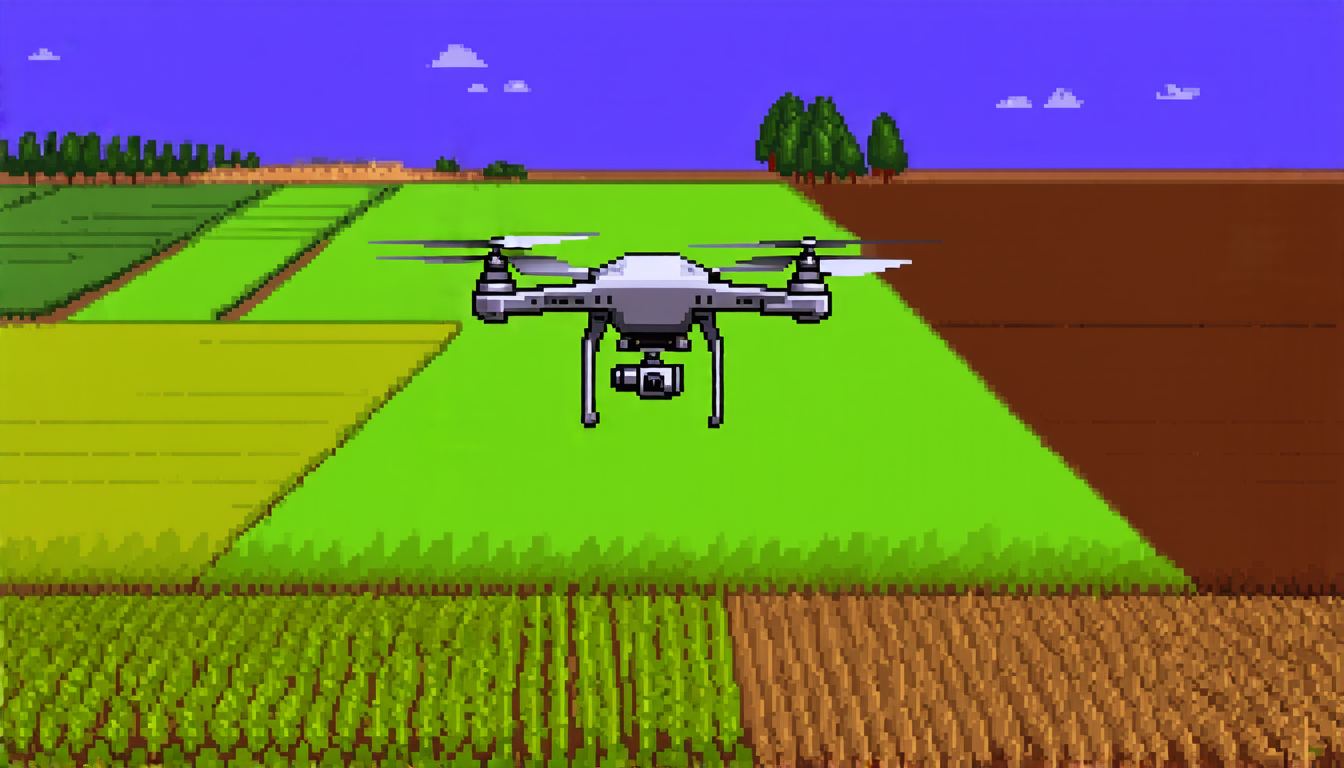
Sphinx has also been used in more specialized applications such as agriculture and construction. For example, researchers have used Sphinx to simulate the use of drones for crop monitoring and precision farming, allowing them to test different algorithms and sensor configurations before deploying them in the field.
The integration of Sphinx with Gazebo has also opened up new possibilities for researchers. By combining the two tools, they can create highly detailed and realistic simulations that include not only the drone itself but also its environment and any other objects or actors within it. This allows for more comprehensive testing and refinement of their systems before deploying them in the real world.
Overall, Sphinx has the potential to revolutionize the field of aerial robotics by providing a powerful tool for simulating complex systems and scenarios.
Cite this article: “Simulating the Skies: Parrot Drones Sphinx Revolutionizes Aerial Robotics”, The Science Archive, 2025.
Aerial Robots, Drones, Simulation, Parrot Drone, Sphinx, Gazebo, Autonomous Vehicles, Search And Rescue, Agriculture, Construction.





