

Tuesday 25 March 2025
As the world continues to transition towards a cleaner, more sustainable energy landscape, the importance of peak shaving strategies has never been more crucial. Peak shaving refers to the process of reducing the peak demand on power grids during periods of high energy usage, which helps alleviate stress on the system and improve overall efficiency.
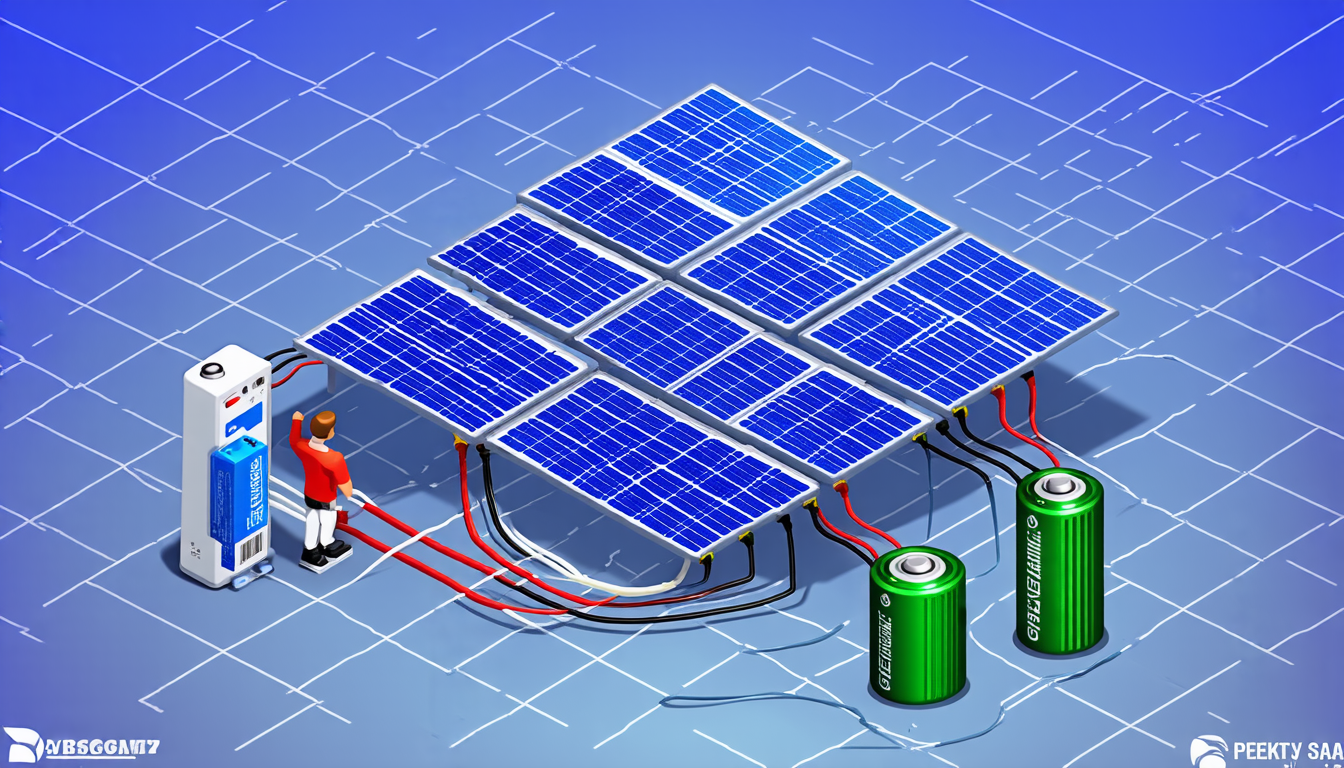
One approach to achieving this is through the use of battery energy storage systems (BESS). BESS technology has come a long way in recent years, with advancements in both hardware and software allowing for more efficient and effective operation. In this study, researchers have proposed a novel cycle-based control strategy for peak shaving using BESS.
The key innovation lies in the use of a cycle-based approach, which optimizes capture rates, release rates, and capacity utilization rates to improve overall system performance. By leveraging advanced algorithms and simulation models, the team was able to demonstrate significant improvements in energy capture and release rates, as well as reduced equivalent cycle times.
But what does this mean for real-world applications? In practical terms, the proposed strategy could lead to a reduction of 174.21 kWh (3.7%) in daily energy losses and an increase in system efficiency by 0.4%. These results are substantial, especially considering the potential long-term benefits to BESS lifespan and overall grid stability.
The study also highlights the importance of power allocation optimization among battery clusters. By employing a modified Particle Swarm Optimization algorithm, researchers were able to optimize power distribution and reduce energy losses further. This approach has significant implications for large-scale BESS deployments, where efficient power allocation is critical to achieving optimal performance.
One of the most intriguing aspects of this study is its focus on real-world applicability. The authors acknowledge that future work will need to consider more complex scenarios, such as multi-cluster systems and dynamic grid conditions. However, their approach provides a solid foundation for exploring these challenges and demonstrates the potential for BESS technology to play a significant role in shaping the future of energy management.
For those interested in delving deeper into the technical details, the study provides a comprehensive overview of the simulation models and algorithms employed. From the perspective of policymakers and industry professionals, the findings offer valuable insights into the potential benefits of adopting cycle-based control strategies for peak shaving.
Ultimately, this research serves as a testament to the power of innovative thinking in addressing some of the most pressing challenges facing our energy infrastructure today.
Cite this article: “Optimizing Battery Energy Storage Systems for Peak Shaving Applications”, The Science Archive, 2025.
Battery Energy Storage Systems, Peak Shaving, Cycle-Based Control Strategy, Bess Technology, Advanced Algorithms, Simulation Models, Power Allocation Optimization, Particle Swarm Optimization, Energy Management, Grid Stability





