

Tuesday 25 March 2025
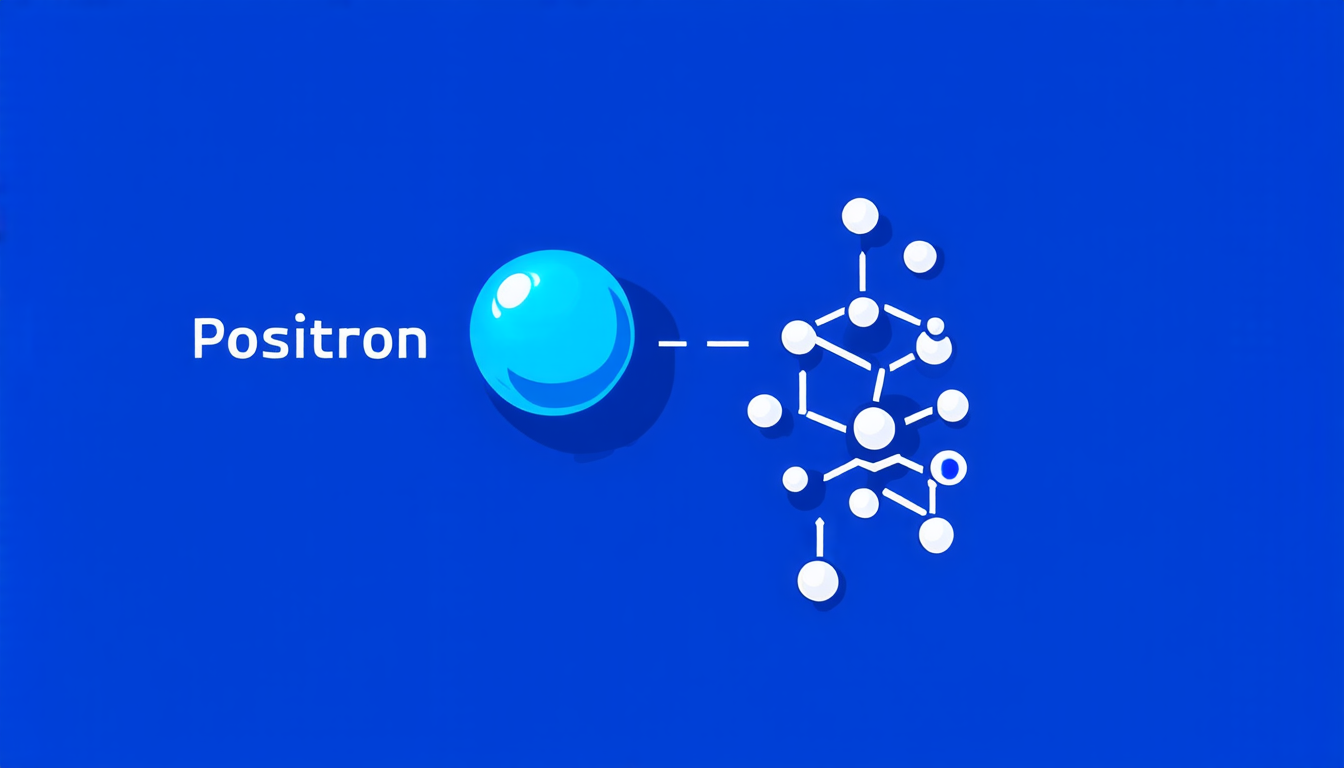
Scientists have made a significant breakthrough in understanding how positrons, the antimatter counterpart of electrons, interact with molecules. A team of researchers has developed a new method to study positron binding to molecules, which could lead to new insights into the behavior of these tiny particles.
Positrons are notoriously difficult to work with because they’re so fleeting and unstable. They have a short lifetime, typically lasting only seconds before annihilating with an electron or another particle. This makes it challenging for scientists to study their interactions with other particles, like molecules.
The new method uses a combination of advanced computer simulations and experimental techniques to study positron binding to molecules. The researchers used a powerful supercomputer to simulate the behavior of positrons interacting with molecules, while also conducting experiments using specialized equipment.
The results show that positrons can bind to certain molecules in a way that’s similar to how electrons bind to atoms. This is a significant finding because it suggests that positrons could be used as a tool to study molecular structure and properties.
One of the most interesting aspects of this research is the discovery that positron binding is influenced by the shape and size of the molecule. The researchers found that certain molecules, like benzene, are more likely to bind with positrons than others.
This finding has important implications for fields like chemistry and materials science. By studying how positrons interact with molecules, scientists could gain a better understanding of the properties and behavior of these molecules. This could lead to new insights into the properties of materials and potentially even the development of new technologies.
The researchers also found that the binding energy of positrons to molecules is influenced by the number of π bonds in the molecule. π bonds are a type of chemical bond that’s characterized by a node in the electron density between the atoms involved. The researchers discovered that the presence of π bonds can increase the binding energy of positrons to molecules.
This finding has important implications for our understanding of chemical bonding and the properties of materials. It suggests that positrons could be used as a tool to study the properties of molecules and potentially even the behavior of electrons within these molecules.
The research is an important step forward in our understanding of positron interactions with molecules. The findings have significant implications for fields like chemistry, materials science, and physics, and could potentially lead to new insights into the behavior of antimatter particles.
Cite this article: “Scientists Uncover Secrets of Positron Interactions with Molecules”, The Science Archive, 2025.
Positrons, Electrons, Molecules, Binding, Chemistry, Materials Science, Physics, Antimatter, Computer Simulations, Experimental Techniques





