
Tuesday 25 March 2025
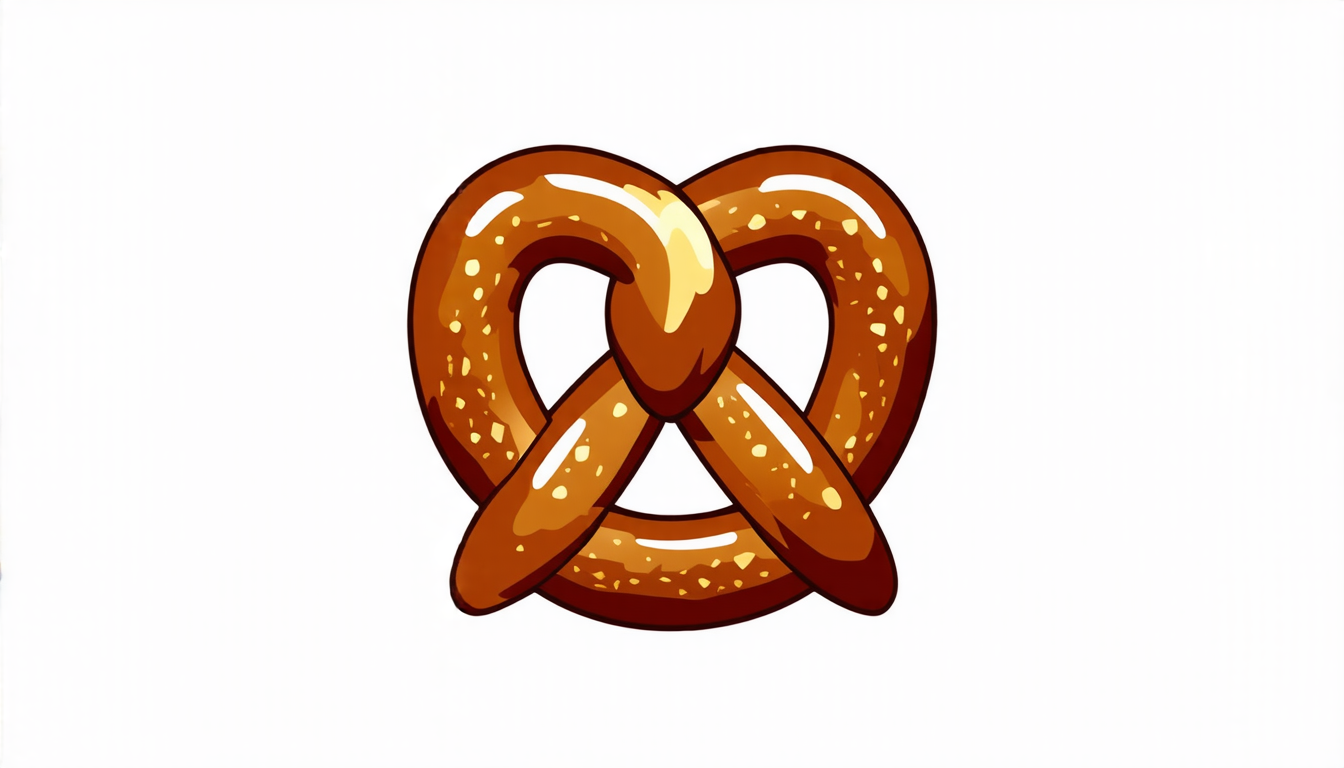
Mathematicians have made a significant breakthrough in understanding the intricacies of knots, those seemingly simple yet notoriously complex shapes that have fascinated humans for centuries. By unlocking the secrets of a particular type of knot called Pretzel knots, researchers have gained valuable insights into their properties and behavior.
Pretzel knots are a special class of knots that can be created by twisting bands together in specific ways. They were first introduced by mathematician Kurt Reidemeister in the 1930s as a way to understand the fundamental topology of space. Despite their relatively simple appearance, Pretzel knots have turned out to be surprisingly complex and difficult to analyze.
The latest research has focused on the Alexander polynomial, a mathematical formula that describes the properties of a knot. The Alexander polynomial is crucial for understanding the knot’s topological invariants, such as its genus (a measure of its complexity) and its colorability (the ability to assign colors to its components).
Using advanced mathematical techniques, researchers have developed explicit formulas for the Alexander polynomial of Pretzel knots. These formulas reveal that the polynomial’s degree – a measure of its complexity – can take on any even value from 0 to n-1, where n is the number of bands in the knot.
The discovery has significant implications for our understanding of topology and geometry. It shows that Pretzel knots with an odd number of bands have a unique property: their Alexander polynomial is trivial, meaning it simplifies to a single term. This means that these knots can be easily colored using a specific set of rules.
In contrast, Pretzel knots with an even number of bands exhibit more complex behavior. Their Alexander polynomial has a non-trivial structure, and coloring them becomes much more challenging.
The findings also shed light on the relationships between different types of knots. Researchers have shown that certain Pretzel knots can be transformed into each other by applying simple transformations, such as twisting or stretching their components.
These results have far-reaching implications for fields beyond mathematics, including physics, chemistry, and engineering. For example, in materials science, understanding the properties of knots could lead to new insights into the behavior of complex systems, such as polymers or crystals.
In addition, the discovery has sparked new questions about the fundamental nature of space itself. The study of Pretzel knots challenges our understanding of the topological structure of space and raises intriguing possibilities about the existence of other, previously unknown types of knots.
Cite this article: “Unlocking the Secrets of Pretzel Knots: A Breakthrough in Topology and Geometry”, The Science Archive, 2025.
Knots, Topology, Geometry, Pretzel Knots, Alexander Polynomial, Mathematical Formula, Complexity, Colorability, Genus, Materials Science.
Reference: Y. Belousov, “Explicit Formulas for the Alexander Polynomial of Pretzel Knots” (2025).