

Tuesday 25 March 2025
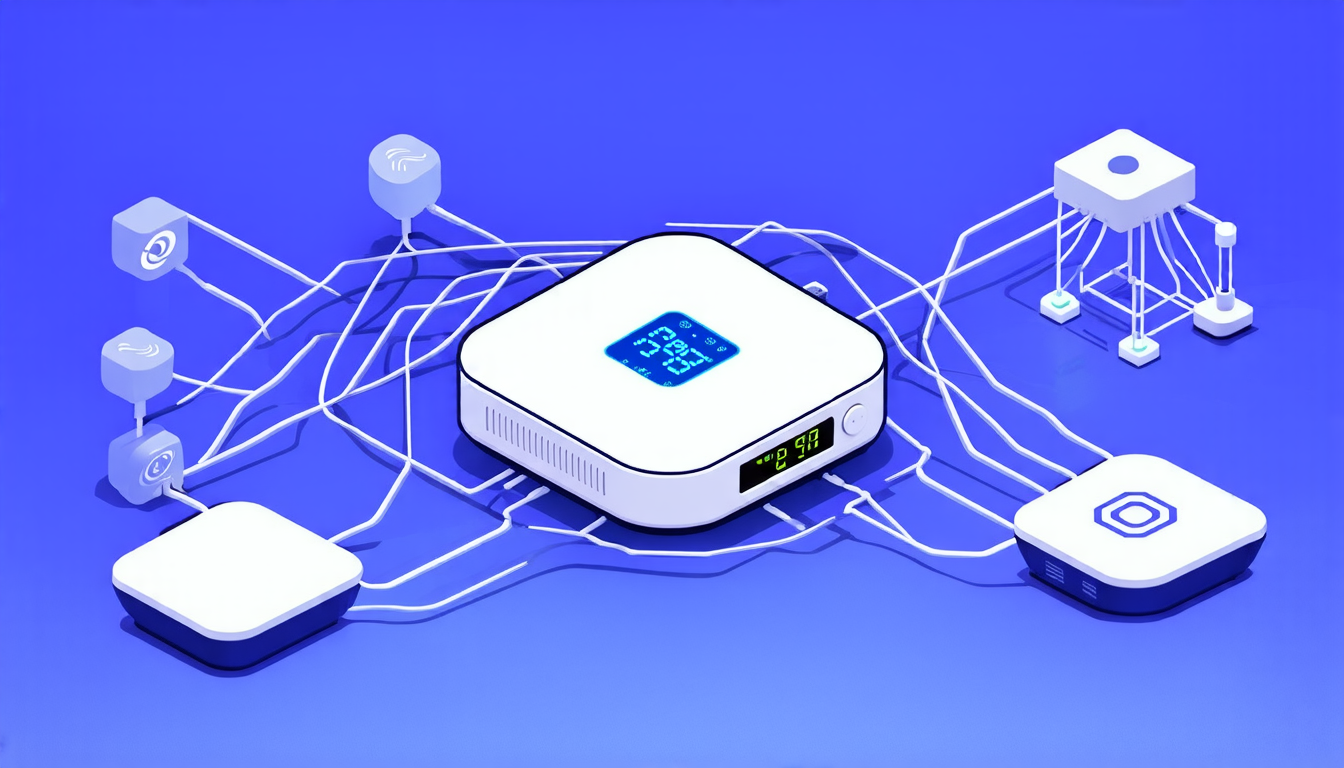
Scientists have long struggled to accurately calibrate low-cost sensors used in internet of things (IoT) devices, which can lead to inaccurate data and poor decision-making. To address this issue, a team of researchers has developed a new framework that combines deep learning models with traditional linear methods to achieve high accuracy while maintaining energy efficiency.
The framework, called SenDaL, uses a bottom-up training process to refine time-series data and then employs neural networks to make predictions. This approach allows SenDaL to adapt to different hardware platforms and sensor types, making it a versatile solution for IoT devices.
One of the key challenges in developing SenDaL was addressing the trade-off between accuracy and energy efficiency. Traditional deep learning models can be computationally intensive and drain device batteries quickly, while linear methods may not provide accurate enough results. By combining these approaches, SenDaL achieves a balance between the two, allowing it to accurately calibrate sensors while consuming relatively low amounts of power.
SenDaL was tested on various embedded hardware platforms, including Raspberry Pi and Jetson Nano devices, and demonstrated superior performance compared to baseline deep learning models in terms of both accuracy and efficiency. The framework also showed flexibility by adapting to different sensor types and scenarios, making it a promising solution for real-world applications.
The potential applications of SenDaL are vast, ranging from smart home systems to industrial automation. By accurately calibrating low-cost sensors, SenDaL can help IoT devices make more informed decisions, improve system reliability, and reduce the need for expensive hardware upgrades.
In addition to its technical merits, SenDaL also highlights the importance of interdisciplinary collaboration in research. The project brought together experts from fields such as computer science, electrical engineering, and data analysis to tackle a complex problem that spans multiple disciplines.
As IoT devices continue to play an increasingly important role in our daily lives, developing innovative solutions like SenDaL will be crucial for ensuring their reliability and accuracy. By combining cutting-edge technology with practical considerations, researchers can create frameworks that not only solve pressing problems but also have real-world impact.
Cite this article: “Accurate and Efficient Sensor Calibration Framework for IoT Devices”, The Science Archive, 2025.
Iot, Sensors, Calibration, Deep Learning, Linear Methods, Energy Efficiency, Accuracy, Embedded Hardware, Smart Home, Industrial Automation.





