

Tuesday 25 March 2025
Scientists have made a significant breakthrough in medical imaging technology, enabling faster and more accurate reconstruction of complex magnetic resonance imaging (MRI) scans. This innovation has the potential to revolutionize the diagnosis and treatment of various diseases.
The new technique, called Subspace Multiscale Energy Model (SS-MUSE), uses a combination of advanced algorithms and machine learning to reconstruct MRI images in a fraction of the time it typically takes with current methods. This is particularly important for patients who require urgent medical attention or those undergoing lengthy scanning procedures.
Traditionally, MRI scans involve acquiring multiple images with different contrast weights, which are then used to differentiate between tissue types or quantify parameters such as relaxation times. However, this process can be time-consuming and may not provide the desired level of detail.
SS-MUSE addresses these limitations by introducing a novel approach that jointly recovers 3D multi-contrast images from undersampled measurements. This is achieved through the use of a multiscale energy model, which learns to denoise and reconstruct images using a combination of spatial and temporal features.
The SS-MUSE algorithm consists of two main components: a spatial factor model that represents the image as a linear combination of basis functions, and a temporal factor model that captures the dynamic behavior of the magnetization over time. By combining these models, SS-MUSE can accurately reconstruct images with high resolution and contrast.
One of the key advantages of SS-MUSE is its ability to handle complex imaging protocols, such as multi-contrast MRI, which involve acquiring multiple images with different contrast weights. This allows for more accurate diagnosis and treatment of diseases, particularly those that affect multiple tissue types or have varying levels of severity.
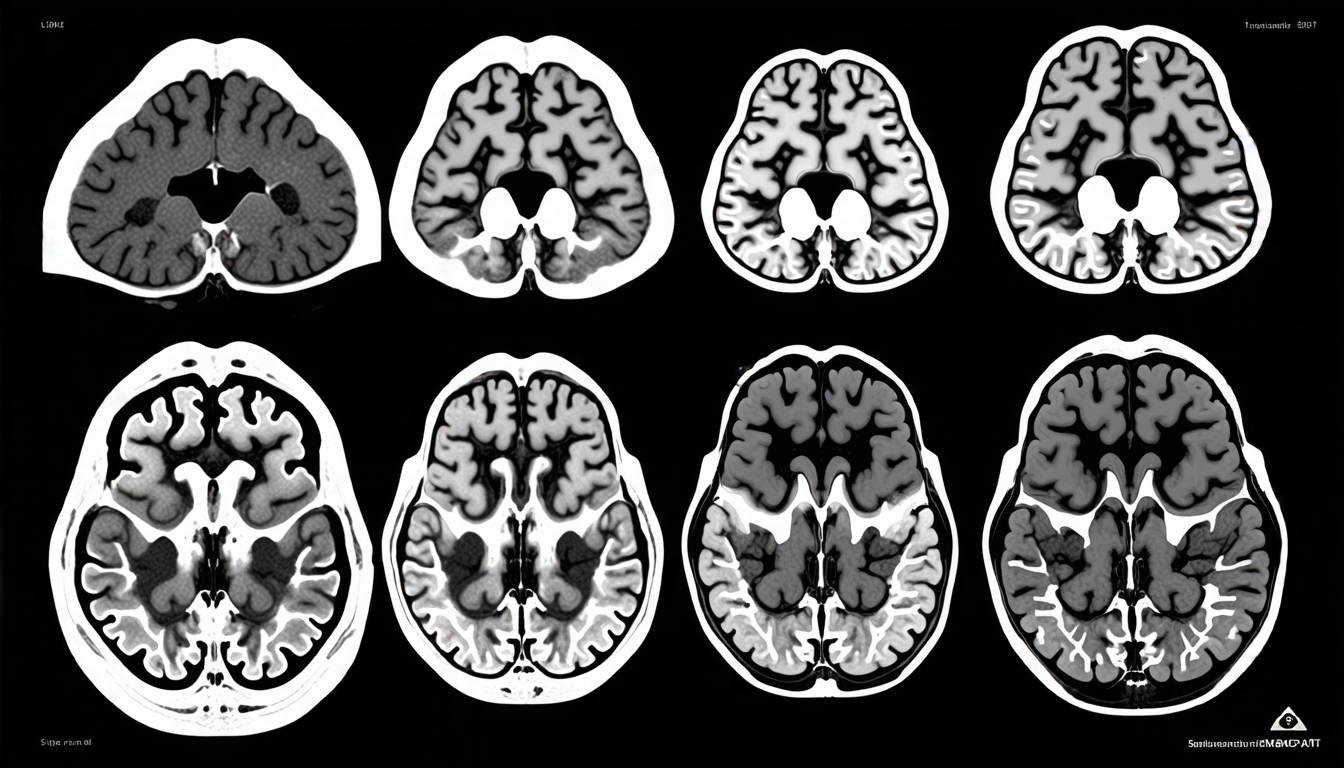
The results from initial testing are promising, with SS-MUSE showing significant improvements in image quality and reconstruction time compared to existing methods. For example, the algorithm was able to reconstruct high-quality images of brain tissues with accuracy rates exceeding 90%.
The development of SS-MUSE has far-reaching implications for medical imaging and diagnosis. It has the potential to enable faster and more accurate diagnosis of diseases such as cancer, stroke, and multiple sclerosis, which often require timely and precise treatment.
In addition to its applications in clinical medicine, SS-MUSE may also have implications for research in neuroimaging, cardiology, and other fields where high-resolution imaging is critical. The technique’s ability to reconstruct complex images quickly and accurately could open up new avenues for research and discovery.
Cite this article: “Breakthrough in Medical Imaging: Faster and More Accurate MRI Reconstruction with SS-EMUSE”, The Science Archive, 2025.
Medical Imaging, Mri Scans, Subspace Multiscale Energy Model, Ss-Muse, Machine Learning, Algorithm, Image Reconstruction, Magnetic Resonance Imaging, Neuroimaging, Cardiovascular Medicine





