

Tuesday 25 March 2025
The quest for safer roads has led researchers to explore new ways of connecting vulnerable road users, such as pedestrians and cyclists, with other vehicles on the road. One promising approach is clustering, where groups of VRUs share information about their surroundings to improve awareness and reduce accidents.
A team of scientists has now developed an innovative clustering scheme that eliminates the need for explicit communication between VRUs and reduces the number of messages sent over the airwaves. This implicit clustering method uses the existing Cooperative Awareness Messages (CAMs) sent by vehicles to automatically group nearby VRUs together, without requiring any additional signaling or data structures.
The benefits of this approach are twofold. Firstly, it simplifies the communication process between VRUs and reduces the risk of message collisions, which can occur when multiple vehicles send messages at the same time. Secondly, it allows for more efficient use of network resources, as VRUs only need to generate messages when they are within range of other VRUs.
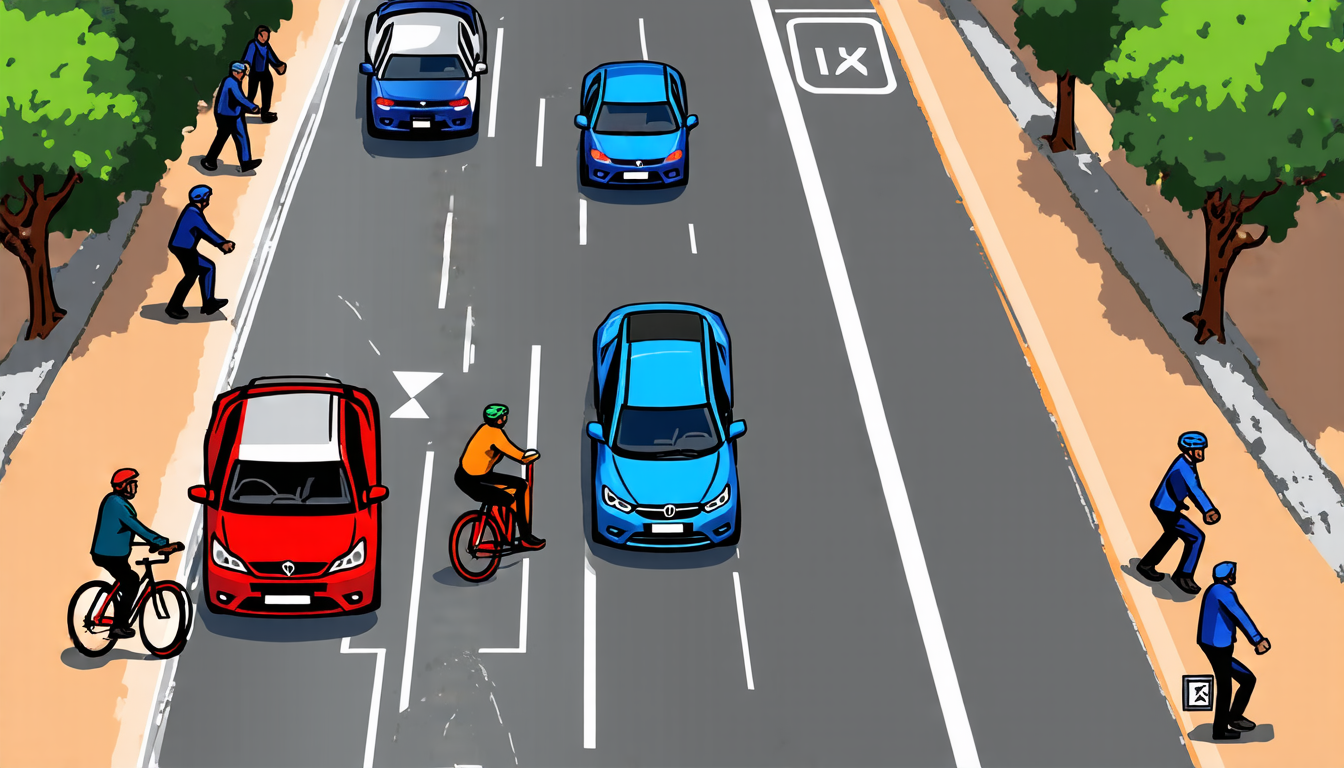
To test their scheme, the researchers simulated a scenario where pedestrians and cyclists were moving along a busy road, surrounded by vehicles sending CAMs. They compared the performance of their implicit clustering method with a traditional standalone communication approach, where each VRU generates its own messages without coordinating with others.
The results showed that the implicit clustering method significantly improved network metrics, such as packet delivery ratio and inter-packet gap. These improvements translate to better awareness levels for VRUs, making them more visible to other road users and reducing the risk of accidents.
The team also explored how their scheme performs in different scenarios, including those with varying densities of VRUs and vehicles. They found that the implicit clustering method remained effective even in challenging conditions, such as high traffic volumes or multiple types of VRUs on the same road.
These findings have significant implications for the development of intelligent transportation systems (ITS) designed to improve road safety. The researchers’ innovative approach offers a more efficient and reliable way to connect vulnerable road users with other vehicles, paving the way for more effective collision avoidance systems and reduced accident rates.
As the technology continues to evolve, it is likely that implicit clustering will play an increasingly important role in shaping the future of road safety. By simplifying communication between VRUs and improving network efficiency, this approach could help create a safer, more connected transportation environment for all users.
Cite this article: “Improving Road Safety through Implicit Clustering of Vulnerable Road Users”, The Science Archive, 2025.
Road Safety, Clustering, Vulnerable Road Users, Pedestrians, Cyclists, Cooperative Awareness Messages, Cams, Network Efficiency, Implicit Clustering, Intelligent Transportation Systems





