

Tuesday 25 March 2025
The pursuit of efficient and harmonious resource allocation in complex systems has long been a challenge for scientists and engineers. In the realm of wireless networks, optimizing the utilization of shared infrastructure is crucial to ensure seamless communication and minimize conflicts between different network slices. A recent study proposes a novel approach to tackle this problem by leveraging multi-agent reinforcement learning (MARL) and information bottleneck auto-encoding.
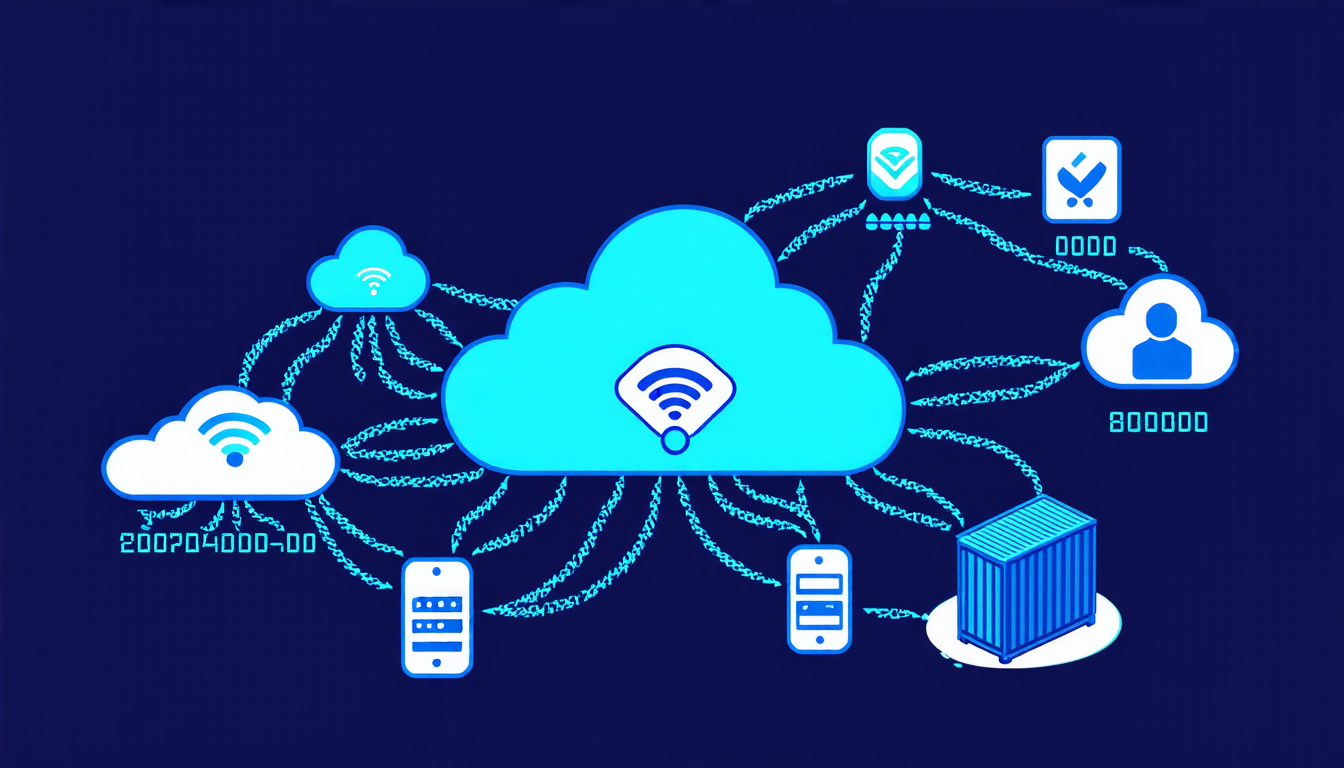
The researchers designed a cloud-native architecture where each slice agent operates within a containerized environment, utilizing Docker as the application abstraction layer. The agents communicate with a central server via a Kafka bus, allowing for asynchronous message exchange and facilitating emergent communication protocols. This decentralized framework enables agents to adapt to fluctuating traffic and network conditions while minimizing conflicts.
The proposed MARL framework incorporates information bottleneck auto-encoding, a technique that extracts latent variables from inter-agent emergent communication messages. By exploiting these latent variables, the agents can better understand each other’s actions and optimize their resource allocation accordingly. This approach has been shown to significantly reduce conflicts between slices and improve infrastructure utilization.
In a cloud-native environment, the researchers simulated a scenario with three slice agents, each representing a different type of network service. The traffic was modeled based on real-world scenarios, capturing variations in packet size and arrival rate. After training, the agent system developed a new communication protocol that optimized resource allocation while minimizing conflicts.
The results demonstrate a substantial improvement in infrastructure utilization, with the MARL framework achieving an average of 85% compared to a baseline approach of around 57%. This increased efficiency is attributed to the agents’ ability to adapt to changing traffic patterns and optimize their resource allocation accordingly.
This research has significant implications for the development of future wireless networks. As the demand for high-speed, low-latency communication continues to grow, the need for efficient resource allocation becomes increasingly pressing. The proposed MARL framework provides a promising solution, enabling network slices to cooperate and adapt to changing conditions while minimizing conflicts.
The study’s findings also highlight the potential benefits of information bottleneck auto-encoding in complex systems. By extracting latent variables from emergent communication messages, agents can develop a deeper understanding of each other’s actions, leading to more effective collaboration and optimization.
As researchers continue to explore the application of MARL and information bottleneck auto-encoding in various domains, this study serves as a compelling example of the potential for these techniques to revolutionize complex system optimization.
Cite this article: “Efficient Resource Allocation in Wireless Networks through Multi-Agent Reinforcement Learning and Information Bottleneck Auto-Encoding”, The Science Archive, 2025.
Multi-Agent Reinforcement Learning, Information Bottleneck Auto-Encoding, Wireless Networks, Resource Allocation, Network Slices, Cloud-Native Architecture, Docker, Kafka Bus, Emergent Communication Protocols, Infrastructure Utilization.





