

Wednesday 26 March 2025
A team of researchers has taken a fresh look at the internal workings of language models, shedding light on how they process and generate text. By analyzing the behavior of residual streams in transformer networks, scientists have gained insights into the complex dynamics that underlie these powerful AI tools.
Transformer networks are widely used in natural language processing tasks such as machine translation, text summarization, and conversational AI. They’re particularly effective at handling sequential data like text, but their inner workings remain somewhat mysterious. To better understand how they function, researchers have been studying the residual streams that flow through these networks.
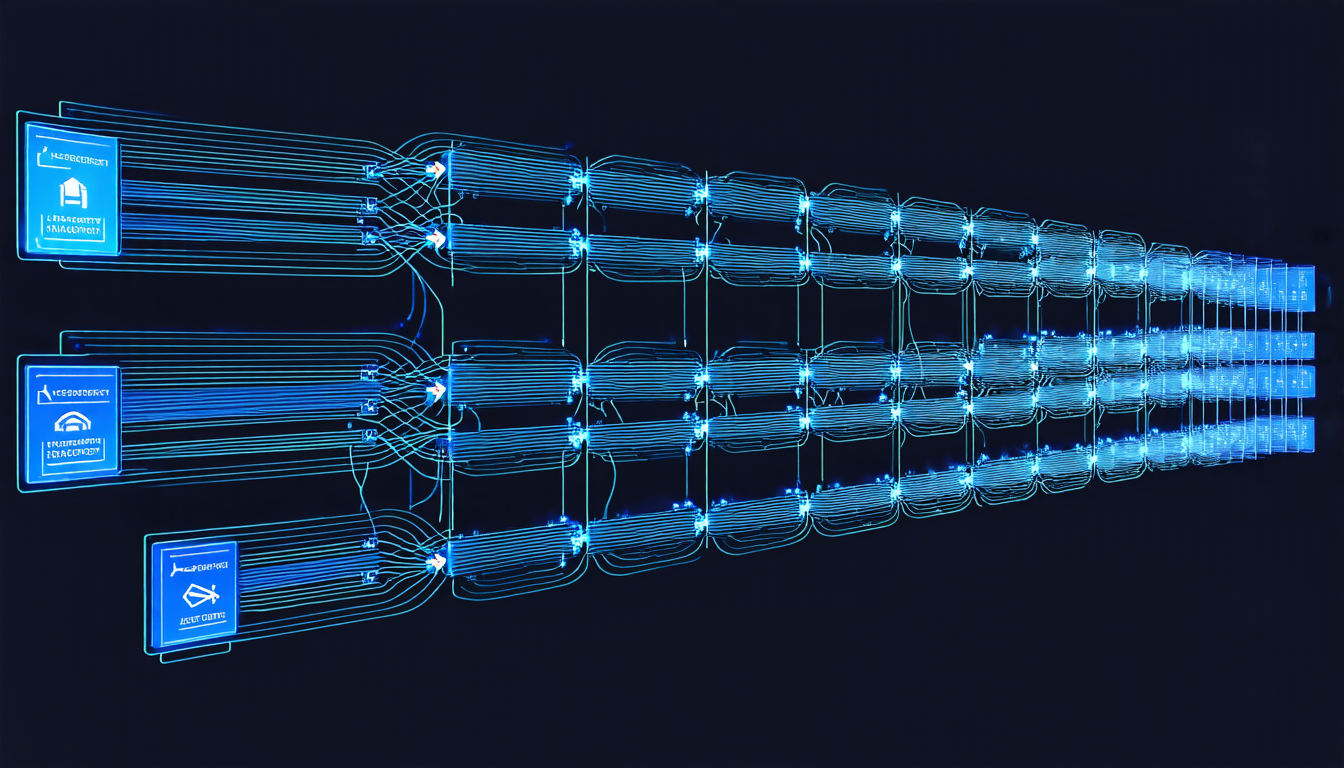
Residual streams, also known as attention streams or memory streams, are a key component of transformer networks. They allow the model to focus on specific parts of an input sequence and retain information from previous steps in the processing pipeline. By analyzing the behavior of these streams, researchers can gain insights into how the model is processing and generating text.
In their study, the team used a combination of mathematical techniques and large-scale simulations to analyze the residual streams in transformer networks. They found that individual units within the stream exhibit strong correlations with each other as they progress through the network. This means that the model is building up complex patterns and relationships between different parts of the input sequence.
The researchers also discovered that the residual streams are characterized by a type of dynamic behavior known as rotational dynamics. This involves the creation of stable computational channels within the stream, which allow the model to maintain desired trajectories through the processing pipeline. The team found that this self-correcting behavior is most pronounced in lower layers of the network, where it helps the model to build up a robust representation of the input sequence.
The study’s findings have significant implications for our understanding of how language models work. By shedding light on the internal dynamics of these powerful AI tools, researchers can develop more effective and efficient algorithms for tasks like natural language processing and machine translation. The team’s results also highlight the importance of considering the complex interactions within transformer networks when designing new architectures or training protocols.
The study’s authors hope that their research will inspire further investigation into the inner workings of language models. By continuing to explore these complex systems, scientists can develop more sophisticated AI tools that are better equipped to handle real-world tasks and challenges.
Cite this article: “Unraveling the Inner Workings of Language Models: Researchers Shine Light on Transformer Networks Dynamics”, The Science Archive, 2025.
Language Models, Transformer Networks, Residual Streams, Attention Streams, Memory Streams, Natural Language Processing, Machine Translation, Text Summarization, Conversational Ai, Rotational Dynamics





