

Wednesday 26 March 2025
A team of researchers has developed a new method for generating realistic and controllable traffic scenarios, which could be used to test autonomous vehicles in a more efficient and cost-effective way.
The traditional approach to testing self-driving cars involves collecting data from real-world driving, which can be time-consuming and expensive. However, this approach is limited by the number of possible scenarios that can be observed in reality, and it may not cover all potential situations that could arise on the road.
To address these limitations, researchers have turned to simulation-based testing, where virtual vehicles are programmed to follow real-world traffic rules and interact with each other in a simulated environment. This approach allows for the creation of complex and diverse scenarios that would be difficult or impossible to replicate in reality.
The new method developed by the researchers uses a technique called diffusion-based modeling, which involves generating traffic scenarios through a process of iterative refinement. The model starts with an initial set of vehicles and then iteratively updates their positions and behaviors based on real-world traffic rules and patterns.
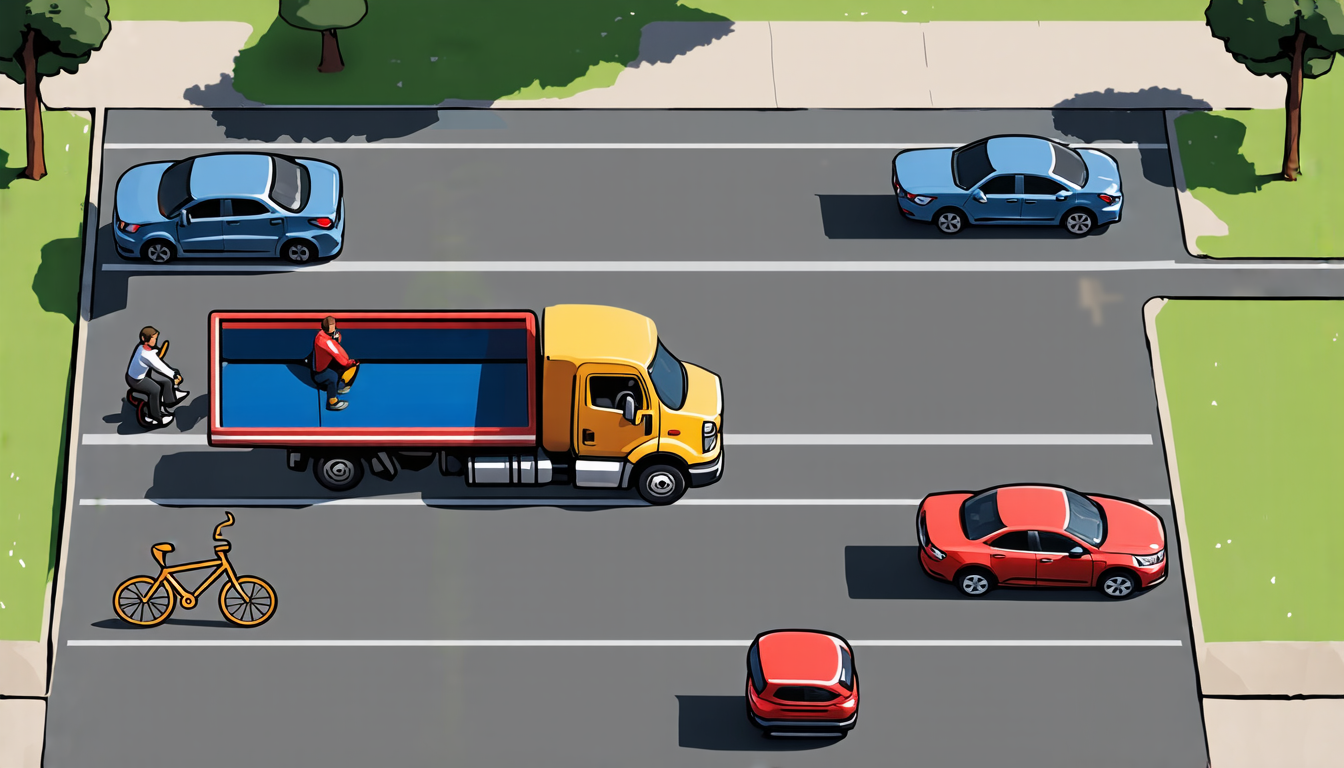
One of the key advantages of this approach is its ability to generate complex and realistic traffic scenarios that are difficult to achieve in reality. For example, the model can create scenarios involving multiple lanes, intersections, and pedestrian crossings, as well as different types of vehicles, such as cars, trucks, and bicycles.
The researchers tested their method using a dataset of real-world driving data, which they used to train and fine-tune their model. They found that the generated traffic scenarios were highly realistic and could be used to test autonomous vehicles in a variety of different conditions.
This approach has significant potential for reducing the cost and complexity of testing autonomous vehicles. By generating complex and realistic traffic scenarios through simulation, researchers can quickly and efficiently test a wide range of possible situations, which could help to improve the safety and reliability of self-driving cars.
In addition to its practical applications, this research also highlights the power of diffusion-based modeling as a tool for simulating complex systems. By using iterative refinement to generate realistic traffic scenarios, the model demonstrates the potential for this approach to be applied in a wide range of fields, from weather forecasting to financial modeling.
Overall, this new method offers a promising solution for generating realistic and controllable traffic scenarios, which could help to accelerate the development of autonomous vehicles and improve our understanding of complex systems.
Cite this article: “Simulation-Based Testing for Autonomous Vehicles Using Diffusion-Modeling”, The Science Archive, 2025.
Autonomous Vehicles, Simulation-Based Testing, Traffic Scenarios, Diffusion-Based Modeling, Real-World Driving Data, Iterative Refinement, Complex Systems, Weather Forecasting, Financial Modeling, Self-Driving Cars





