

Wednesday 26 March 2025
Researchers have made a breakthrough in addressing the challenge of modality incompleteness in multimodal federated learning, a technique used to analyse data from multiple sources while respecting privacy concerns.
Federated learning allows different institutions or organizations to collaborate on machine learning projects without having to share their individual datasets. This is particularly useful in healthcare and medical research, where data is often sensitive and fragmented across different locations. However, this approach can be limited by the fact that some institutions may not have access to certain types of data, such as imaging modalities like PET or MRI scans.
To address this issue, a team of researchers has developed a novel framework called ClusMFL, which stands for Cluster-based Multimodal Federated Learning. This approach uses clustering algorithms to identify patterns in the available data and then generates synthetic representations of missing modalities. These synthetic representations are then used to train a model that can make predictions on the complete dataset.
The key innovation behind ClusMFL is its ability to adaptively integrate client contributions, taking into account the availability of different modalities at each institution. This ensures that the model learns from all available data, regardless of whether it’s missing or not.
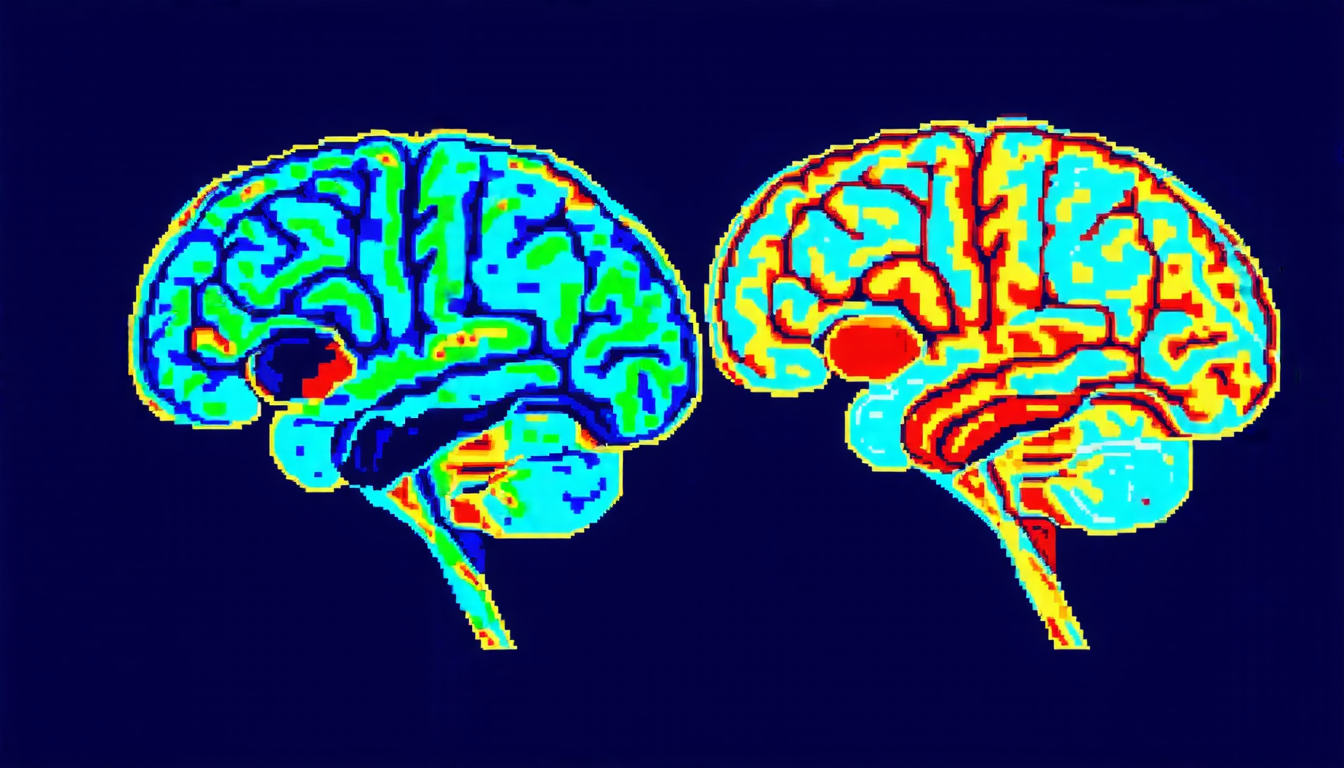
In experiments using a large dataset of brain imaging scans, the researchers found that ClusMFL significantly outperformed traditional federated learning approaches in terms of accuracy and precision. The framework was also able to learn robust representations of brain structure and function, even when only a subset of modalities were available.
The potential applications of ClusMFL are vast, particularly in healthcare where accurate diagnosis and treatment rely on access to comprehensive data. By enabling institutions to collaborate more effectively, ClusMFL could help accelerate medical research and improve patient outcomes.
Moreover, the framework’s ability to adapt to changing availability of modalities makes it a promising solution for real-world scenarios where data may be incomplete or uncertain. This could have far-reaching implications in fields such as autonomous vehicles, finance, and environmental monitoring, where accurate predictions are critical.
Overall, ClusMFL represents a significant step forward in the development of multimodal federated learning, opening up new possibilities for collaborative research and data analysis while respecting the privacy concerns that come with sharing sensitive information.
Cite this article: “Adaptive Multimodal Federated Learning Framework Improves Data Analysis in Healthcare and Beyond”, The Science Archive, 2025.
Multimodal Federated Learning, Clusmfl, Brain Imaging Scans, Machine Learning, Healthcare, Medical Research, Data Analysis, Privacy Concerns, Clustering Algorithms, Synthetic Representations.





