

Wednesday 26 March 2025
The pursuit of optimal control in complex systems is a longstanding challenge in artificial intelligence and robotics. Recently, researchers have made significant progress in this area by developing novel methods for maximizing reward functions using diffusion-based models.
At its core, the problem of optimal control involves finding the best possible sequence of actions to achieve a desired outcome while navigating uncertainty and potential constraints. This can be particularly tricky when dealing with high-dimensional state spaces or complex dynamics.
One approach that has gained popularity in recent years is the use of diffusion models, which are based on stochastic differential equations. These models have shown remarkable ability to capture complex distributions and generate realistic samples from them.
The key insight behind this research lies in recognizing that many real-world systems can be modeled as probabilistic processes. By representing these systems using diffusion models, researchers can leverage the power of deep learning to optimize control policies and maximize reward functions.
In this study, the authors propose a novel approach for optimizing diffusion-based control policies using reinforcement learning. The method involves training a policy network to predict optimal actions given a sequence of states and rewards.
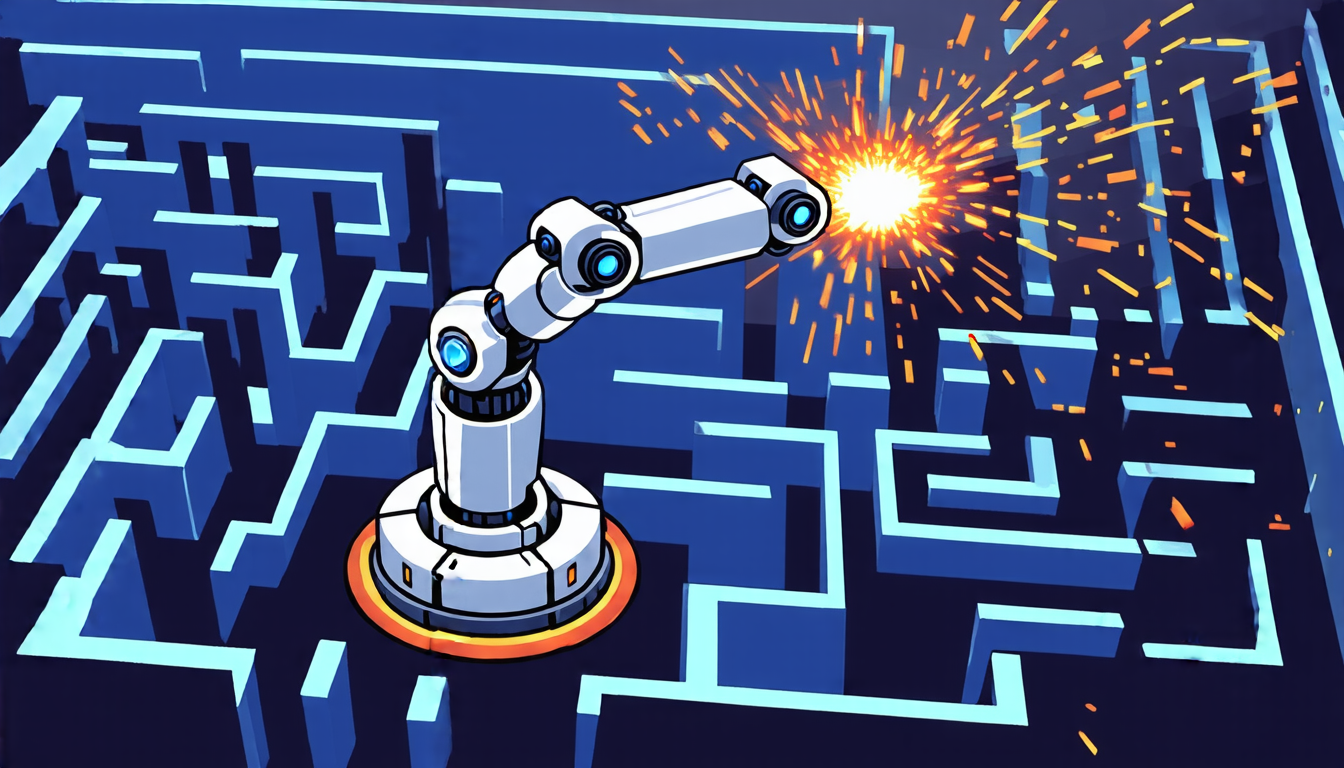
The authors demonstrate their approach on a range of challenging tasks, including robotic manipulation and navigation in complex environments. The results show significant improvements over traditional methods, with the proposed approach achieving higher returns and more efficient exploration.
One notable aspect of this research is its potential applications in real-world systems. For example, optimizing control policies for autonomous vehicles or robots could lead to safer and more efficient operation.
Furthermore, the authors’ approach has implications for other areas of artificial intelligence, such as planning and decision-making under uncertainty. By integrating diffusion models with reinforcement learning, researchers can develop more robust and effective algorithms for complex decision-making tasks.
Overall, this research represents a significant step forward in the development of optimal control methods using diffusion-based models. The proposed approach shows great promise for tackling challenging problems in robotics and artificial intelligence, and its applications are likely to be far-reaching.
Cite this article: “Optimal Control in Complex Systems: Leveraging Diffusion Models and Reinforcement Learning”, The Science Archive, 2025.
Optimal Control, Diffusion Models, Reinforcement Learning, Robotic Manipulation, Navigation, Complex Systems, Artificial Intelligence, Robotics, Autonomous Vehicles, Decision-Making.





