

Wednesday 26 March 2025
Scientists have made a significant breakthrough in developing an efficient and robust model for smoke plume segmentation, a crucial task in environmental monitoring and industrial safety. The new model, called SmokeNet, is capable of accurately identifying smoke particles in complex scenes and can be used to monitor air pollution, detect wildfires, and track hazardous material spills.
Smoke plumes are notoriously difficult to segment because they often appear as irregular shapes with varying opacities and textures. Traditional models struggle to handle these complexities, leading to inaccurate results. SmokeNet addresses this issue by incorporating multiscale convolutions and multiview linear attention mechanisms into its architecture.
The model’s ability to process images at multiple scales allows it to capture both the fine-grained details of smoke particles and the larger context in which they appear. This is particularly useful for detecting subtle changes in smoke patterns that can indicate hazardous conditions.
SmokeNet’s attention mechanism enables it to focus on specific regions of an image, such as areas with high concentrations of smoke particles. This helps the model to ignore irrelevant background information and concentrate on the task at hand.
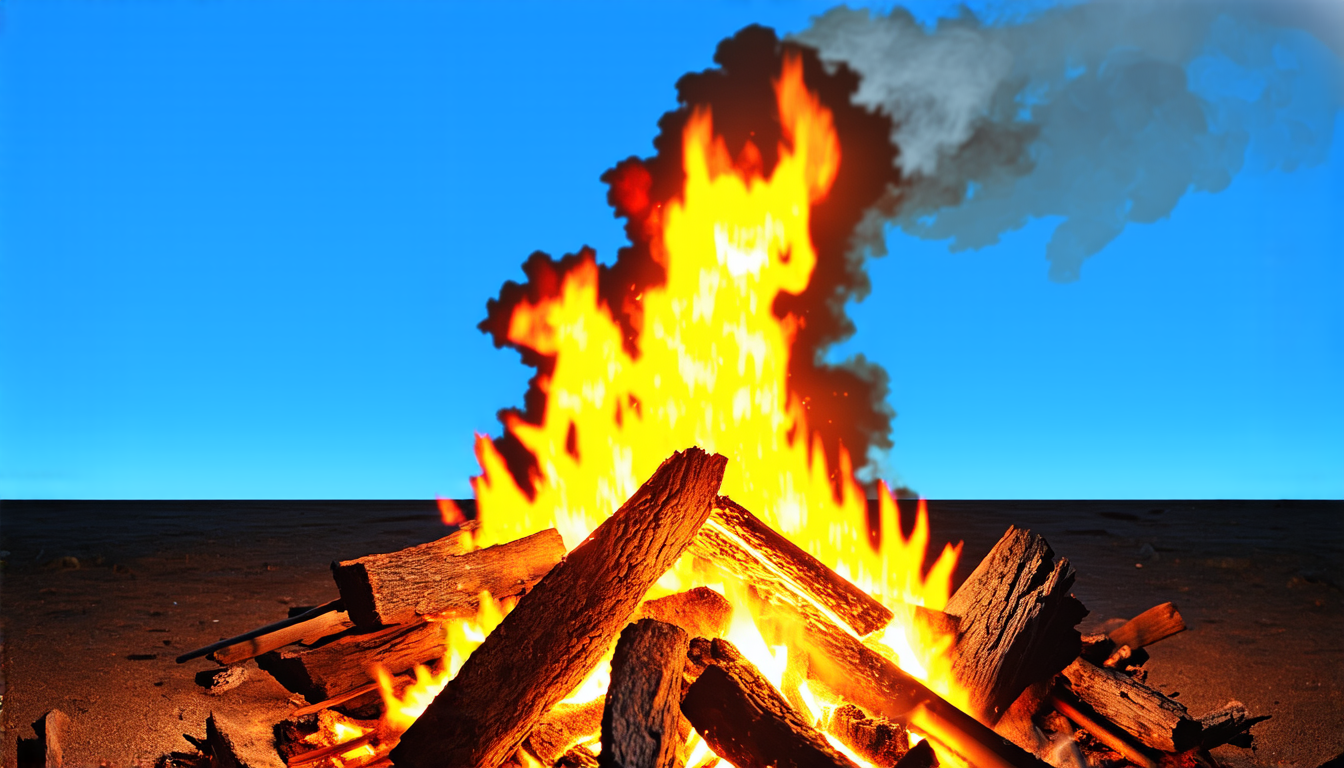
The researchers tested SmokeNet on a variety of datasets, including images of campfires, wildfires, and quarry blasts. The results showed that SmokeNet outperformed other models in terms of both accuracy and computational efficiency.
One of the most impressive aspects of SmokeNet is its ability to handle complex backgrounds, such as those with multiple textures and colors. This is particularly important in real-world scenarios where smoke plumes may appear against a variety of different backgrounds.
Another key advantage of SmokeNet is its speed. The model can process images at a rate of 77 frames per second, making it suitable for use in real-time monitoring applications. This is significantly faster than other models that are capable of achieving similar levels of accuracy.
The development of SmokeNet has significant implications for a range of fields, including environmental science, industrial safety, and disaster response. By enabling more accurate and efficient smoke plume segmentation, the model can help to improve our ability to monitor and respond to hazardous conditions.
In the future, the researchers plan to continue refining SmokeNet and exploring its potential applications. They also hope to develop new models that can build upon the successes of SmokeNet and tackle even more complex challenges in image processing.
Cite this article: “SmokeNet: A Breakthrough Model for Accurate Smoke Plume Segmentation”, The Science Archive, 2025.
Image Processing, Smoke Plume Segmentation, Environmental Monitoring, Industrial Safety, Wildfires, Hazardous Materials, Multiscale Convolutions, Multiview Linear Attention Mechanisms, Real-Time Monitoring, Computer Vision





