

Wednesday 26 March 2025
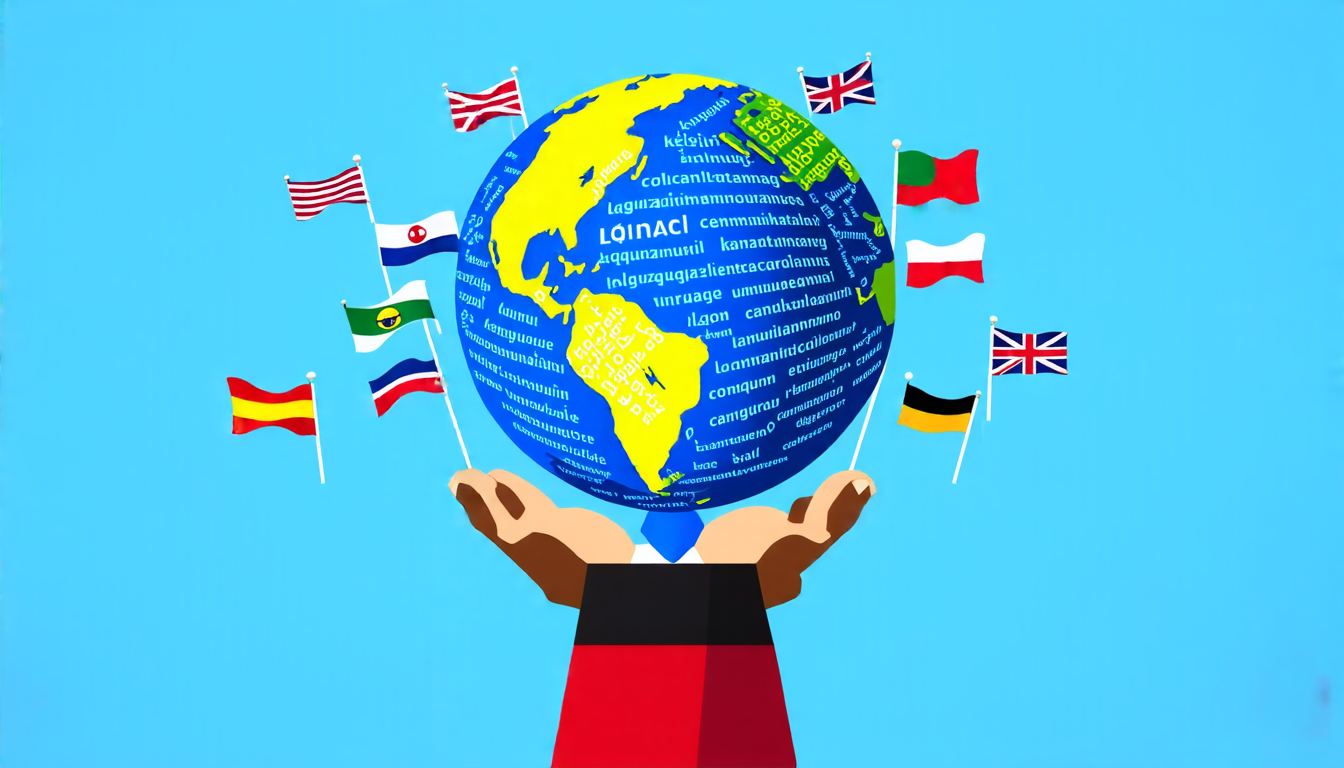
The quest for language parity has long been a challenge in the field of artificial intelligence, particularly when it comes to low-resource languages. These tongues often lack the rich digital footprint needed to train machine learning models, making them difficult to translate and understand using current techniques.
To address this issue, researchers have developed a new dataset called SMOL (Set of Maximal Over-all Leverage), which aims to provide professional-quality translations for 115 under-represented languages. This is no small feat, considering that many of these languages do not even have token-level translations available.
SMOL consists of two main components: SMOLSENT and SMOLDOC. The former is a collection of sentence pairs, carefully chosen to cover the most common English tokens. The latter, on the other hand, comprises documents translated into various languages, focusing on broad topic coverage.
The dataset was designed with maximum impact in mind, using a combination of human translation and machine learning algorithms to generate high-quality content. This approach not only provides accurate translations but also helps to alleviate the workload for human translators, allowing them to focus on more complex tasks.
One of the key benefits of SMOL is its ability to bridge the gap between low-resource languages and the digital world. By providing professional-quality translations, researchers hope to enable machine learning models to better understand and interact with these languages, ultimately improving language translation and processing capabilities.
The dataset’s potential applications are vast, ranging from natural language processing and machine translation to speech recognition and language generation. For instance, SMOL could be used to improve the accuracy of automatic translation services, making it easier for people to communicate across linguistic barriers.
The impact of SMOL goes beyond the realm of technology, too. By providing a platform for low-resource languages to be represented online, researchers hope to promote cultural preservation and exchange. This could lead to a greater understanding and appreciation of diverse cultures worldwide, ultimately fostering global cooperation and collaboration.
While SMOL is a significant step forward in addressing the challenges faced by low-resource languages, there is still much work to be done. The dataset’s creators plan to continue expanding its scope, incorporating more languages and translation pairs to further bridge the gap between humans and machines.
As researchers continue to push the boundaries of language understanding and processing, SMOL serves as a testament to the power of collaboration and innovation.
Cite this article: “SMOL: A Revolutionary Dataset for Low-Resource Languages”, The Science Archive, 2025.
Artificial Intelligence, Language Parity, Low-Resource Languages, Machine Learning Models, Translation, Dataset, Smol, Natural Language Processing, Machine Translation, Cultural Preservation





