

Wednesday 26 March 2025
A team of researchers has made significant strides in developing a new control strategy for systems with limited computational resources, paving the way for more efficient and reliable operation in industries such as aerospace and manufacturing.
The study, published in a recent issue of a leading scientific journal, presents a novel approach to model predictive control (MPC) that addresses the challenges posed by increasingly complex systems. MPC is a powerful tool used to optimize performance while ensuring safety and stability, but its reliance on online optimization can be computationally intensive, making it unsuitable for systems with limited processing power.
To overcome this limitation, the researchers adopted a tube-based design framework, which decouples nominal trajectory optimization from robust control synthesis. This allowed them to develop a steady-state-aware MPC that not only ensures output tracking and convergence to a desired configuration but also maintains constraint satisfaction at all times without adding extra computational load.
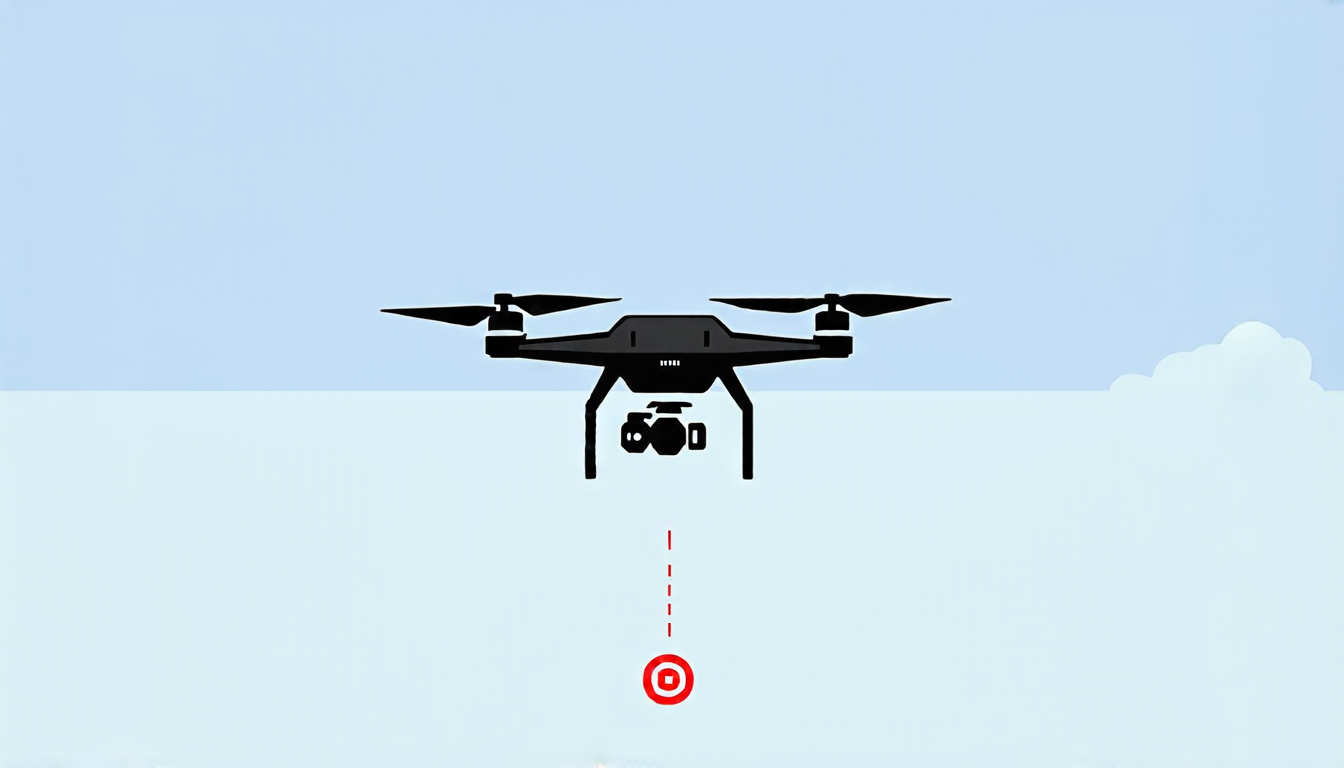
The team tested their approach using a Parrot Bebop 2 drone as a case study, simulating various scenarios with different disturbance magnitudes. The results showed that the proposed methodology effectively guided the drone to its target location while consistently satisfying state and input constraints, even in the presence of external disturbances.
One of the key advantages of this new approach is its ability to provide robustness against uncertainties and disturbances, which is critical for many real-world applications. By incorporating a tube-based design framework, the researchers were able to ensure that their MPC scheme remained stable and effective even when faced with unexpected changes or perturbations.
The study’s findings have significant implications for industries that rely on complex systems with limited computational resources. Aerospace engineers, for example, could use this approach to develop more efficient control strategies for spacecraft or aircraft, while manufacturing professionals might apply it to optimize production lines or supply chains.
Moreover, the researchers’ work highlights the potential benefits of integrating robustness and stability considerations into MPC design. By explicitly addressing uncertainties and disturbances, they were able to create a more resilient and reliable control strategy that can adapt to changing conditions.
As technology continues to evolve and systems become increasingly complex, the need for efficient and effective control strategies will only grow. The researchers’ innovative approach offers a promising solution to this challenge, paving the way for more robust and reliable operation in a wide range of industries.
Cite this article: “Efficient Control Strategies for Complex Systems with Limited Computational Resources”, The Science Archive, 2025.
Model Predictive Control, Limited Computational Resources, Aerospace, Manufacturing, Tube-Based Design Framework, Robustness, Stability, Uncertainty, Disturbance, Mpc Design.





