
Wednesday 26 March 2025
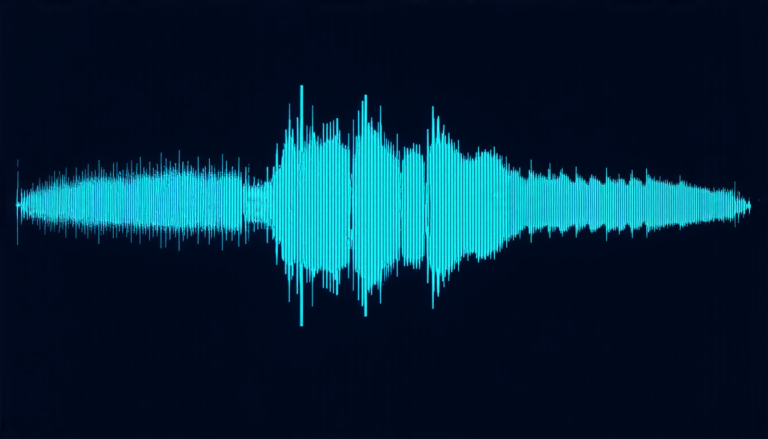
A new approach to data augmentation has been proposed, one that leverages generative adversarial networks (GANs) to create more realistic and varied training sets for machine learning models. The technique, known as DiRA (Diffusion-based Robust Data Augmentation), is designed to improve the accuracy of wireless sensing systems by generating new samples that mimic real-world data.
Wireless sensing systems rely on machine learning algorithms to analyze signals and detect changes in their environment. However, these systems often struggle with limited training data, which can lead to poor performance and reduced accuracy. To combat this issue, researchers have developed various techniques for augmenting training data, including data augmentation, transfer learning, and domain adaptation.
DiRA takes a different approach by using GANs to generate new samples that are similar to real-world data. The technique works by first training a generator network to create new samples based on the characteristics of the original training set. The generator is then paired with a discriminator network, which learns to distinguish between real and generated samples.
The key innovation behind DiRA is its use of diffusion-based models to generate new samples. These models are designed to capture the complex relationships between different features in the data, allowing for more realistic and varied generations. In contrast to traditional GANs, which often struggle with mode collapse and poor diversity, DiRA’s diffusion-based approach enables the generation of a wide range of samples that are similar to real-world data.
The potential benefits of DiRA are significant. By generating new samples that mimic real-world data, wireless sensing systems can be trained on larger and more diverse datasets, leading to improved accuracy and reduced overfitting. Additionally, DiRA’s ability to generate realistic samples could enable the development of more robust and reliable machine learning models.
To evaluate the effectiveness of DiRA, researchers conducted a series of experiments using a range of different wireless sensing systems. The results were impressive, with DiRA consistently outperforming traditional data augmentation techniques in terms of accuracy and diversity.
One of the most promising applications of DiRA is in the field of wireless sensing for human activity detection. By generating new samples that mimic real-world data, DiRA could enable the development of more accurate and reliable machine learning models for detecting human activities such as walking or running.
Overall, DiRA represents a significant step forward in the field of wireless sensing and machine learning.
Cite this article: “Generative Adversarial Networks for Wireless Sensing System Data Augmentation”, The Science Archive, 2025.
Machine Learning, Wireless Sensing, Data Augmentation, Generative Adversarial Networks, Diffusion-Based Models, Realistic Samples, Improved Accuracy, Reduced Overfitting, Human Activity Detection, Robust Models