
Wednesday 26 March 2025
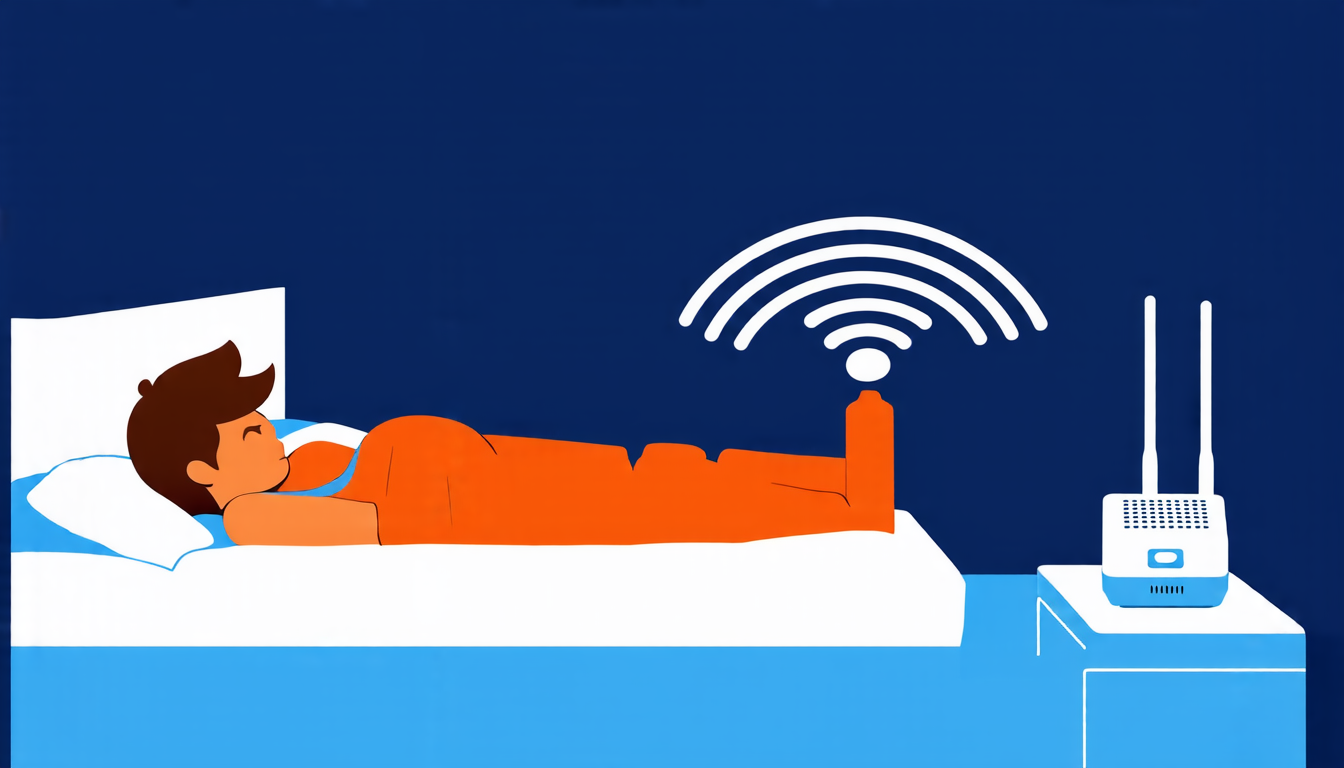
Researchers have made significant progress in developing a system that can accurately detect a person’s breathing rate using wireless signals emitted by WiFi routers. The new method, called ComplexBeat, uses channel state information (CSI) to track vital signs, offering a non-invasive and cost-effective way to monitor respiratory health.
The study builds upon previous work in the field, which has shown that CSI can be used to detect movement and even heartbeats using off-the-shelf WiFi devices. However, detecting breathing rates was previously limited by the noise and interference present in wireless signals.
To overcome this challenge, the researchers developed a calibration method that corrects for amplitude and phase distortions in the CSI data. This involves identifying and removing linear components of the signal, which can be caused by various factors such as antenna imperfections or environmental influences.
The calibrated CSI data is then transformed into the delay domain, where it is analyzed using a technique called dominant path-based filtering. This process helps to extract relevant features of the signal that are related to breathing rates, such as changes in amplitude and phase over time.
The researchers tested their system on a dataset collected from patients with varying breathing rates, ranging from 0.2 to 0.5 Hz (12-30 beats per minute). The results showed that ComplexBeat was able to accurately estimate breathing rates with an error of less than 1 beat per minute for most samples.
Compared to previous methods, ComplexBeat offers several advantages. For one, it does not require any specialized equipment or training, making it a more accessible solution for healthcare professionals and patients alike. Additionally, the system is non-invasive and can be used in real-time, allowing for continuous monitoring of respiratory health.
The potential applications of ComplexBeat are vast. In hospitals, it could be used to monitor patients’ vital signs remotely, reducing the need for frequent hospital visits and improving patient care. In clinics, it could help healthcare professionals diagnose respiratory disorders more effectively, enabling early intervention and treatment.
Furthermore, ComplexBeat has the potential to revolutionize home healthcare by providing a simple and affordable way to monitor respiratory health in the comfort of one’s own home. This could be especially beneficial for patients with chronic conditions such as COPD or asthma, who may require frequent monitoring to manage their symptoms effectively.
While there is still much work to be done to refine the system, the results of this study are promising and demonstrate the potential of wireless signals to revolutionize healthcare.
Cite this article: “Wireless Signals Used to Monitor Respiratory Health with High Accuracy”, The Science Archive, 2025.
Wifi, Breathing Rate, Respiratory Health, Non-Invasive, Cost-Effective, Vital Signs, Channel State Information, Csi, Wireless Signals, Healthcare.