

Wednesday 26 March 2025
In a recent study, researchers have shed new light on the intricate dance between social networks and our ability to learn from them. By analyzing complex systems of interconnected nodes, scientists have discovered that even seemingly simple networks can harbor hidden complexities that impact our capacity for truth-seeking.
At its core, the research revolves around the concept of network learning, where individual nodes – or agents – make decisions based on information they receive from their neighbors. In this context, accuracy and consistency are crucial, as a single misstep can have far-reaching consequences throughout the network.
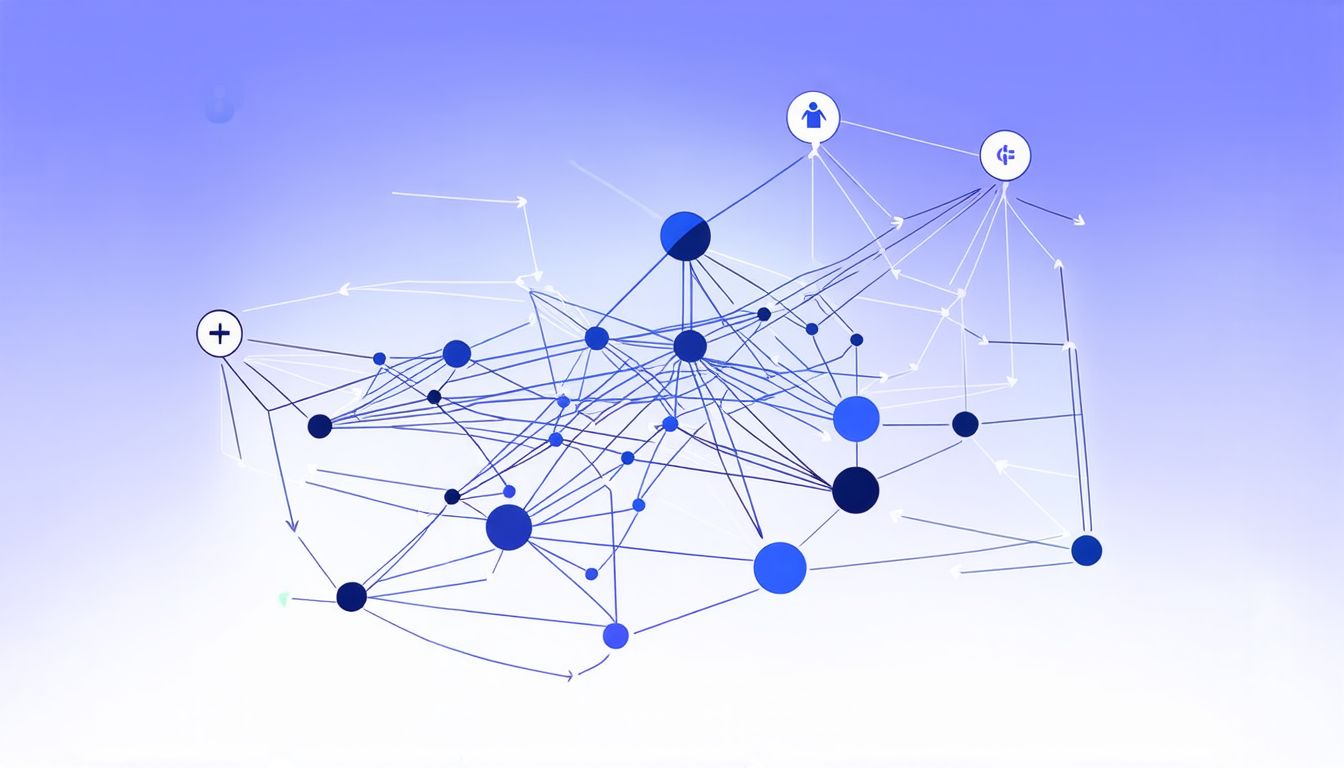
To better understand these dynamics, researchers constructed a series of artificial networks, comprising variable gadgets (representing individual opinions) and clause gadgets (symbolizing collective agreements). By carefully tuning the parameters of these networks, scientists were able to simulate various scenarios, including those where the truth is known and others where it’s hidden.
One key finding was that even when all nodes possess identical information, the ordering in which they receive this data can significantly impact the network’s overall learning rate. Specifically, researchers discovered that an optimal decision ordering – one that respects the partial ordering induced by a maximal assignment (essentially, the most accurate arrangement) – can boost the network’s cumulative learning rate.
But what about networks where the truth is not universally known? Here, the picture becomes more nuanced. In such cases, the learning rate of the network is influenced by the number of satisfied clauses (i.e., agreements among agents). The researchers found that when a formula is satisfiable – meaning there exists an assignment that makes all clauses true – the optimal decision ordering can lead to a higher cumulative learning rate.
On the other hand, when a formula is not satisfiable, the network’s learning rate is capped by a lower bound. In this scenario, even the optimal decision ordering cannot overcome the inherent contradictions within the network.
The implications of these findings are far-reaching. By understanding how social networks process and disseminate information, researchers can better design systems that facilitate truth-seeking and reduce the spread of misinformation. Moreover, the study’s insights into the interplay between network structure and learning behavior may have significant applications in fields such as epidemiology, where accurate knowledge is critical for effective disease control.
Ultimately, this research highlights the intricate dance between social networks and our capacity for truth-seeking.
Cite this article: “Network Learning Dynamics: Unpacking the Complexities of Social Information Dissemination”, The Science Archive, 2025.
Social Networks, Learning Rate, Network Structure, Decision Ordering, Artificial Networks, Node Agents, Information Dissemination, Truth-Seeking, Misinformation, Epidemiology





