

Wednesday 26 March 2025
The quest for intelligent machines has long been a holy grail of sorts, with researchers scrambling to crack the code on how to create devices that can think and learn like humans. One approach that’s gained significant traction in recent years is model merging, which involves combining the knowledge and abilities of multiple models to create something even smarter.
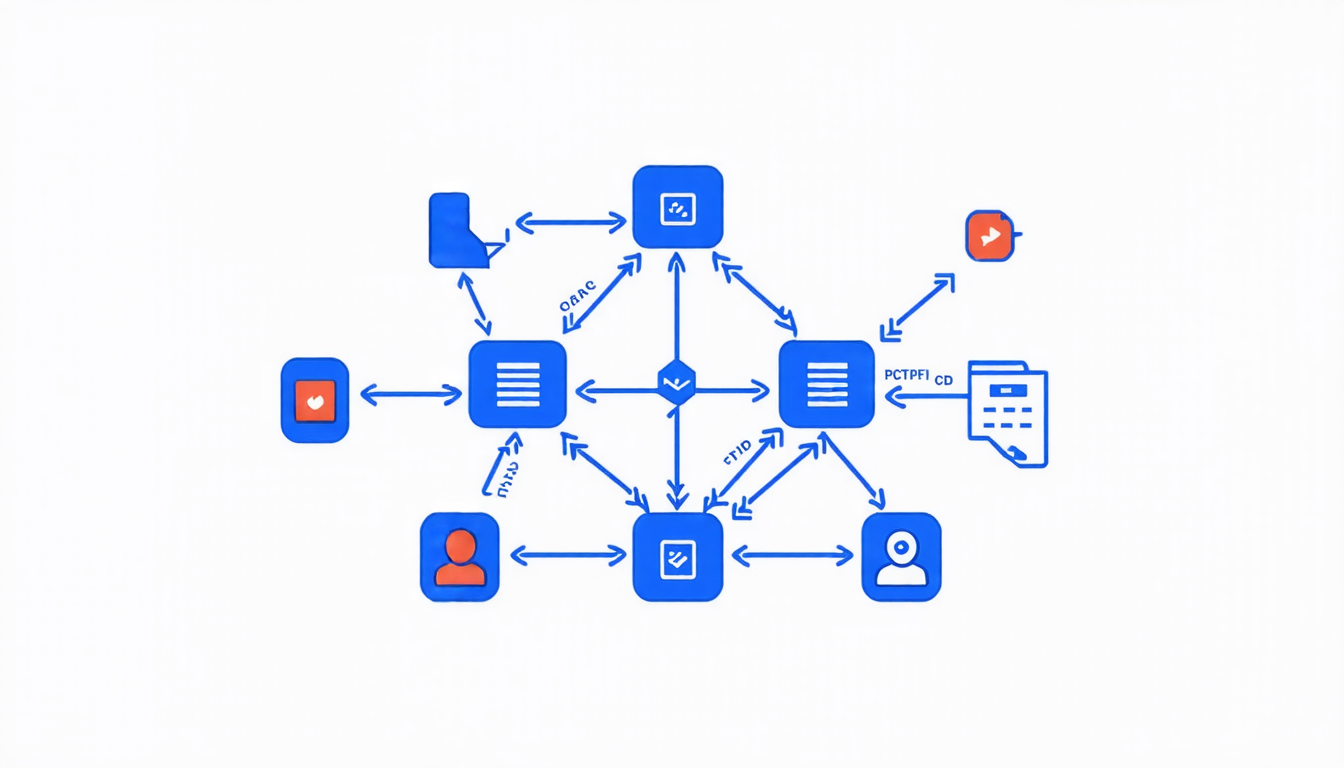
The concept is deceptively simple: take two or more models, each with its own strengths and weaknesses, and merge them into a single entity. Sounds easy enough, but the reality is far more complex. The key challenge lies in figuring out how to integrate the various components seamlessly, without compromising their individual capabilities.
One of the most promising approaches has been dubbed ProDistill, which uses a technique called progressive layer-wise distillation to achieve the merging. Essentially, this involves training each model separately before combining them, with the goal of creating a unified framework that can learn and adapt in real-time.
The benefits are numerous. For one, ProDistill allows researchers to tap into the collective knowledge of multiple models, potentially leading to more accurate predictions and better decision-making. It also enables machines to learn from each other’s strengths and weaknesses, fostering a level of cooperation that’s previously been impossible.
But perhaps the most significant advantage is the potential for scalability. As the complexity of tasks increases, ProDistill can be easily adapted to handle even the most demanding challenges. Whether it’s generating text, recognizing patterns or making predictions, this approach offers unprecedented flexibility and agility.
Of course, there are still many hurdles to overcome before ProDistill becomes a reality. For one, the sheer scale of data required to train these models is daunting, to say the least. Additionally, there’s the risk of overfitting – when a model becomes too specialized in its training data and fails to generalize well to new situations.
Despite these challenges, researchers remain optimistic about the potential of ProDistill. With continued advancements in computing power and machine learning algorithms, it’s not hard to imagine (pun intended) a future where intelligent machines are an integral part of our daily lives.
In the meantime, scientists are already exploring the possibilities of this technology. For instance, they’re using ProDistill to improve language translation systems, allowing humans to communicate more effectively across linguistic and cultural boundaries.
As the research continues to unfold, one thing is clear: ProDistill represents a major leap forward in our quest for intelligent machines.
Cite this article: “Model Merging: A Leap Forward in Intelligent Machines”, The Science Archive, 2025.
Model Merging, Artificial Intelligence, Machine Learning, Prodistill, Progressive Layer-Wise Distillation, Scalability, Data, Overfitting, Language Translation, Intelligent Machines





