

Wednesday 26 March 2025
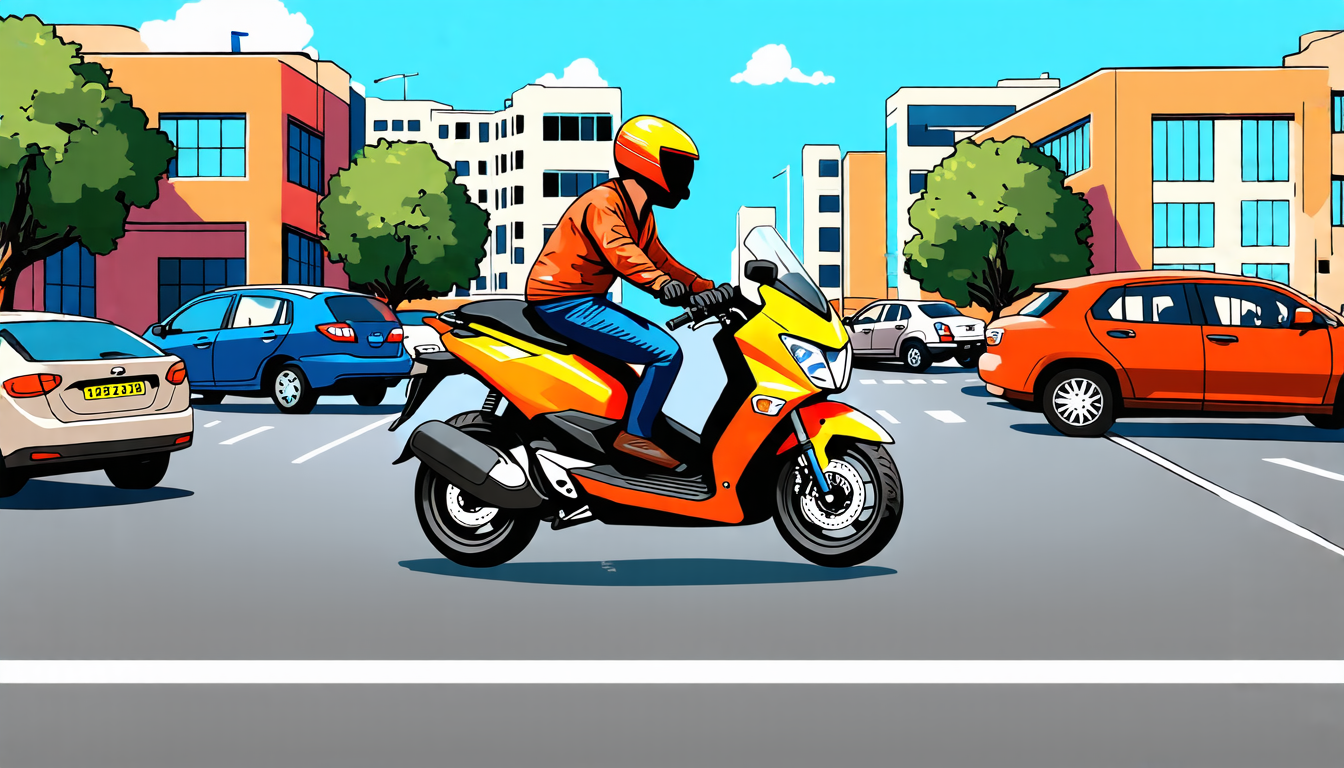
A new dataset has been created that aims to improve our understanding of how drivers in India navigate complex traffic environments. The myEye2Wheeler dataset is a collection of eye-tracking data gathered from Indian two-wheeler drivers, providing a unique perspective on how they allocate their attention while driving.
The dataset was collected using wearable eye trackers, which recorded the gaze patterns of 40 participants as they navigated through a busy urban road in Hyderabad. The route included various traffic scenarios, such as intersections, pedestrian crossings, and narrow lanes, mimicking real-life conditions.
One of the key challenges in developing driver assistance systems is understanding how drivers process visual information while driving. Traditional datasets have focused on four-wheeler drivers, which can limit their applicability to Indian roads where two-wheelers are a dominant mode of transport. The myEye2Wheeler dataset aims to address this gap by providing a comprehensive look at how two-wheeler drivers interact with their environment.
The dataset includes 261,073 frames of video, each annotated with the participant’s gaze direction. This information can be used to develop saliency models that predict where drivers are likely to focus their attention. The authors are already working on developing a specialized model tailored to Indian traffic conditions, which could improve the accuracy of predictions.
The myEye2Wheeler dataset also highlights the importance of context-aware approaches in driver assistance systems. Traditional models trained on datasets from Western countries may not generalize well to Indian roads, where driving behaviors and road infrastructure differ significantly. By developing models that take into account local traffic conditions, it is possible to improve the safety and efficiency of two-wheeler drivers.
The dataset has several limitations, including a skewed gender distribution among participants and limited data collection hours. However, these limitations do not detract from the significance of the myEye2Wheeler dataset in providing new insights into driver behavior in Indian traffic environments.
Overall, the myEye2Wheeler dataset is an important step towards improving our understanding of how two-wheeler drivers navigate complex traffic scenarios. By developing context-aware models that take into account local conditions, it may be possible to improve road safety and reduce accidents. The dataset has significant implications for the development of driver assistance systems in India and other countries with similar traffic environments.
Cite this article: “myEye2Wheeler Dataset: A New Perspective on Driver Behavior in Indian Traffic Environments”, The Science Archive, 2025.
Eye-Tracking, Myeye2Wheeler Dataset, Indian Drivers, Two-Wheeler, Traffic Navigation, Gaze Patterns, Driver Assistance Systems, Saliency Models, Road Safety, Indian Roads





