

Wednesday 26 March 2025
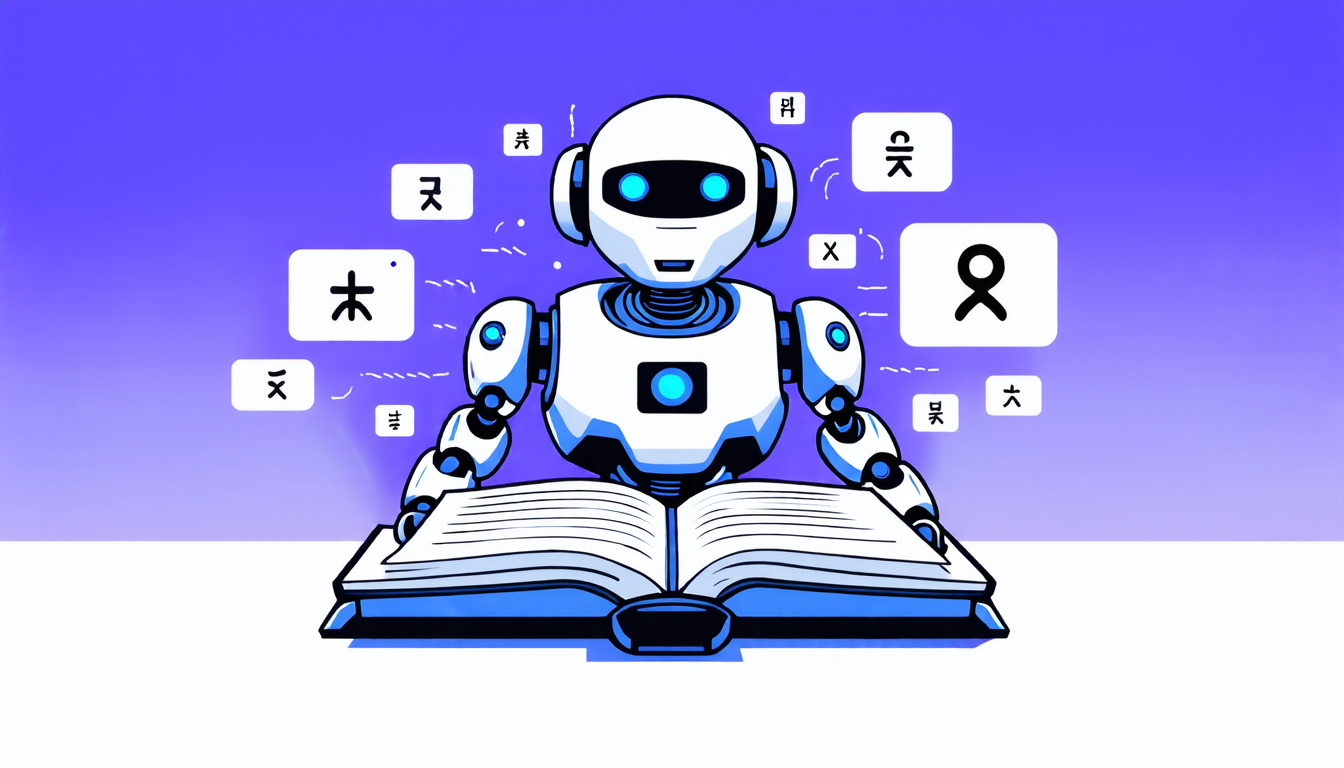
Artificial Intelligence has come a long way since its inception, and one of the most significant advancements in recent years is the development of Transformers, a type of neural network that has revolutionized the field of Natural Language Processing (NLP). The Transformer model was first introduced in 2017 by Vaswani et al. and has since become a staple in many AI applications.
The key innovation behind the Transformer is its ability to process sequential data, such as sentences or paragraphs, without relying on traditional recurrent neural networks (RNNs) or convolutional neural networks (CNNs). Instead, the Transformer uses self-attention mechanisms to weigh the importance of different words or tokens in a sequence, allowing it to capture long-range dependencies and contextual relationships.
One of the major challenges facing AI researchers is the need for efficient processing of large amounts of data. As data sets grow in size and complexity, traditional methods become increasingly slow and inefficient. The Transformer model addresses this issue by leveraging parallelization and matrix multiplication to speed up computation.
However, as powerful as the Transformer is, it has one significant limitation: its computational requirements make it difficult to train on large datasets using common hardware configurations. This has led researchers to develop new optimization techniques, such as those presented in a recent paper by Dao et al., which aim to reduce the memory footprint and computational costs associated with training Transformers.
The authors of this paper propose a novel approach called SparkAttention, which leverages the Tensor Core Units (TCUs) on NVIDIA Volta GPUs to accelerate the computation of attention mechanisms. By using TCU’s matrix multiplication capabilities, SparkAttention achieves significant speedups compared to traditional methods, making it possible to train large Transformers models in a reasonable amount of time.
The researchers also experimented with different hardware configurations and found that SparkAttention can be easily adapted to other GPU architectures, including AMD and Huawei Ascend NPU. This makes the approach more versatile and applicable to a wider range of AI applications.
The implications of this research are far-reaching. With faster and more efficient training methods, AI developers will be able to create more accurate and robust models that can handle increasingly complex tasks. This could lead to breakthroughs in areas such as language translation, text summarization, and even dialogue systems.
As the field of AI continues to evolve, it’s exciting to think about the possibilities that SparkAttention and other optimization techniques hold.
Cite this article: “Accelerating Transformers: A Novel Approach to Efficient Training”, The Science Archive, 2025.
Artificial Intelligence, Natural Language Processing, Transformer, Neural Network, Self-Attention Mechanism, Parallelization, Matrix Multiplication, Gpu Acceleration, Optimization Techniques, Deep Learning





