

Wednesday 26 March 2025
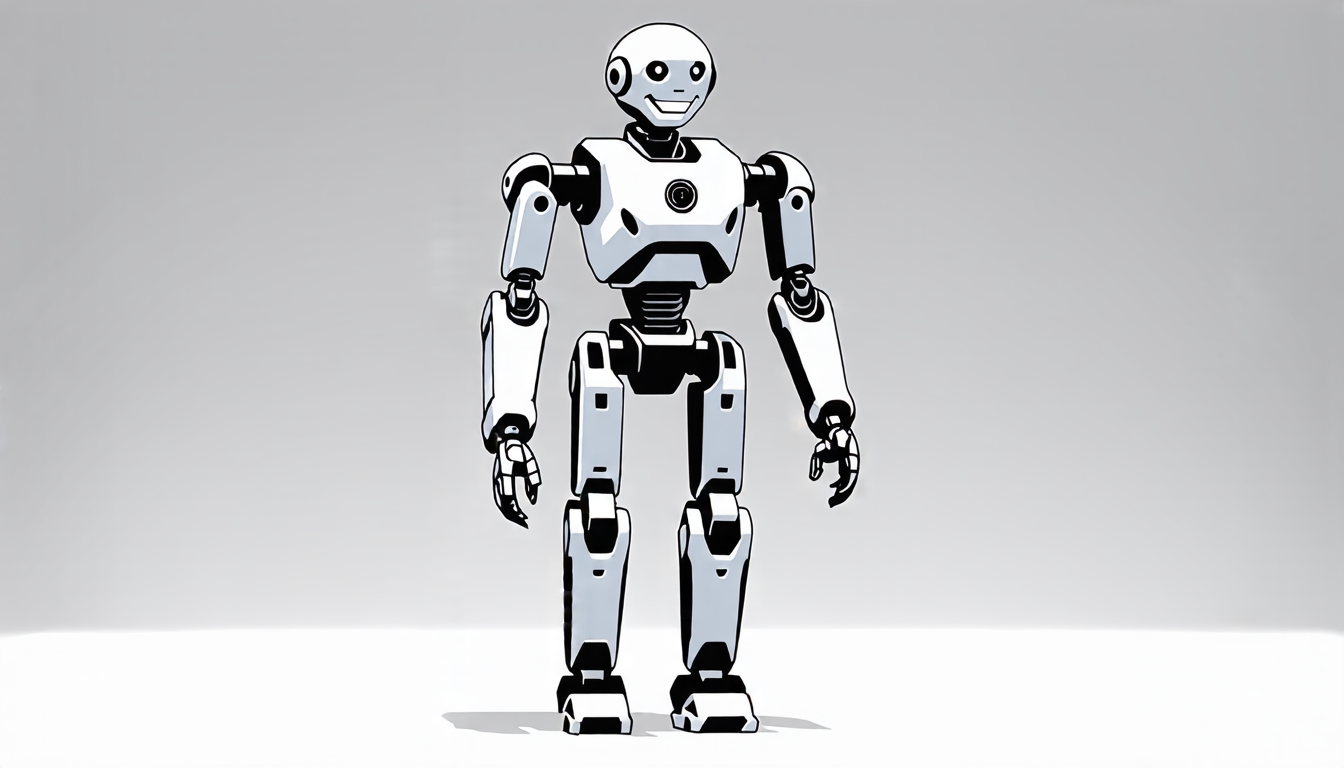
The pursuit of creating a humanoid robot that can mimic human movement and flexibility has long been a holy grail for robotics engineers. For decades, researchers have been working tirelessly to develop machines that can replicate the intricate movements of the human body, but with limited success. That is, until now.
A team of scientists has made significant strides in developing a musculoskeletal humanoid robot that can move and function like its human counterpart. The key innovation lies in the design of the robot’s muscles, which are arranged in a way that allows them to work together seamlessly to generate movement.
Traditionally, robots have relied on rigid joints and fixed actuators to control their movements. This approach has limitations, as it restricts the range of motion and can result in stiff, unnatural movements. In contrast, humans have a unique advantage – their muscles are capable of working together in harmony to produce a wide range of motions.
The new robot, developed by researchers at the University of Tokyo, uses a novel design that mimics this human approach. The robot’s muscles are arranged in a way that allows them to work together to generate movement, much like our own muscles do. This means that the robot can move its joints in a more natural and fluid way, with a greater range of motion than previous robots.
But how does it work? According to the researchers, the key lies in the design of the muscle arrangement. The muscles are arranged in a way that allows them to work together to generate movement, rather than relying on rigid joints or fixed actuators. This approach allows the robot to move its joints in a more natural and fluid way, with a greater range of motion.
The implications of this innovation are significant. For one, it could revolutionize the field of robotics, allowing robots to perform tasks that were previously thought impossible. Imagine being able to build a robot that can climb stairs, or perform delicate surgical procedures – all without the need for complex and expensive mechanisms.
But beyond its potential applications in robotics, this innovation also holds significant promise for fields such as medicine and rehabilitation. For example, it could enable the development of prosthetic limbs that are capable of mimicking human movement, allowing individuals with paralysis or amputations to regain mobility and independence.
The researchers’ approach is not without its challenges, however. Developing a robot that can mimic human movement requires a deep understanding of human anatomy and physiology – as well as significant advances in materials science and robotics engineering.
Despite these challenges, the potential rewards are substantial.
Cite this article: “Breakthrough in Humanoid Robotics: A Musculoskeletal Revolution”, The Science Archive, 2025.
Humanoid Robot, Musculoskeletal, Robotics, Muscles, Joints, Actuators, Movement, Flexibility, Prosthetic Limbs, Rehabilitation





