
Wednesday 26 March 2025
EEG signals are notoriously tricky to decipher, but a new approach is offering hope for better diagnosing and treating epilepsy. Researchers have developed a method that combines dimensionality reduction and persistent homology to extract meaningful features from electroencephalography data.
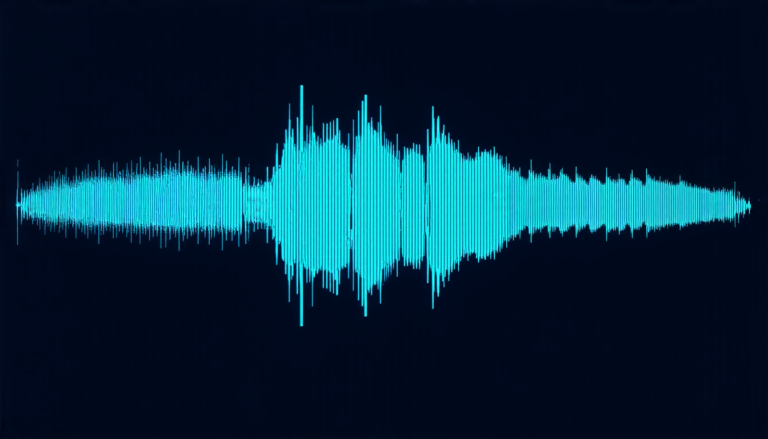
The key challenge in analyzing EEG signals lies in their sheer volume and complexity. With hundreds of channels capturing brain activity over time, it’s like trying to make sense of a chaotic storm. Conventional methods often rely on statistical techniques or machine learning algorithms, but these can be limited by their assumptions about the underlying structure of the data.
The new approach takes a different tack. By using dimensionality reduction techniques, such as Dynamical Component Analysis (DyCA) and Principal Component Analysis (PCA), researchers can condense the vast amounts of data into more manageable 3D trajectories. These trajectories capture the dynamic patterns in brain activity that are often lost when looking at individual channels or time points.
But here’s where things get really interesting. The researchers then use persistent homology to analyze these 3D trajectories. This technique is borrowed from the field of topology, which studies the properties of shapes and spaces. By applying it to EEG data, researchers can identify topological features that are unique to specific brain states or events.
In this study, the researchers focused on Interictal Epileptic Discharges (IEDs), which are brief periods of abnormal brain activity that occur between seizures. They used EEG recordings from patients with epilepsy and applied their method to extract meaningful features from these signals. The resulting features were then fed into a machine learning algorithm to classify the data as either IEDs or background activity.
The results are promising: the approach was able to accurately distinguish between IEDs and background activity, even when using a small number of channels. This could potentially lead to more accurate diagnoses and better treatment outcomes for patients with epilepsy.
So what does this mean for epilepsy research? For one, it opens up new avenues for analyzing EEG data and identifying patterns that might not be apparent through traditional methods. It also suggests that topological features may play a crucial role in understanding brain activity and its relationship to epilepsy.
The implications are far-reaching, too. As researchers continue to develop this approach, it could potentially be applied to other areas of neuroscience, such as studying brain development or monitoring neurological disorders like Alzheimer’s disease.
In short, this new method offers a powerful tool for unlocking the secrets of EEG signals and improving our understanding of the brain.
Cite this article: “Deciphering EEG Signals with Topological Analysis”, The Science Archive, 2025.
Eeg, Epilepsy, Dimensionality Reduction, Persistent Homology, Topology, Machine Learning, Brain Activity, Neurology, Seizures, Diagnosis