

Wednesday 26 March 2025
The quest for a better way to analyze complex data has led researchers down many paths, but a new approach may have just emerged as the most promising yet. By combining two existing methods, scientists have created an algorithm that can learn the best parameters from infinitely large semi-supervised learning families with provable guarantees.
Semi-supervised learning is a type of machine learning where some data is labeled and some isn’t. This can be particularly useful when dealing with large datasets, as it allows for more efficient use of resources. However, traditional methods often rely on heuristics or rules-of-thumb to determine the best approach, which can lead to suboptimal results.
The new algorithm, dubbed Graph-Based Semi-Supervised Learning, addresses this issue by providing a theoretically principled way to select hyperparameters from infinitely large families of algorithms. This allows for more accurate and efficient learning, even in situations where traditional methods would struggle.
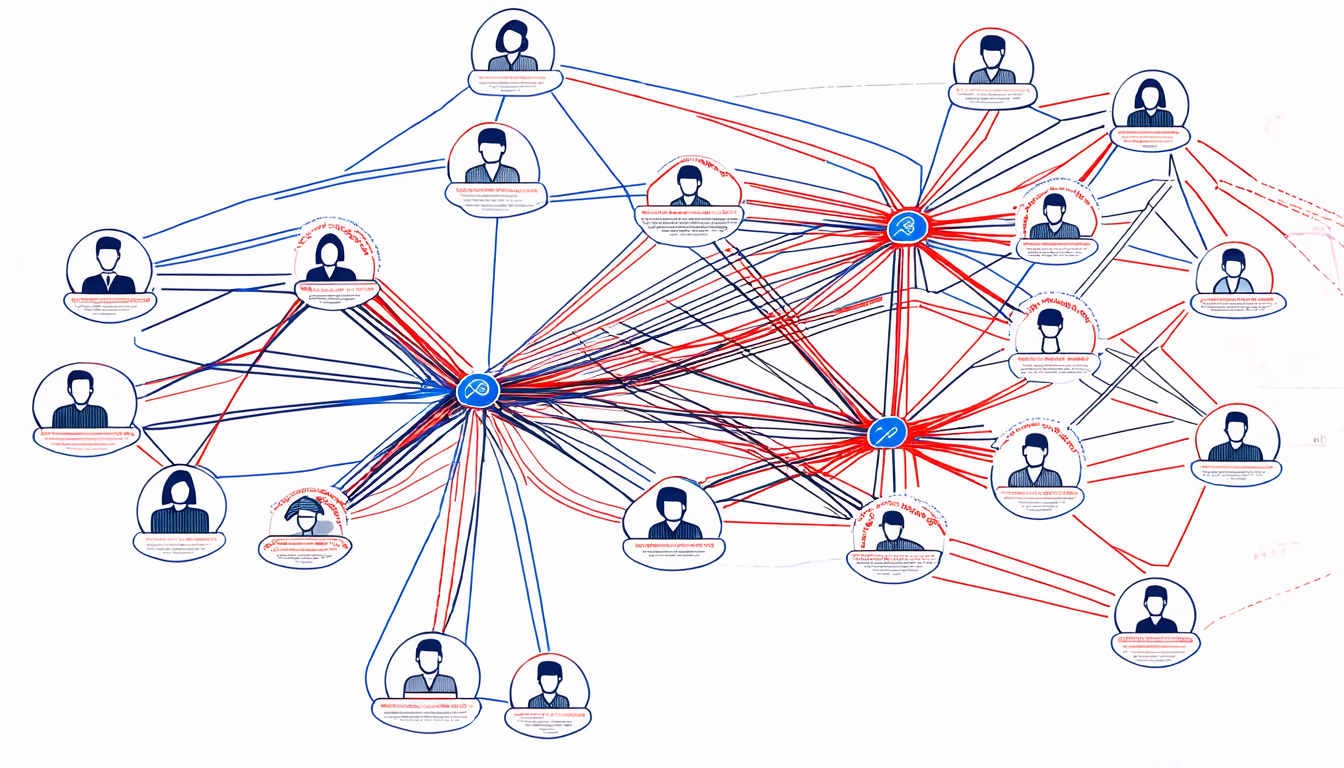
One of the key innovations behind this approach is its ability to handle complex data structures, such as graphs. These networks can represent relationships between different pieces of information, making them particularly useful for modeling social networks, biological systems, or other complex systems.
The algorithm works by first designing a graph that captures the underlying structure of the data. This is done by selecting which pairs of nodes have edges between them and how these edges are weighted. Next, it uses a label propagation-based method to propagate labels from labeled nodes to unlabeled ones.
But here’s where things get interesting. The algorithm doesn’t stop there. It also incorporates an interpolation strategy that combines two existing methods: graph convolutional neural networks (GCNs) and graph attention networks (GATs). GCNs are particularly good at handling node-level features, while GATs excel at capturing relationships between nodes.
By combining these two approaches, the algorithm can learn to select the best parameters for each specific dataset. This is done by tuning a hyperparameter called η, which controls how much of each method is used. The result is an algorithm that can adapt to different data structures and learning tasks with remarkable flexibility.
Experiments have shown that this approach outperforms traditional methods on several benchmark datasets, including those from the fields of computer vision, natural language processing, and bioinformatics. In some cases, it even surpasses the performance of state-of-the-art models.
The implications of this research are significant.
Cite this article: “Graph-Based Semi-Supervised Learning Algorithm Breakthrough”, The Science Archive, 2025.
Machine Learning, Semi-Supervised Learning, Graph-Based Algorithms, Hyperparameter Tuning, Interpolation Strategy, Graph Convolutional Neural Networks, Graph Attention Networks, Label Propagation, Complex Data Structures, Infinitely Large Families Of Algorithms.





