

Wednesday 26 March 2025
A team of researchers has developed a new way to represent complex shapes, allowing for more accurate and efficient reconstruction, generation, and manipulation of objects in computer simulations.
The approach, called PartSDF, is an extension of implicit neural representations, which have been used to model simple shapes such as spheres and cubes. However, these methods struggle when dealing with composite shapes, made up of multiple parts that interact with each other.
PartSDF addresses this challenge by introducing a part-based representation, where the shape is broken down into individual components, known as parts. Each part has its own latent vector, which captures its unique characteristics and relationships with other parts. This allows for more accurate reconstruction of complex shapes, even when they have intricate details such as thin features or holes.
The researchers tested PartSDF on a range of datasets, including cars, mixers, and chairs, and found that it outperformed existing methods in terms of shape accuracy and part coherence. For example, the model was able to accurately reconstruct the shape of a car, complete with its intricate body panels and wheel wells.
PartSDF also enables efficient generation of new shapes by sampling from the part latent space. This allows for rapid creation of diverse and realistic objects, which could be used in fields such as computer-aided design, animation, or product design.
In addition to reconstruction and generation, PartSDF also supports manipulation of existing shapes. By modifying the latent vectors of individual parts, the model can create new variations of an object while preserving its overall structure and coherence.
One potential application of PartSDF is in the field of aerodynamics, where accurate simulation of complex shapes is crucial for optimizing aircraft design. The model could be used to quickly generate and test different shape variants, allowing engineers to optimize their designs more efficiently.
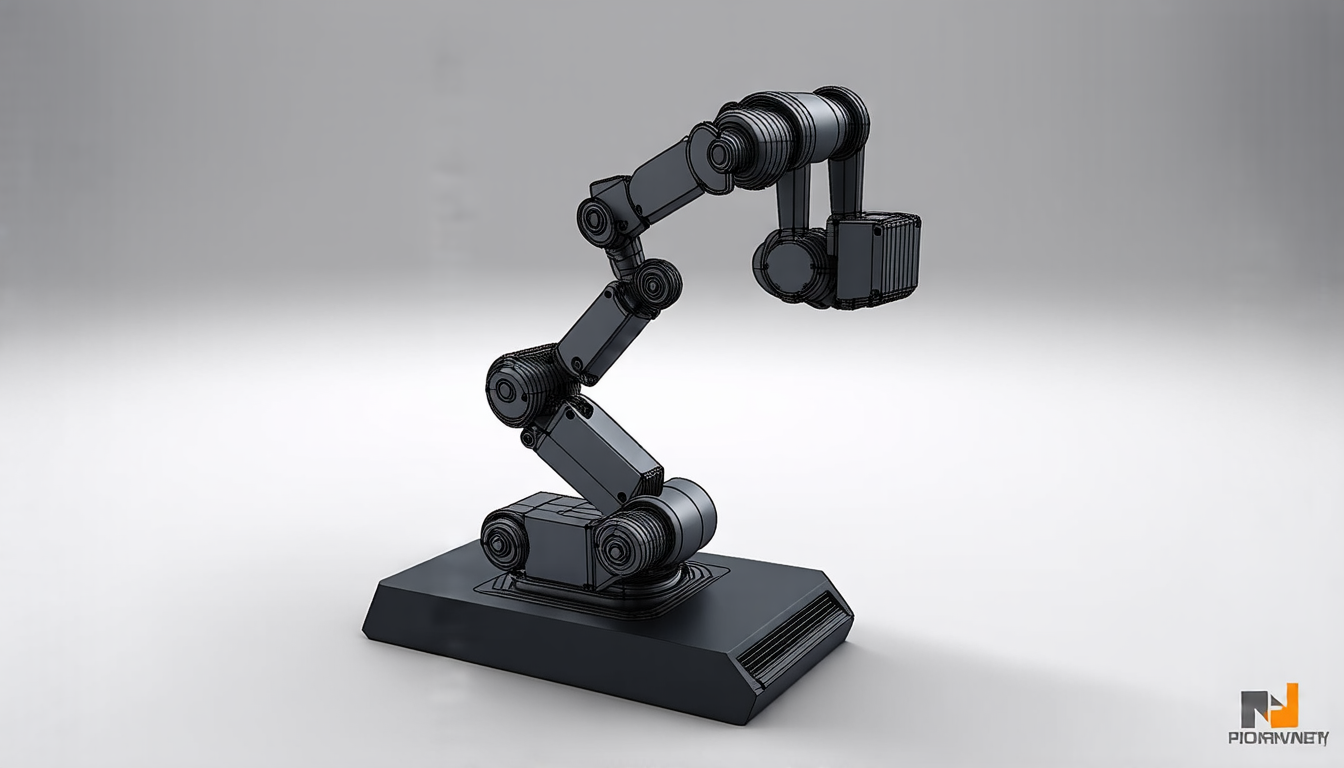
Another potential use case is in robotics, where PartSDF could be used to model and manipulate the shapes of robotic arms or grippers. This could enable more precise and dexterous manipulation of objects, with applications in fields such as manufacturing or healthcare.
Overall, PartSDF represents a significant advance in the field of computer-aided design and simulation, offering new possibilities for accurate and efficient modeling of complex shapes. Its potential applications are vast, from aerodynamics to robotics, and could lead to significant breakthroughs in various industries.
Cite this article: “PartSDF: A New Approach to Representing Complex Shapes”, The Science Archive, 2025.
Computer-Aided Design, Shape Representation, Neural Networks, Implicit Representations, Complex Shapes, Part-Based Models, Object Reconstruction, Generation, Manipulation, Aerodynamics





