

Thursday 27 March 2025
As technology continues to advance, our ability to process and analyze data is becoming increasingly sophisticated. One of the most promising developments in this area is the emergence of proactive data systems, which use large language models (LLMs) to understand and optimize complex data processing tasks.
At its core, a proactive data system is designed to take initiative when it comes to understanding and optimizing data processing tasks. Unlike traditional reactive systems that simply execute queries as written, proactive systems use LLMs to aid in the process of identifying relevant data, extracting insights, and even generating new queries based on user intent.
One of the key benefits of proactive data systems is their ability to handle complex, unstructured data with ease. This includes documents, images, and other types of multimedia files that are often difficult or impossible for traditional database systems to process. By using LLMs to analyze and understand this type of data, proactive systems can extract valuable insights and provide users with more accurate and relevant results.
Another significant advantage of proactive data systems is their ability to adapt to changing user needs and preferences. Traditional query languages, such as SQL, are often inflexible and require users to specify exactly what they’re looking for in advance. Proactive systems, on the other hand, can use LLMs to anticipate user intent and generate queries that meet their evolving needs.
One example of a proactive data system is DocETL, which uses LLMs to analyze and extract insights from complex documents such as police records. By identifying key entities and relationships within these documents, DocETL can provide users with more accurate and relevant results than traditional search engines or database systems.
Another example is Spade, which uses LLMs to synthesize assertions for large language model pipelines. This allows Spade to optimize the performance of complex data processing tasks by identifying and eliminating unnecessary steps in the pipeline.
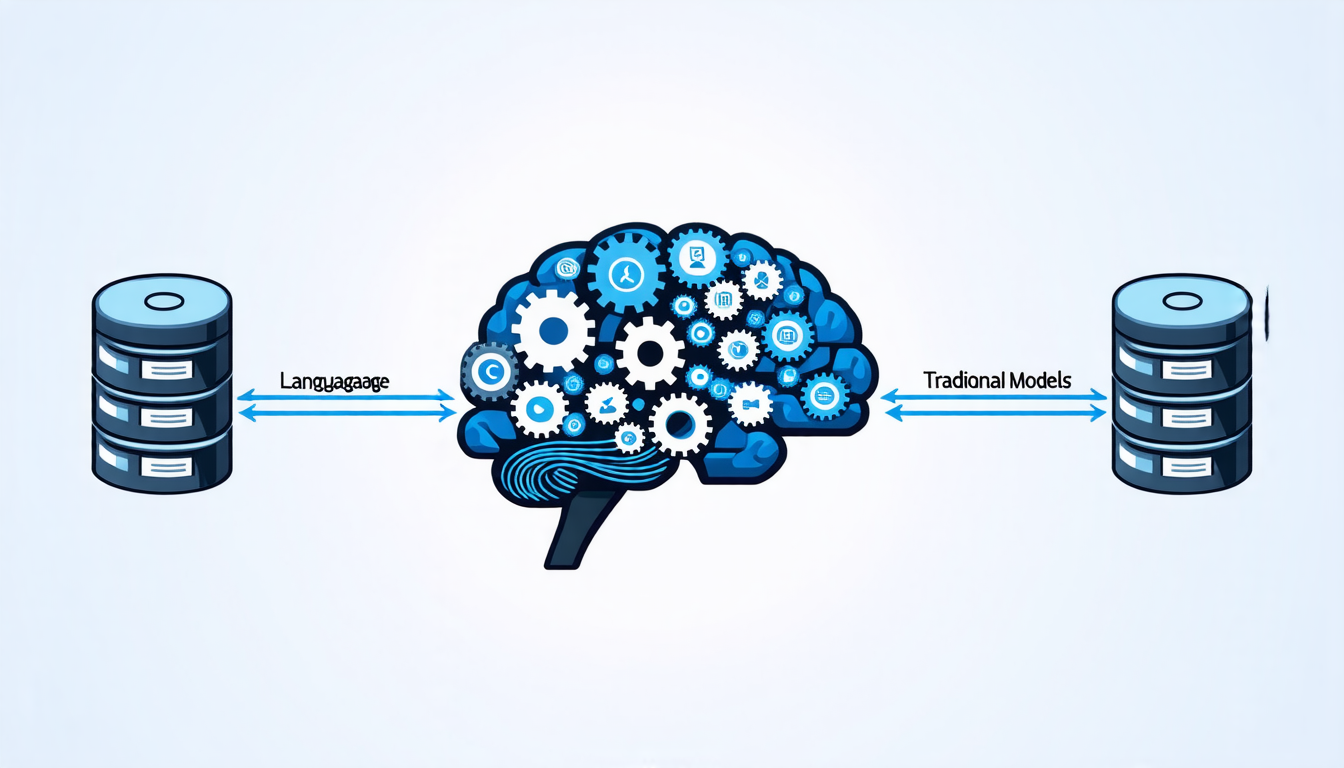
Despite their many benefits, proactive data systems are still in the early stages of development. One of the biggest challenges facing researchers is how to effectively integrate LLMs with traditional database systems, which are often designed around a specific set of queries or data models.
Another challenge is ensuring that proactive data systems can handle the vast amounts of data being generated by modern applications and services. As data becomes increasingly decentralized and distributed, it’s becoming more important than ever for proactive systems to be able to scale and adapt to changing user needs.
Despite these challenges, the potential benefits of proactive data systems are significant.
Cite this article: “Proactive Data Systems: Revolutionizing Complex Data Processing Tasks with Large Language Models”, The Science Archive, 2025.
Large Language Models, Proactive Data Systems, Complex Data Processing, Database Systems, Sql, User Intent, Llms, Query Languages, Docetl, Spade, Data Analysis





