

Thursday 27 March 2025
A new method has been developed that can help computers learn to defer to human experts in situations where data is incomplete or uncertain. This approach, known as L2D-CD, could have significant implications for fields such as medicine and finance, where decisions often rely on expert judgment.
The problem of incomplete data is a common one in many areas of science and technology. In some cases, data may be missing due to technical limitations or the complexity of the system being studied. Other times, data may be uncertain because it’s based on incomplete or noisy information. In these situations, computers can struggle to make accurate predictions or decisions.
To address this issue, researchers have developed a range of techniques for dealing with incomplete and uncertain data. One approach is to use machine learning algorithms that can learn from small amounts of data and then generalize to new situations. Another approach is to use expert systems, which rely on human judgment and experience to make decisions.
However, these approaches often have limitations. Machine learning algorithms may not be able to generalize well to new situations, while expert systems may not be able to adapt to changing circumstances.
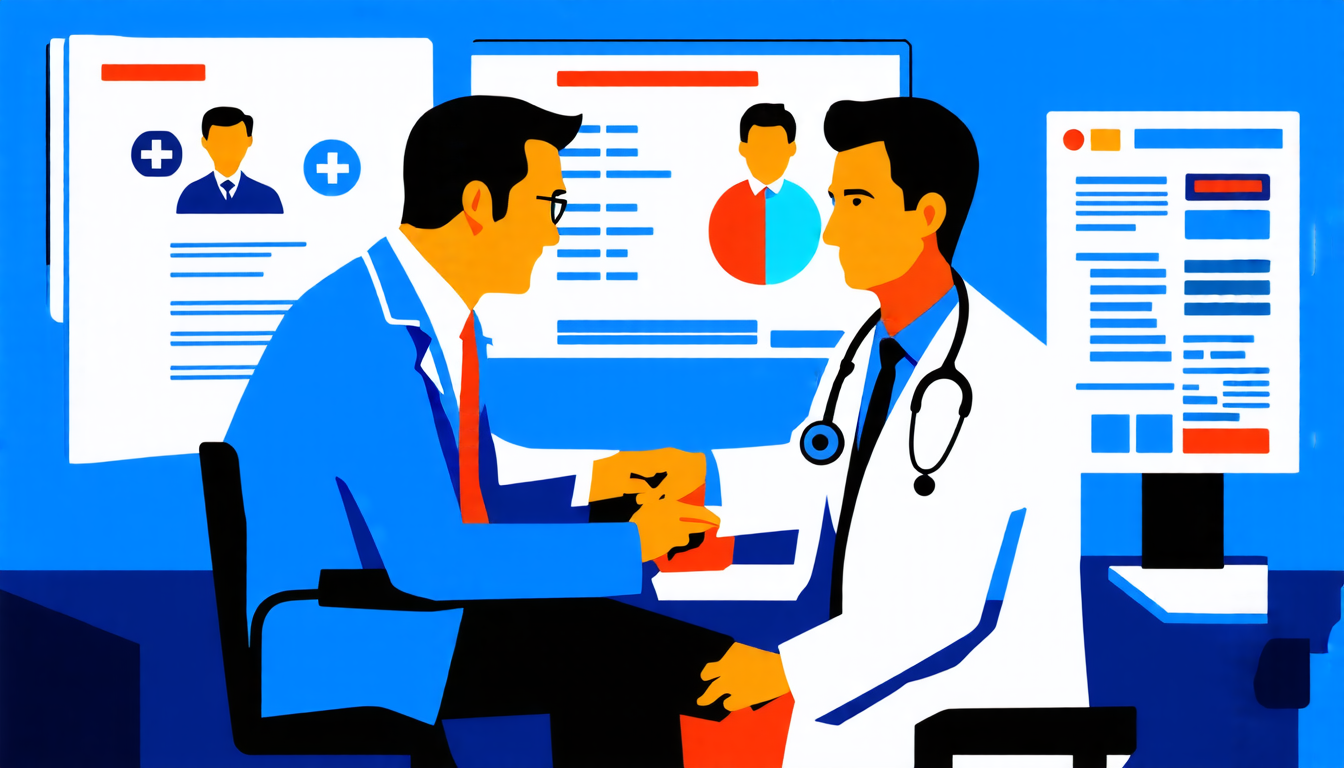
L2D-CD takes a different approach. Instead of trying to overcome the limitations of incomplete data, it learns to defer to human experts when necessary. This means that computers can still make decisions even in situations where data is missing or uncertain, but they do so by consulting with an expert who has more knowledge and experience.
The key innovation behind L2D-CD is a new type of algorithm that can learn from both data and expert judgment. This algorithm, known as a deferral function, can be trained on large datasets to identify situations where it’s best to defer to an expert. When the computer encounters a situation that falls outside its knowledge domain, it can use this deferral function to decide whether to seek guidance from an expert.
To test L2D-CD, researchers used a range of simulations and real-world data sets. In one experiment, they compared L2D-CD with other machine learning algorithms on a dataset of medical diagnoses. The results showed that L2D-CD was able to make more accurate predictions than the other algorithms, even when data was incomplete or uncertain.
The potential applications of L2D-CD are wide-ranging. In medicine, for example, it could be used to help doctors diagnose complex conditions and develop personalized treatment plans. In finance, it could be used to help investment analysts make more informed decisions about risk and return.
Cite this article: “Computers Learn to Defer to Human Experts in Uncertain Situations with L2D-CD Method”, The Science Archive, 2025.
Machine Learning, Incomplete Data, Uncertain Data, Expert Judgment, Deferral Function, Algorithm, Medical Diagnoses, Finance, Investment Analysis, Personalized Treatment Plans.





