

Thursday 27 March 2025
The quest for better medical imaging has led researchers down a fascinating path, where artificial intelligence and natural language processing converge. A recent study published in a leading scientific journal reveals that injecting domain-specific knowledge into pre-trained models can significantly improve the accuracy of chest X-ray classification.
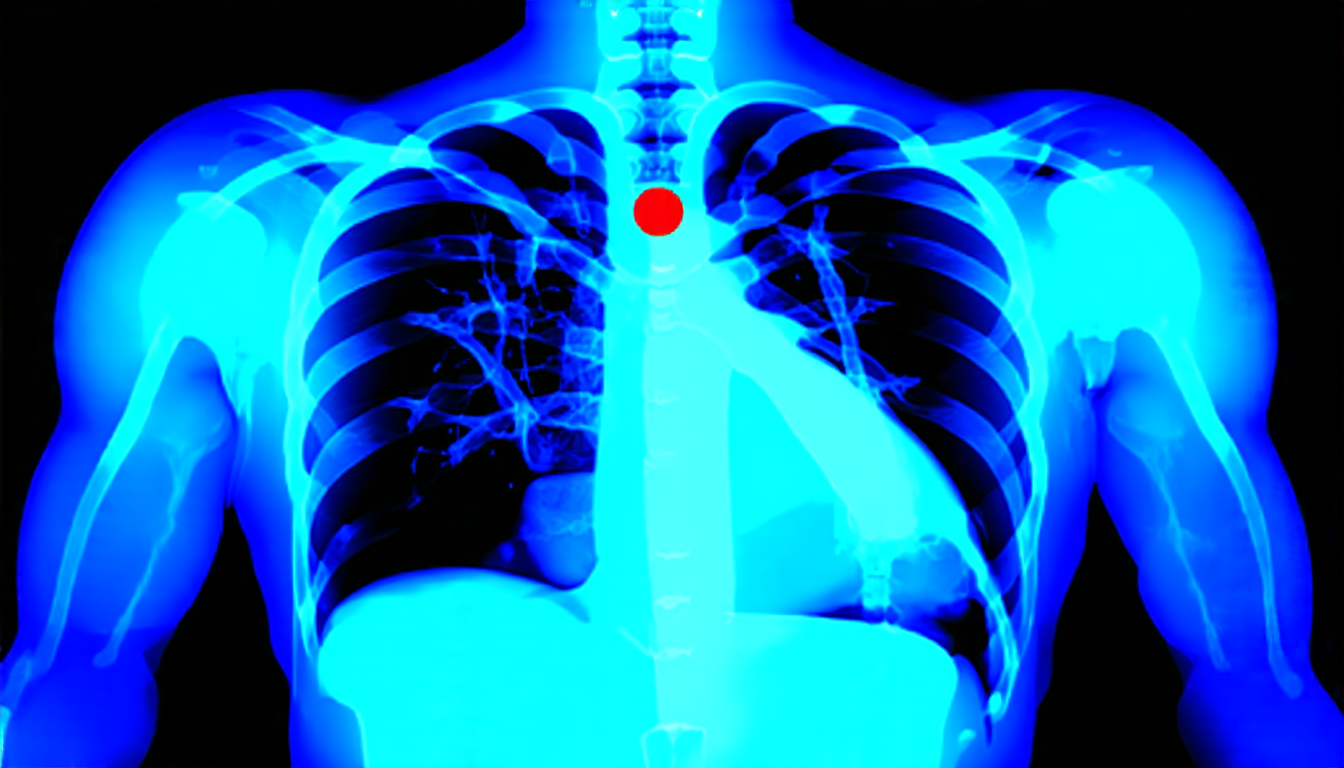
Chest X-rays are a crucial diagnostic tool in medicine, helping doctors identify diseases such as pneumonia, tuberculosis, and lung cancer. However, interpreting these images is a challenging task, requiring extensive medical expertise. That’s where artificial intelligence (AI) comes in – to automate the process and make it more efficient.
The researchers employed a novel approach called knowledge injection, which involves fine-tuning pre-trained language models with medical domain-specific information. These models are trained on vast amounts of text data, including patient records, clinical notes, and medical literature. By injecting this knowledge into the model, the team aimed to enhance its ability to understand medical concepts and relate them to X-ray images.
The study focused on a specific type of AI model called CLIP (Contrastive Language-Image Pre-training), which is designed for visual-language tasks like image captioning and visual question answering. The researchers used a set-theory-based approach to generate captions for chest X-rays with varying levels of medical knowledge granularity. This allowed them to evaluate the impact of domain-specific knowledge on the model’s performance.
The results were impressive: when fine-tuned with medical knowledge, the CLIP model achieved a remarkable 72.5% accuracy in classifying chest X-rays, significantly outperforming models without this injection. The team also explored the use of different language models and found that those specifically trained for medical domains performed better than general-purpose models.
This breakthrough has significant implications for medical imaging analysis. By leveraging domain-specific knowledge, AI models can become more accurate and reliable in diagnosing diseases from X-ray images. This could lead to faster and more accurate diagnoses, ultimately improving patient outcomes.
The study’s findings also highlight the importance of domain expertise in developing effective medical AI systems. While pre-trained language models are powerful tools, they require fine-tuning with knowledge specific to a particular domain to achieve optimal performance.
As researchers continue to push the boundaries of AI-powered medical imaging, this study serves as a reminder that combining human expertise with machine learning can lead to innovative solutions with real-world impact.
Cite this article: “AI-Powered Chest X-Ray Classification Boosted by Domain-Specific Knowledge Injection”, The Science Archive, 2025.
Artificial Intelligence, Medical Imaging, Chest X-Rays, Language Models, Domain Knowledge, Pre-Training, Fine-Tuning, Clip Model, Image Classification, Machine Learning





