

Thursday 27 March 2025
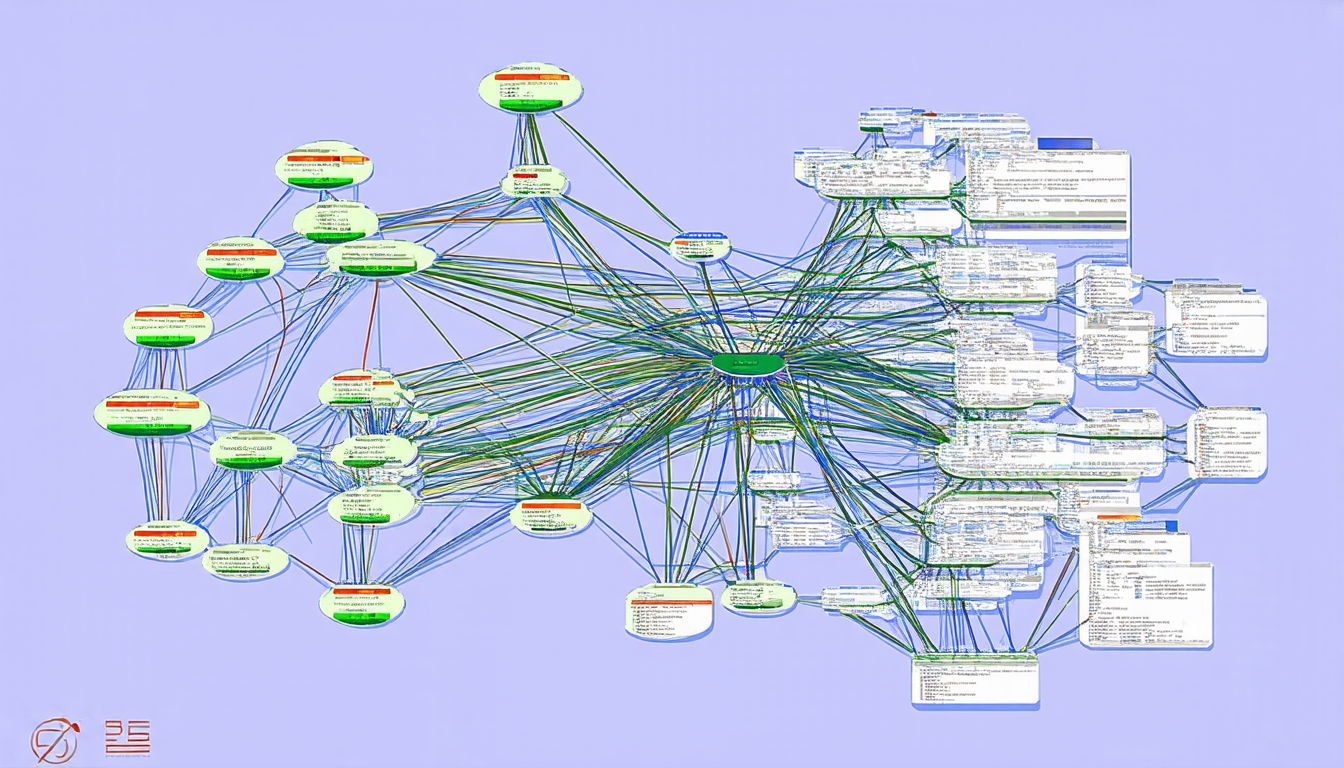
The quest for a more effective way to model interactions between features in datasets has been ongoing for some time. Recent research has made significant strides in this area, particularly in the realm of graph neural networks (GNNs). GNNs have shown great promise in capturing complex relationships between data points, but their performance is often hindered by the quality of the feature graphs used to train them.
A new study sheds light on this issue, providing a deeper understanding of how feature graphs affect the performance of GNNs. The researchers found that the structure of these graphs plays a crucial role in determining the model’s ability to capture pairwise feature interactions. Specifically, they discovered that edges between interacting features are essential for enabling GNNs to effectively model these interactions.
The team also explored the theoretical underpinnings of this phenomenon, demonstrating that sparse feature graphs retaining only necessary interaction edges yield a more efficient and interpretable representation than complete graphs. This aligns with Occam’s Razor, which suggests that simpler explanations are often preferred over more complex ones.
One of the key challenges in developing effective feature graphs is deciding which edges to include and how to weight them. The researchers addressed this issue by proposing a new method for selecting edges based on their importance. This approach involves using the Minimum Description Length (MDL) principle, which aims to find the most concise representation of the data that still captures its essential features.
The MDL principle is rooted in information theory and has been applied to various fields, including machine learning. In this context, it provides a way to evaluate the quality of different feature graphs by measuring their ability to compress the data while preserving its underlying structure.
The researchers demonstrated the effectiveness of their approach through a series of experiments on synthesized datasets. They found that their method consistently outperformed traditional methods for selecting edges, leading to improved performance and interpretability in GNNs.
This study has significant implications for the development of more effective machine learning models. By providing a better understanding of how feature graphs affect GNNs, it offers insights into how to improve the design of these networks and their ability to capture complex relationships between data points. The results also highlight the importance of using sparse and interpretable feature graphs in machine learning applications.
In addition to its theoretical contributions, this research has practical implications for a wide range of fields, from recommender systems to natural language processing.
Cite this article: “Unlocking the Power of Feature Graphs in Graph Neural Networks”, The Science Archive, 2025.
Graph Neural Networks, Feature Graphs, Pairwise Interactions, Machine Learning, Data Modeling, Sparse Graphs, Interpretability, Occam’S Razor, Minimum Description Length, Information Theory





