

Thursday 27 March 2025
The mesmerizing dance of microscopic swimmers has long fascinated scientists, and a recent study sheds new light on their peculiar behavior in crowded environments.
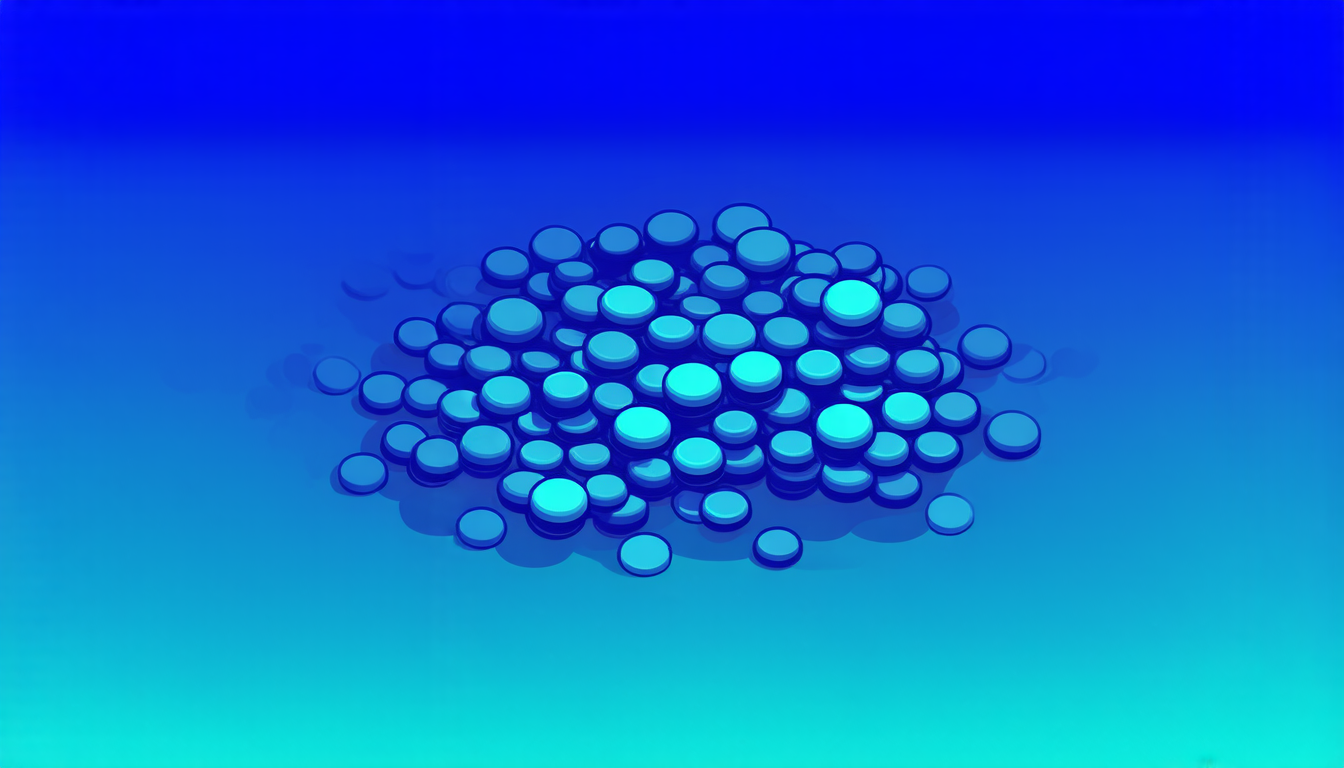
Motility-induced phase separation (MIPS) is a phenomenon where self-propelled particles, like tiny robots or bacteria, group together to form distinct phases. This occurs when the particles’ own movements create an environment that favors clustering over random dispersal. In other words, they’re attracted to each other and away from their surroundings.
Researchers have long been intrigued by MIPS because it has implications for fields such as biomedicine, materials science, and even robotics. By understanding how these microscopic swimmers behave, scientists can develop new ways to manipulate matter at the nanoscale or create novel materials with unique properties.
In a recent paper, scientists explored the dynamics of MIPS in two-dimensional suspensions of active particles. These particles were modeled as Janus disks, which have one side that moves and another that remains stationary. By simulating this system, researchers gained valuable insights into the behavior of these swimmers as they interact with each other and their environment.
One fascinating discovery was the existence of non-Gaussian normal diffusion in MIPS systems. This means that the particles’ movements don’t follow traditional random patterns, instead exhibiting transient fat tails that are characteristic of leptokurtic distributions. In other words, the particles tend to bunch up or spread out more than expected, leading to an intriguing deviation from typical Brownian motion.
Another key finding was the presence of hysteresis loops in the system’s phase diagram. Hysteresis occurs when a system exhibits different behavior depending on its history or direction of change. In this case, the particles’ movements and clustering patterns depend on whether they’re moving towards or away from each other.
These findings have significant implications for our understanding of MIPS and its applications. For instance, they suggest that manipulating the environment’s fluctuations could influence the formation of clusters or the particles’ overall behavior. This knowledge could be used to develop novel materials with tunable properties or to create more efficient systems for tasks like particle separation or chemical reactions.
The study also highlights the importance of considering the intricacies of microscopic swimmers in crowded environments. By accounting for their interactions and the complex dynamics they generate, scientists can gain a deeper understanding of these fascinating systems and unlock new opportunities for innovation.
Cite this article: “Unveiling the Complexity of Microscopic Swimmers in Crowded Environments”, The Science Archive, 2025.
Microscopic Swimmers, Motility-Induced Phase Separation, Active Particles, Janus Disks, Normal Diffusion, Leptokurtic Distributions, Hysteresis Loops, Phase Diagram, Brownian Motion, Nanoscale Manipulation





