

Thursday 27 March 2025
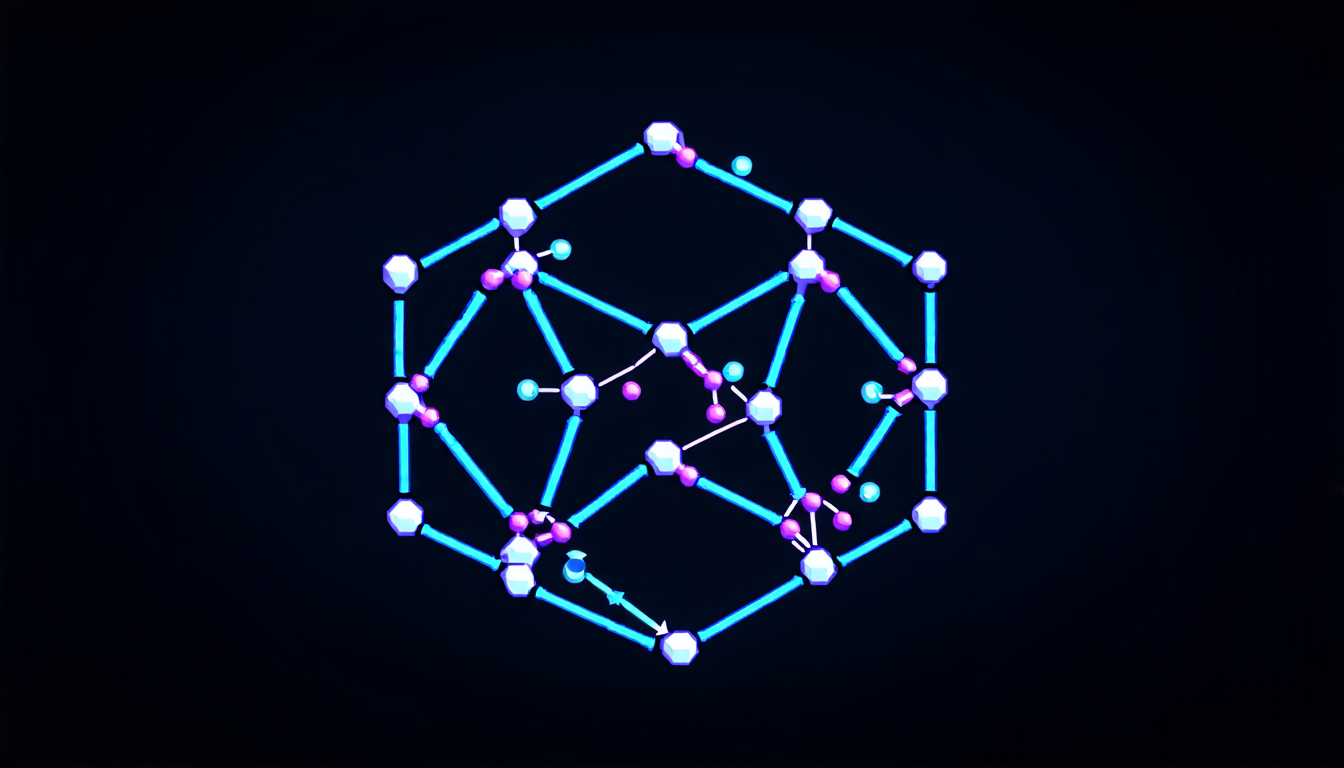
Researchers have made significant strides in understanding the behavior of iron, a crucial component in many modern technologies, under ion irradiation. By using a combination of experimental and computational techniques, they’ve uncovered new insights into how dislocations form and interact within iron crystals.
Dislocations are defects in crystal lattices that can significantly impact material properties. In the case of iron, understanding how dislocations behave is crucial for developing more robust materials for applications such as nuclear reactors and high-temperature alloys.
The researchers used a technique called nanoindentation to study the behavior of iron under ion irradiation. Nanoindentation involves pressing a small indenter into the surface of a material with controlled force, allowing scientists to observe how the material responds. In this case, the team used a focused beam of ions to simulate radiation damage and then examined the resulting dislocation structures using advanced microscopy techniques.
Computational simulations played a key role in interpreting the experimental results. The researchers used a combination of atomistic models and discrete-continuous models to simulate the behavior of dislocations within iron crystals. These models allowed them to study how dislocations interact with each other and with the surrounding crystal lattice.
The team found that ion irradiation significantly increases the density of geometrically necessary dislocations (GNDs) within the iron crystals. GNDs are a type of dislocation that forms when a material is subjected to plastic deformation. In this case, the researchers observed that the GND density increased by a factor of 10-20 under ion irradiation.
The simulations also revealed that the formation and interaction of dislocations play a crucial role in determining the mechanical response of iron under ion irradiation. The team found that the pop-in behavior, which is characterized by sudden displacement bursts during nanoindentation testing, can be attributed to the activation of pre-existing dislocation loops.
The study’s findings have important implications for the development of new materials and technologies. By understanding how dislocations form and interact within iron crystals under ion irradiation, researchers can design more robust materials that are better able to withstand radiation damage.
The use of advanced computational models and experimental techniques has also opened up new avenues for research in this area. Future studies could focus on exploring the effects of different ion energies, fluences, and temperatures on dislocation behavior within iron crystals. This could lead to a deeper understanding of the underlying mechanisms governing material behavior under radiation damage.
Cite this article: “Understanding Dislocation Behavior in Iron Under Ion Irradiation”, The Science Archive, 2025.
Iron, Ion Irradiation, Dislocations, Crystal Lattices, Nanoindentation, Computational Simulations, Atomistic Models, Discrete-Continuous Models, Geometrically Necessary Dislocations, Radiation Damage.





