

Thursday 27 March 2025
The latest advancement in graph neural networks has brought us closer to unlocking the secrets of complex data structures. A team of researchers has developed a new method, called Asymmetric Spectral Augmentation Graph Contrastive Learning (AS- GCL), which promises to improve our ability to analyze and understand these intricate patterns.
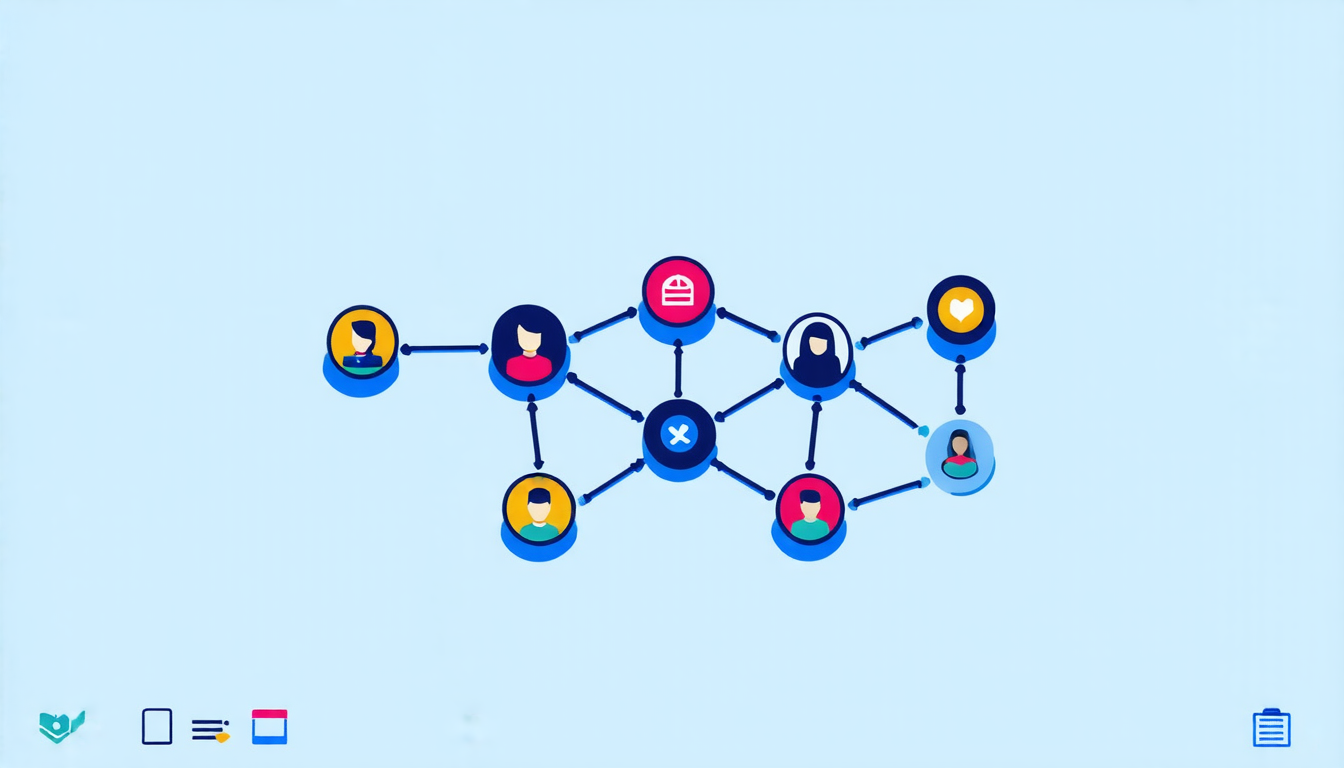
Graphs are all around us, from social media networks to molecular structures. They’re made up of nodes, or individual elements, connected by edges that represent relationships between them. But as the complexity of these graphs increases, so too does the difficulty in analyzing and understanding their underlying structure.
Enter AS-GCL, a new approach that combines two powerful techniques: spectral augmentation and graph contrastive learning. The first step is to apply an asymmetric transformation to the graph’s spectral domain, which helps to reduce noise and improve the quality of the data. This is followed by a graph contrastive learning process, where the model learns to identify similarities and differences between different views of the same graph.
The result is a more robust and accurate representation of the graph, one that can be used for a wide range of applications, from recommender systems to molecular modeling. By leveraging the power of spectral augmentation and graph contrastive learning, AS-GCL has shown significant improvements in performance over existing methods.
One of the key advantages of AS-GCL is its ability to handle large and complex graphs, which are becoming increasingly common in many fields. Traditional methods often struggle with these types of datasets, but AS-GCL’s asymmetric transformation and contrastive learning approach allow it to efficiently process and analyze even the most intricate patterns.
The potential applications of AS-GCL are vast and varied. For example, researchers could use this method to develop more accurate recommender systems, ones that take into account the complex relationships between users and items. Similarly, scientists could employ AS-GCL to better understand the structure of molecules and develop new drugs or materials.
In addition to its practical applications, AS-GCL has also shed new light on the fundamental properties of graph neural networks. By studying the behavior of these models in different domains, researchers can gain a deeper understanding of how they work and what limitations they may have. This knowledge can then be used to develop even more powerful and effective methods for analyzing complex data structures.
Overall, AS-GCL represents a significant step forward in our ability to analyze and understand complex graphs. Its potential applications are vast and varied, and its impact could be felt across many fields of science and engineering.
Cite this article: “Unlocking Complex Graphs with AS-GCL: A Breakthrough in Data Analysis”, The Science Archive, 2025.
Graph Neural Networks, Asymmetric Spectral Augmentation Graph Contrastive Learning, Spectral Augmentation, Graph Contrastive Learning, Complex Data Structures, Node Connections, Edge Relationships, Recommender Systems, Molecular Modeling, Machine Learning Algorithms.





