

Thursday 27 March 2025
The quest for more accurate and reliable graph-based machine learning models has led researchers to explore innovative approaches, including leveraging large language models (LLMs) as a source of domain knowledge. A recent study proposes a novel method that harnesses LLMs to augment graph data, potentially revolutionizing the field.
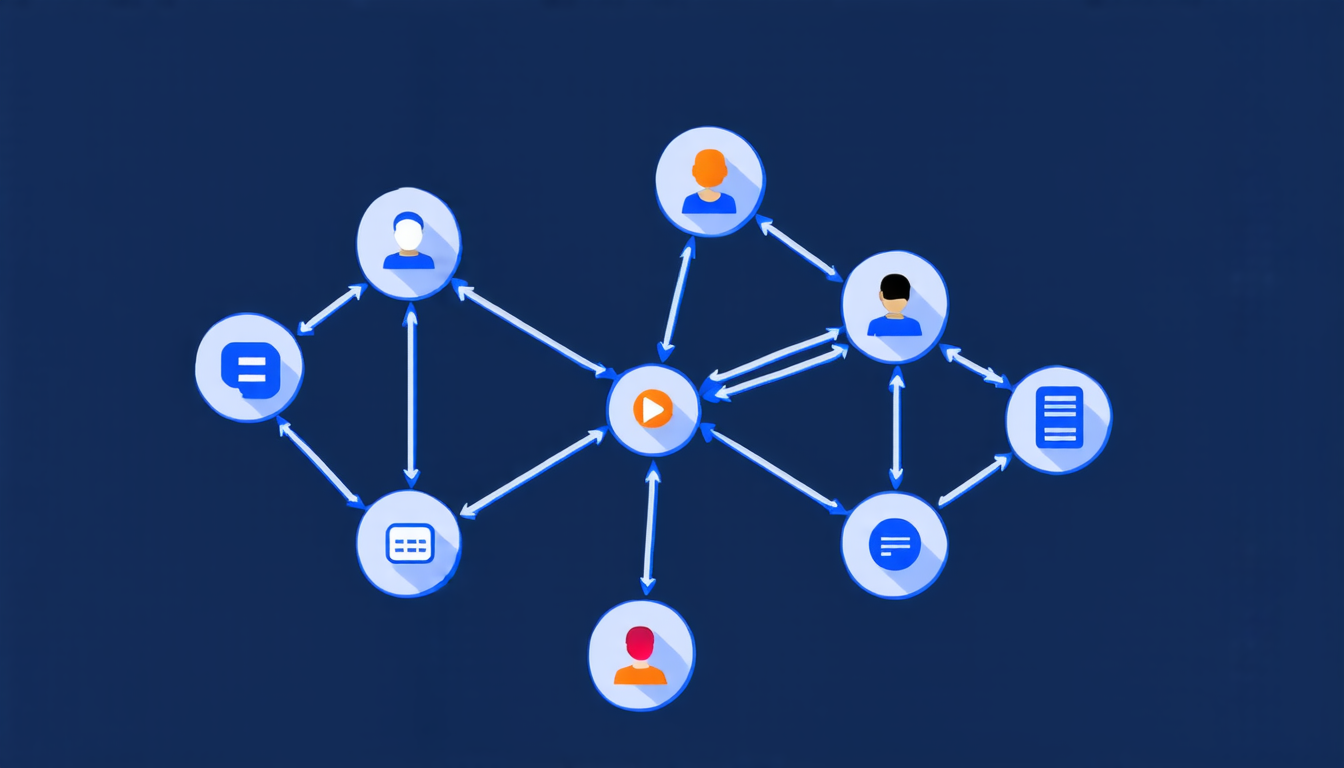
In traditional graph representation learning, data augmentation techniques aim to generate synthetic examples by perturbing or modifying existing graph structures and features. However, these methods often overlook crucial contextual information and can lead to artifacts in the resulting graphs. The new approach addresses this issue by using LLMs as a knowledge source, generating contextualized relationships between entities and concepts.
The method begins by fine-tuning an LLM on a specific domain or dataset, allowing it to learn the underlying semantics and relationships within that context. This knowledge is then used to generate extensive arrays of associated connections between entities and concepts, which are crucial for downstream tasks like node classification. The generated relationships are directed, so the order matters, and both entities should be selected from a list of important concepts.
To control sparsity, the researchers designed a granularity-aware prompting strategy, where the LLM is instructed to generate relationships at varying levels of abstraction, from coarse-grained to fine-grained. This approach allows for more nuanced and accurate graph augmentation, taking into account the complexities of real-world data.
The study demonstrates the effectiveness of this method on several benchmark datasets, including Cora, Citeseer, PPI, and Actor, which are commonly used in natural language processing and machine learning research. The results show that the proposed approach outperforms traditional graph data augmentation methods, achieving better performance in node classification tasks while maintaining interpretability.
One notable aspect of this work is its focus on enhancing the reliability of augmented graphs by leveraging contextual knowledge from LLMs. This approach has significant implications for a wide range of applications, including but not limited to social network analysis, recommender systems, and bioinformatics.
The researchers also highlight the flexibility of their method, which can be adapted to various graph-based machine learning tasks and domains. By integrating this technique into existing pipelines, developers can potentially create more accurate and robust models that better capture complex relationships in real-world data.
As the field of graph representation learning continues to evolve, innovative approaches like this one will play a crucial role in advancing our understanding of complex systems and improving the accuracy of machine learning models.
Cite this article: “Enhancing Graph Augmentation with Large Language Models for More Accurate Machine Learning”, The Science Archive, 2025.
Large Language Models, Graph Data Augmentation, Node Classification, Contextual Knowledge, Domain Knowledge, Fine-Tuning, Granularity-Aware Prompting, Interpretability, Reliability, Machine Learning Models.





