

Thursday 27 March 2025
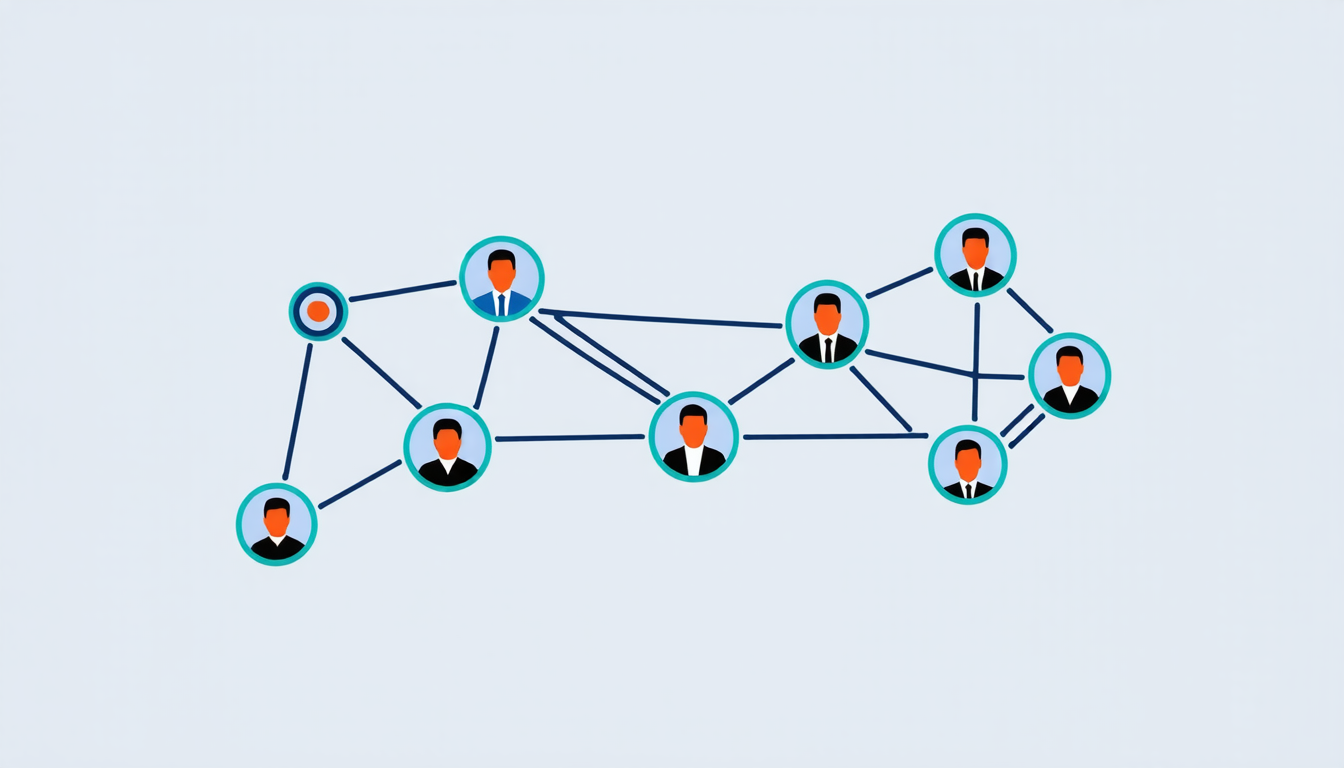
A team of researchers has made a significant breakthrough in the field of social network analysis, developing a new method for identifying influential individuals within online communities. The approach, dubbed HIM (Hyperbolic Influence Maximization), uses a novel combination of machine learning and geometric techniques to pinpoint those most likely to spread information or ideas.
The traditional approach to influence maximization involves selecting nodes with high degrees – that is, the number of connections they have to other nodes in the network. However, this method has its limitations. For instance, it can be influenced by the structure of the network itself, rather than the actual behavior of the individuals within it.
HIM addresses this issue by using a hyperbolic representation of the social network. In this framework, nodes are embedded in a higher-dimensional space that is curved and non-Euclidean. This allows the model to capture the complex relationships between individuals and their influence on each other in a more accurate way.
The team used four real-world datasets – Cora-ML, Power Grid, Facebook, and YouTube – to test HIM’s performance. They found that it outperformed existing methods in all cases, achieving significantly higher influence spread ratios. This indicates that HIM is able to identify those individuals who are most likely to spread information or ideas within a network.
One of the key innovations behind HIM is its adaptive seed selection module. This component uses a priority queue to select nodes based on their likelihood of spreading information, rather than simply choosing the most connected ones. This allows the model to focus on the nodes that are most important for influencing others, even if they don’t have as many connections.
The researchers also explored the scalability of HIM by testing it on large networks with millions of nodes. They found that the model was able to efficiently scale up and down, making it suitable for use in a wide range of applications.
This breakthrough has significant implications for fields such as marketing, public health, and politics, where understanding how information spreads within online communities is crucial. By identifying those individuals who are most likely to spread information or ideas, HIM can help organizations target their efforts more effectively, leading to better outcomes.
In the future, the team plans to continue refining HIM and exploring its applications in different domains. With its ability to accurately identify influential nodes and adapt to complex network structures, this method has the potential to make a significant impact on our understanding of social networks and how they shape our world.
Cite this article: “Breaking Down Barriers: A Novel Approach to Identifying Influential Individuals in Online Communities”, The Science Archive, 2025.
Social Network Analysis, Influence Maximization, Machine Learning, Geometric Techniques, Hyperbolic Representation, Social Networks, Online Communities, Node Selection, Priority Queue, Scalability.
Reference: Hongliang Qiao, “Diffusion Model Agnostic Social Influence Maximization in Hyperbolic Space” (2025).





