

Thursday 27 March 2025
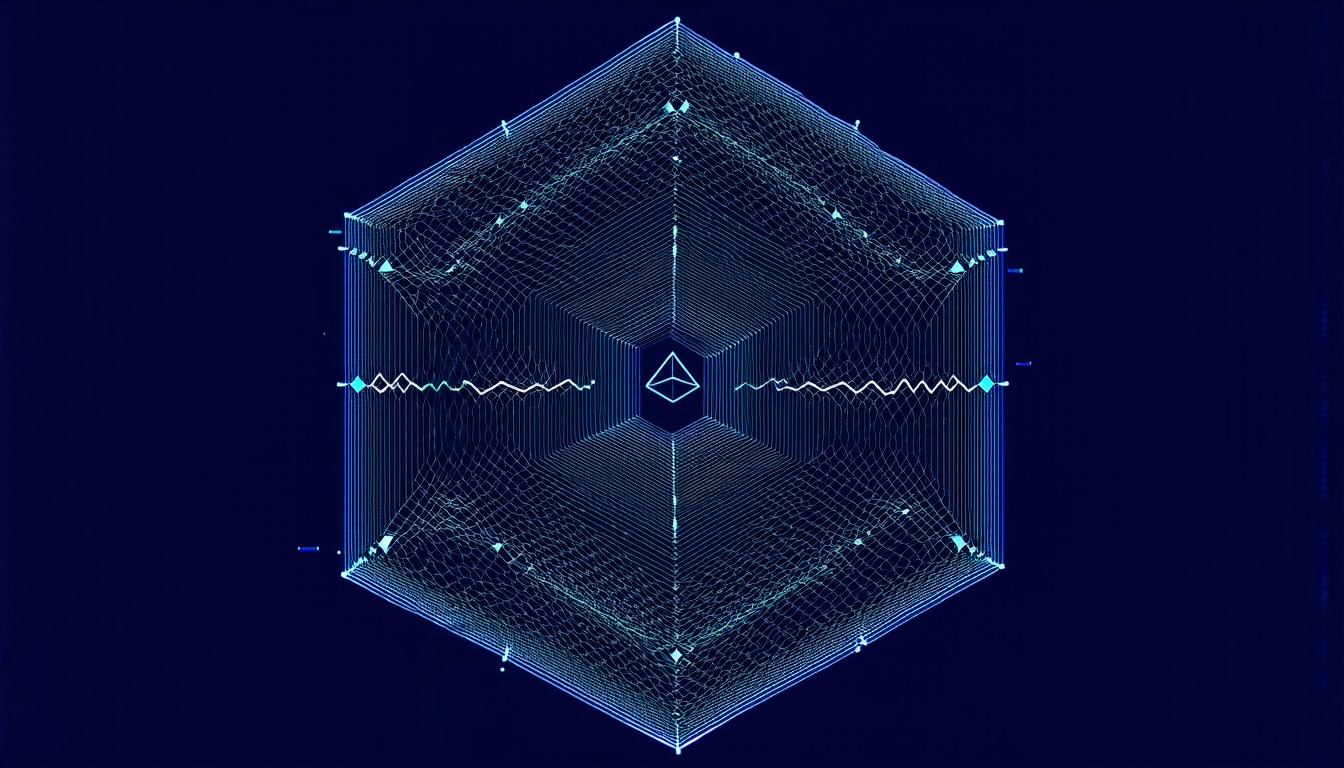
Scientists have been fascinated by the kagome lattice, a unique arrangement of triangles that forms a hexagonal structure, for decades. This geometric pattern has been found in various materials, but recently, researchers have discovered that it can also be used to create exotic states of matter.
One such material is AV3Sb5, a family of compounds that includes potassium, rubidium, and cesium vanadium antimonides. These substances have a kagome lattice structure, which allows them to exhibit unusual properties not seen in other materials.
Researchers have been studying these compounds using various techniques, including transport measurements. Transport measurements involve sending an electrical current through the material and measuring how it responds. This can provide valuable information about the material’s electronic properties.
By analyzing the data from these experiments, scientists have found that AV3Sb5 exhibits a rich array of symmetry-breaking phases. Symmetry-breaking phases occur when a material’s internal structure is disrupted, leading to unusual behaviors.
One of the most fascinating phenomena observed in AV3Sb5 is the emergence of superconductivity. Superconductors are materials that can conduct electricity with zero resistance at very low temperatures. This property makes them incredibly useful for applications like power transmission and medical imaging.
However, what’s remarkable about AV3Sb5 is that it exhibits superconductivity without any apparent explanation. Traditional theories suggest that superconductivity arises from the alignment of electrons in a material. But in AV3Sb5, the electrons don’t seem to be aligned in this way.
Instead, researchers believe that the kagome lattice structure may be responsible for the emergence of superconductivity. The unique geometry of the triangles allows for unusual electronic interactions that can lead to unconventional behavior.
Another intriguing property of AV3Sb5 is its ability to host exotic charge density waves (CDWs). CDWs are patterns of electrical charge that can form in a material, leading to unusual optical and magnetic properties.
In AV3Sb5, the kagome lattice structure allows for the formation of multiple CDW phases. These phases can coexist or compete with each other, leading to complex behaviors.
The discovery of these exotic states of matter has significant implications for our understanding of electronic behavior. It suggests that materials with unique geometries can exhibit properties that defy traditional theories.
As researchers continue to study AV3Sb5 and similar compounds, they may uncover even more surprising phenomena.
Cite this article: “Unlocking Exotic States of Matter in Kagome Lattice Compounds”, The Science Archive, 2025.
Kagome Lattice, Superconductivity, Av3Sb5, Symmetry-Breaking Phases, Charge Density Waves, Exotic States Of Matter, Electronic Properties, Transport Measurements, Unconventional Behavior, Zero Resistance.





