

Thursday 27 March 2025
In recent years, machine learning has made tremendous strides in tackling complex tasks like image recognition and natural language processing. But when it comes to graphs, those intricate networks of nodes and edges that describe everything from social media relationships to molecular structures, AI systems have been stuck in a rut.
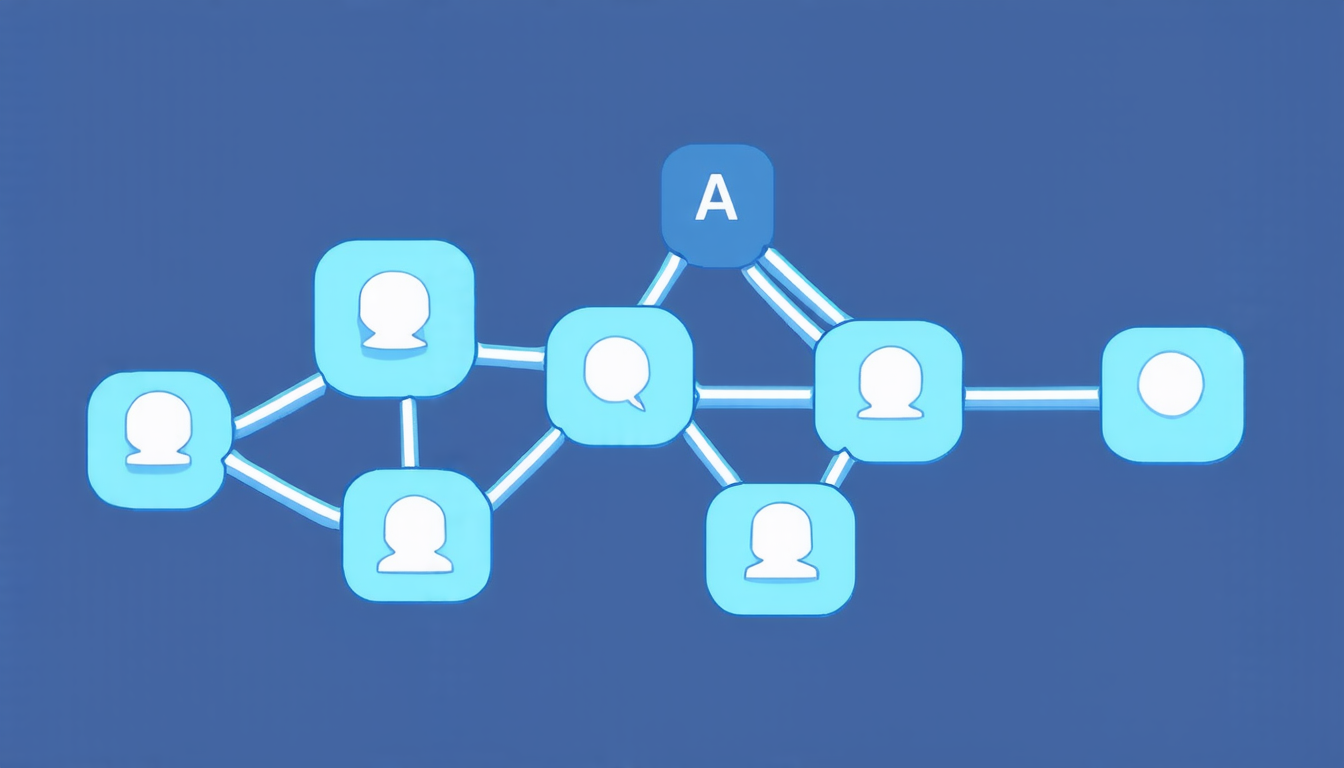
Graph neural networks (GNNs) are designed to navigate these graph-based datasets, but they’re limited by their inability to ignore irrelevant information – like node identifiers. These IDs might seem harmless, but they can skew the results of GNNs and reduce their accuracy.
A team of researchers has now developed a solution to this problem, introducing a new technique called ICON (Invariance-Constrained Optimization Network). By explicitly regularizing GNNs to ignore node IDs, ICON boosts the performance of these models on graph-based tasks.
The challenge lies in designing a system that can learn from graphs without relying too heavily on those pesky IDs. In traditional machine learning, this might involve techniques like data augmentation or dropout, but these methods don’t translate well to graph neural networks.
To overcome this hurdle, the researchers developed ICON, which uses a novel regularization strategy to enforce ID invariance. This involves adding an additional term to the GNN’s loss function that encourages the model to produce similar outputs regardless of the node IDs.
In practice, this means that the GNN is trained on a mixture of graphs with different IDs, as well as modified versions of those graphs where the IDs have been randomized or swapped. By doing so, the model learns to focus on more meaningful features – like the relationships between nodes – rather than getting bogged down in ID-specific details.
The results are impressive: ICON outperforms traditional GNNs on a range of tasks, including graph classification and node classification. On one popular benchmark dataset, ICON achieves an accuracy of 93%, compared to just 84% for the standard GNN approach.
But what does this mean for real-world applications? For one, it opens up new possibilities for analyzing complex networks like social media or biological systems. By ignoring irrelevant information like node IDs, ICON can help uncover hidden patterns and relationships that might have gone unnoticed before.
Moreover, ICON’s ability to generalize better across different datasets could lead to more robust AI models that are less prone to overfitting. In the long run, this could enable GNNs to tackle even more challenging tasks – like predicting the behavior of complex systems or identifying new molecules with potential therapeutic properties.
Cite this article: “Unlocking Graph Neural Networks: A New Technique for Improved Performance and Invariance”, The Science Archive, 2025.
Graph Neural Networks, Gnns, Icon, Node Ids, Graph Classification, Node Classification, Machine Learning, Artificial Intelligence, Regularization Strategy, Loss Function.





