

Thursday 27 March 2025
A team of researchers has made a significant breakthrough in understanding how to allocate indivisible goods fairly among a group of people. The problem, known as the envy-free allocation problem, has puzzled mathematicians and economists for decades.
The difficulty lies in finding an allocation that satisfies two seemingly contradictory conditions: fairness and efficiency. Fairness requires that each person values their bundle at least as much as they value any other bundle, while efficiency demands that no one can improve their situation by switching with someone else.
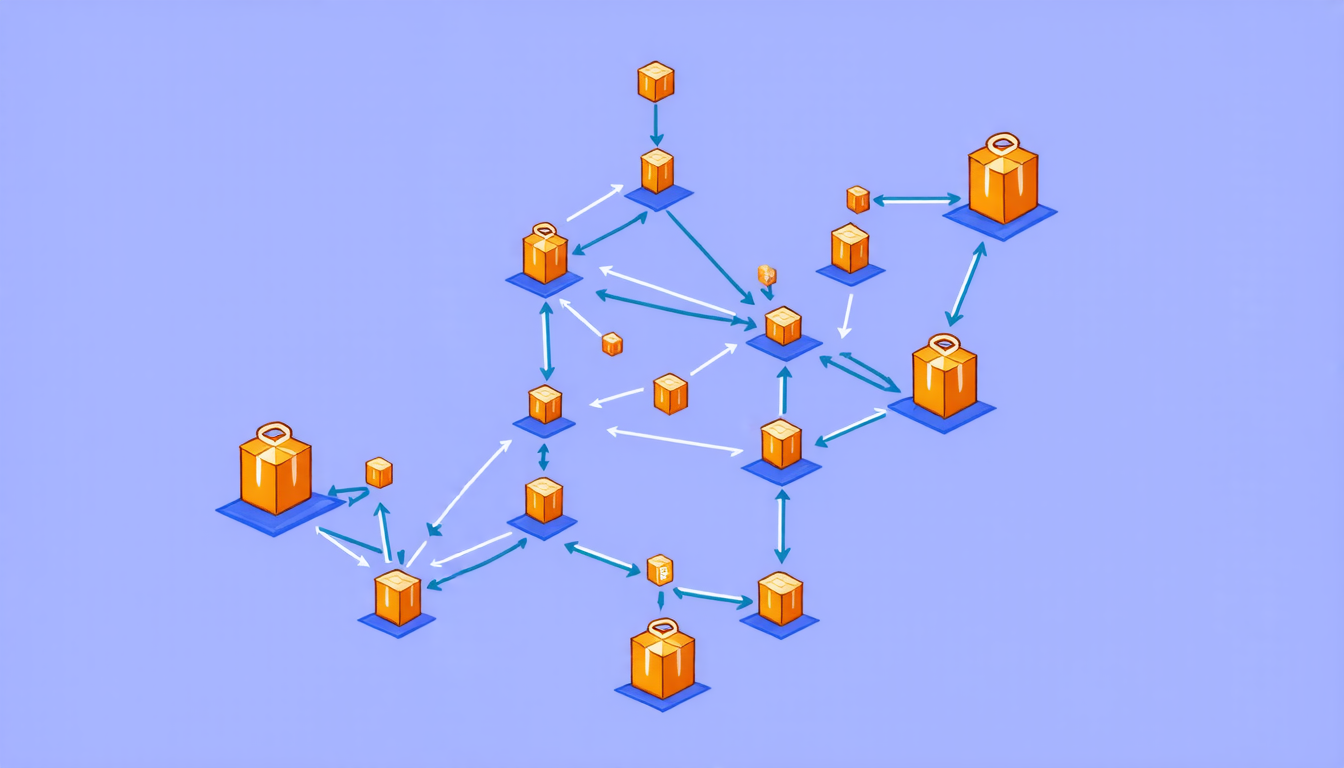
To tackle this challenge, the researchers developed a novel algorithm that takes into account the unique characteristics of each individual’s preferences. The approach is based on a graph theory framework, where agents are represented as nodes and edges represent the relationships between them.
The team found that for certain types of graphs, their algorithm can ensure that an envy-free allocation exists, even when the goods being allocated are indivisible. This has important implications for real-world applications, such as dividing up resources in a community or allocating seats in a parliament.
One key insight from the research is that the existence of envy-free allocations depends on the structure of the graph representing the relationships between agents. For example, if there are cycles in the graph, it may not be possible to find an envy-free allocation.
The algorithm works by iteratively adjusting the bundles assigned to each agent until a stable solution is reached. This process is guided by a set of rules that ensure fairness and efficiency are maintained throughout.
While the researchers’ findings have significant theoretical implications, they also have practical applications in various fields. For instance, their work could inform decision-making processes in areas such as resource allocation, voting systems, and social welfare policy.
The team’s breakthrough has shed new light on a long-standing problem in economics and mathematics, and it is likely to have far-reaching consequences for our understanding of fairness and efficiency in complex systems.
Cite this article: “Unlocking Envy-Free Allocations: A Breakthrough in Resource Distribution”, The Science Archive, 2025.
Envy-Free Allocation, Indivisible Goods, Graph Theory, Fairness, Efficiency, Algorithm, Resource Allocation, Voting Systems, Social Welfare Policy, Mathematical Economics





