
Thursday 27 March 2025
The quest for efficient biclustering methods has long been a thorn in the side of data analysts and machine learning researchers alike. Biclustering, the process of identifying patterns within rectangular blocks of data, is a crucial step in uncovering meaningful relationships between variables. However, traditional methods have fallen short due to their inability to handle high-dimensional datasets and lack of flexibility.
Enter ResNMTF, a novel approach that leverages non-negative matrix tri-factorization (NMTF) to tackle the challenges of biclustering. By exploiting the properties of NMTF, researchers have developed a method that can efficiently identify patterns in data with hundreds or even thousands of features. The result is a more accurate and scalable solution that can handle complex datasets with ease.
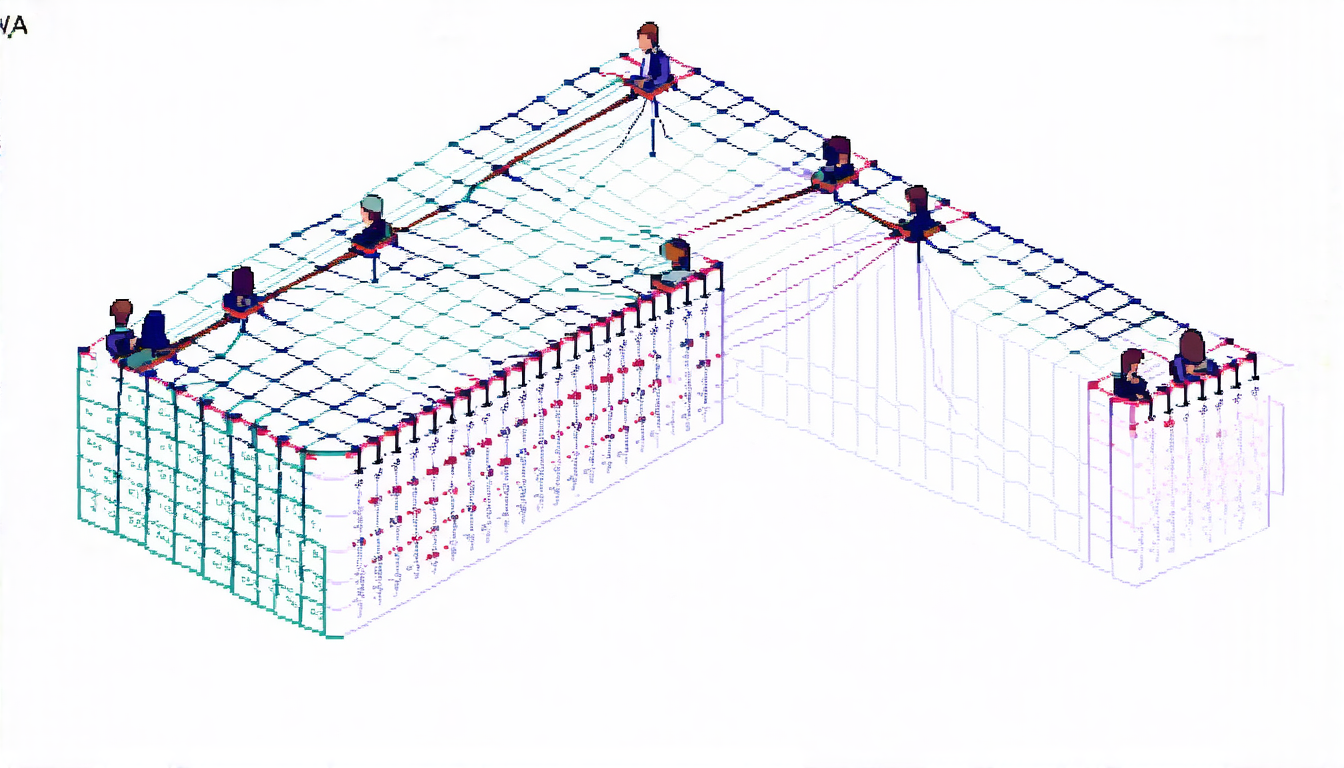
So how does it work? ResNMTF begins by representing each dataset as a matrix, where rows correspond to samples and columns represent features. The algorithm then uses NMTF to decompose this matrix into three lower-dimensional matrices: one for the row factors, one for the column factors, and a third that captures the relationships between them. By iteratively optimizing these factors, ResNMTF is able to identify patterns in the data that may not be immediately apparent.
But what makes ResNMTF truly unique is its ability to handle non-exhaustive biclusters. In traditional biclustering methods, each row and column must belong to exactly one bicluster. However, real-world datasets often exhibit more complex relationships, where rows or columns can participate in multiple biclusters. ResNMTF’s flexibility allows it to accommodate these situations, resulting in a more accurate representation of the data.
To test its mettle, researchers applied ResNMTF to several real-world datasets, including gene expression data and text documents. The results were impressive: ResNMTF outperformed traditional methods in terms of accuracy and scalability. Moreover, it was able to identify novel patterns and relationships that had been missed by other approaches.
One of the most intriguing aspects of ResNMTF is its bisilhouette score, a new metric designed specifically for evaluating biclustering results. Unlike traditional silhouette scores, which focus solely on the cohesion within each cluster, the bisilhouette score takes into account both intra-cluster and inter-cluster relationships. This allows researchers to assess the quality of their biclusters in a more comprehensive manner.
ResNMTF’s potential applications are vast and varied.
Cite this article: “Efficient Biclustering with ResNMTF: A Novel Approach to Uncovering Complex Patterns in High-Dimensional Data”, The Science Archive, 2025.
Machine Learning, Biclustering, Non-Negative Matrix Tri-Factorization, Data Analysis, Pattern Recognition, Dimensionality Reduction, Clustering Algorithms, Gene Expression, Text Documents, Scalability, Accuracy