

Thursday 27 March 2025
Reinforcement learning, a type of artificial intelligence that enables machines to learn from trial and error, has long been touted as a solution for complex problems in fields such as finance, healthcare, and manufacturing. But what about industrial process control? This is an area where traditional methods have reached their limits, yet it’s crucial for maintaining efficiency, reducing waste, and ensuring product quality.
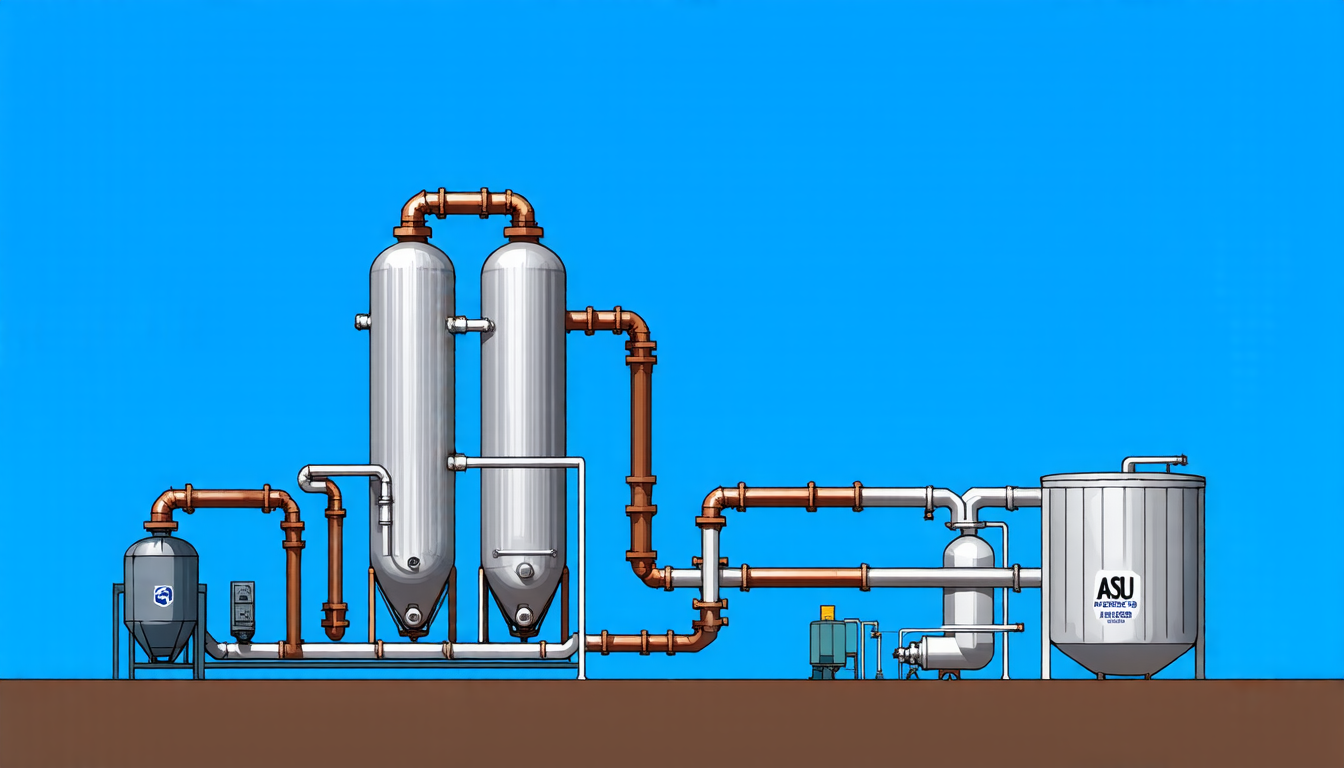
Researchers have now successfully applied reinforcement learning to a challenging industrial problem: scheduling the operation of an air separation unit (ASU), which produces high-purity oxygen, nitrogen, and argon from atmospheric air. The ASU is a critical component in many industries, including healthcare, energy, and manufacturing.
The team used a novel approach that combined reinforcement learning with model predictive control (MPC). MPC is a widely used method for optimizing the operation of complex systems, but it can be computationally intensive and may not always find the best solution. By incorporating reinforcement learning, which learns from trial and error, the researchers were able to improve the performance of the ASU while reducing computational complexity.
The approach was tested using a realistic simulation of an ASU, with results showing significant improvements in terms of energy efficiency, product quality, and flexibility. The system was able to adapt to changing conditions such as electricity prices and product demand, making it more resilient to uncertainty and variability.
One of the key advantages of this approach is its ability to handle complex constraints, such as ensuring that the ASU operates within certain temperature ranges or maintains a minimum level of storage capacity. This is particularly important in industrial settings where equipment failure or process upsets can have significant consequences.
The researchers also demonstrated that their approach was able to learn quickly and efficiently, reducing the need for extensive training data and computational resources. This makes it more practical for real-world applications, where data may be limited and computational resources are often shared among multiple tasks.
This breakthrough has important implications for industries that rely on ASUs or similar complex systems. By applying reinforcement learning to these problems, companies can improve their operations, reduce costs, and increase productivity. Furthermore, the approach can be extended to other industrial processes, such as chemical synthesis, power generation, and water treatment.
As AI continues to advance and become more integrated into our daily lives, it’s exciting to see researchers exploring new applications for reinforcement learning.
Cite this article: “Reinforcement Learning Boosts Industrial Process Control Efficiency”, The Science Archive, 2025.
Reinforcement Learning, Artificial Intelligence, Industrial Process Control, Air Separation Unit, Model Predictive Control, Optimization, Energy Efficiency, Product Quality, Flexibility, Complex Constraints.





