

Thursday 27 March 2025
In a breakthrough that could revolutionize the field of materials science, researchers have discovered a previously unknown mechanism enabling the stable growth of metallic delafossite thin films on suitable substrates. These films, comprised of noble metal (A+) and strongly correlated sublayers (BO2-), exhibit highly anisotropic properties, making them attractive for various applications.
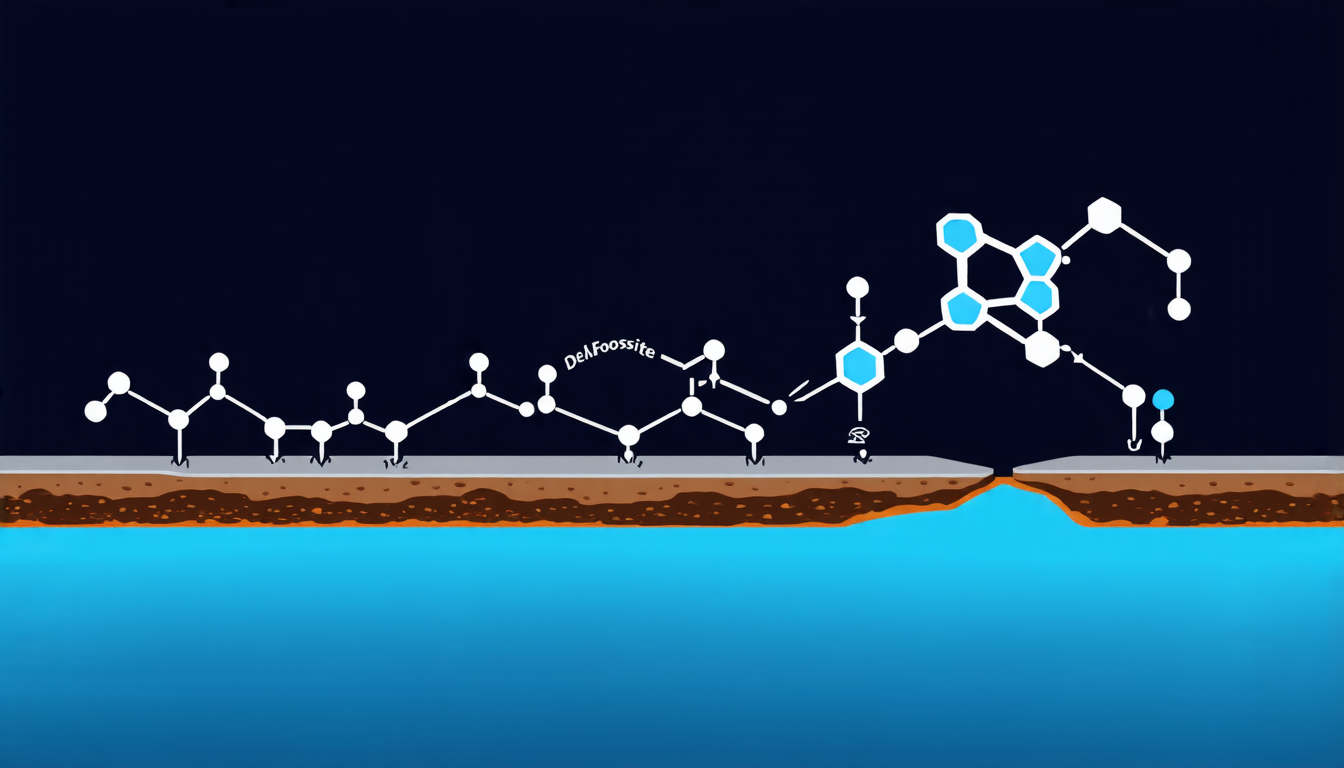
The delafossites’ unique lattice geometry has long been a challenge to fabricate high-quality thin films. Different materials grow differently, even when deposited on the same substrate, often resulting in complete growth suppression or successful epitaxy. The researchers have now identified a secondary phase within the substrate surface that stabilizes the films, deviating from conventional understanding of strain relief mechanisms at oxide heterostructure interfaces.
The team used advanced scanning transmission electron microscopy techniques to investigate the nucleation mechanism underlying stable growth on Al2O3 and LaAlO3 substrates. They grew PdCoO2 thin films via molecular-beam epitaxy and employed density functional theory (DFT) calculations to assess the likelihood of different interface types.
The findings reveal that the shared oxygen layer at the interface plays a crucial role in stabilizing the film-substrate interaction. The researchers discovered that the Co-interface is significantly more stable than the Pd-interface, due to the stronger bonding between Co and oxygen atoms. This difference in stability is attributed to the unique electronic properties of Co, which forms covalent bonds with six oxygen atoms to form an octahedron.
The team also explored the effect of Co-substitution in the Al- layer of the substrate on the interface energy. They found that 50% Co-substitution resulted in a more stable interface than the pure Al2O3 case, while 100% substitution led to a less stable interface.
To better understand the lattice mismatch between the film and substrate, the researchers used phase-lock-in lattice-modulation analysis from single-sideband phase reconstructions. This technique revealed the presence of defects in the interfacial phase and provided strong contrast for all elements, allowing for the visualization of periodically repeating features within the substrate surface layer.
The study’s findings have significant implications for the development of high-quality thin films with unique properties. By understanding the role of the secondary phase in stabilizing the film-substrate interaction, researchers can design more efficient growth strategies and optimize materials for specific applications. The discovery also highlights the importance of considering the electronic properties of individual elements when designing heterostructures.
Cite this article: “Stabilizing Metallic Delafossite Thin Films Through Secondary Phase Interactions”, The Science Archive, 2025.
Materials Science, Metallic Delafossite Thin Films, Substrate Surface, Strain Relief Mechanisms, Oxide Heterostructure Interfaces, Scanning Transmission Electron Microscopy, Density Functional Theory, Interface Stability, Co-Substitution, Lattice Mismatch.





