

Thursday 27 March 2025
Scientists have been studying the behavior of hydrogen in metals for years, trying to understand how it affects their strength and durability. One of the biggest challenges is figuring out why some materials are more resistant to hydrogen embrittlement – a process where tiny amounts of hydrogen can cause catastrophic failure.
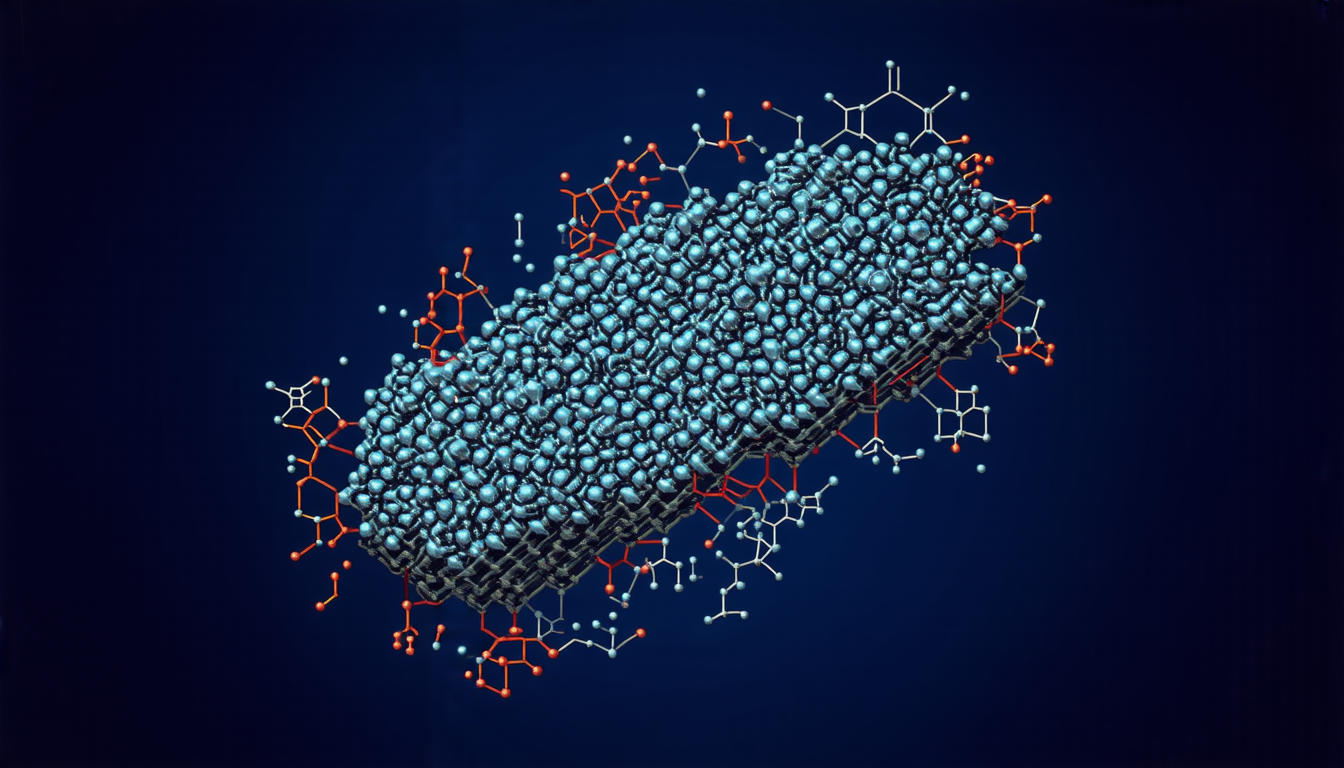
A new study has shed some light on this mystery by examining the microstructure of two common metals: 316L stainless steel and pure nickel. Researchers used advanced computer simulations and experiments to understand how hydrogen diffuses through these materials at different scales, from individual atoms to entire grains.
The results show that the microstructure of the metal plays a crucial role in determining its resistance to hydrogen embrittlement. In both materials, the researchers found that the presence of grain boundaries – areas where individual grains meet – can act as pathways for hydrogen to diffuse through the material.
However, the way that hydrogen diffuses through these boundaries is different between the two metals. In 316L stainless steel, the researchers found that hydrogen tends to accumulate at the grain boundaries, causing them to become weaker and more prone to failure. In contrast, pure nickel has a higher rate of hydrogen diffusion, which means that the hydrogen is distributed more evenly throughout the material.
This difference in behavior could have significant implications for the design of materials used in applications where hydrogen is present, such as fuel cells or pipelines. For example, if designers know that 316L stainless steel is more prone to hydrogen embrittlement due to its microstructure, they may need to take extra precautions to ensure its safety.
The study also highlights the importance of considering multiple scales when studying the behavior of materials. By combining computer simulations with experiments, researchers can gain a deeper understanding of how different processes – such as diffusion and plasticity – interact at different length scales.
In addition to its practical applications, this research has implications for our fundamental understanding of materials science. It shows that even seemingly similar materials can have vastly different properties due to their unique microstructures.
The study’s findings could also lead to the development of new materials that are more resistant to hydrogen embrittlement. By designing materials with specific microstructures in mind, researchers may be able to create materials that are better suited for use in hydrogen-rich environments.
Overall, this research is an important step forward in our understanding of how hydrogen affects the behavior of metals. As scientists continue to explore the mysteries of materials science, they may uncover even more surprising insights into the properties and behaviors of these essential substances.
Cite this article: “Unraveling the Mystery of Hydrogen Embrittlement in Metals”, The Science Archive, 2025.
Hydrogen, Embrittlement, Metals, Microstructure, Grain Boundaries, Diffusion, Fuel Cells, Pipelines, Materials Science, Computer Simulations





