

Thursday 27 March 2025
A recent study has shed light on the reliability of long-term time series forecasting models, highlighting concerns over inconsistent benchmarking and reporting practices in the field.
Time series forecasting involves predicting future values based on past data, a crucial aspect of many industries such as finance, energy management, and environmental modeling. With the rapid advancement of machine learning techniques, numerous complex prediction models have been developed to tackle this challenge. However, researchers are now questioning whether these models truly outperform their predecessors or if the impressive results are due to flawed benchmarking practices.
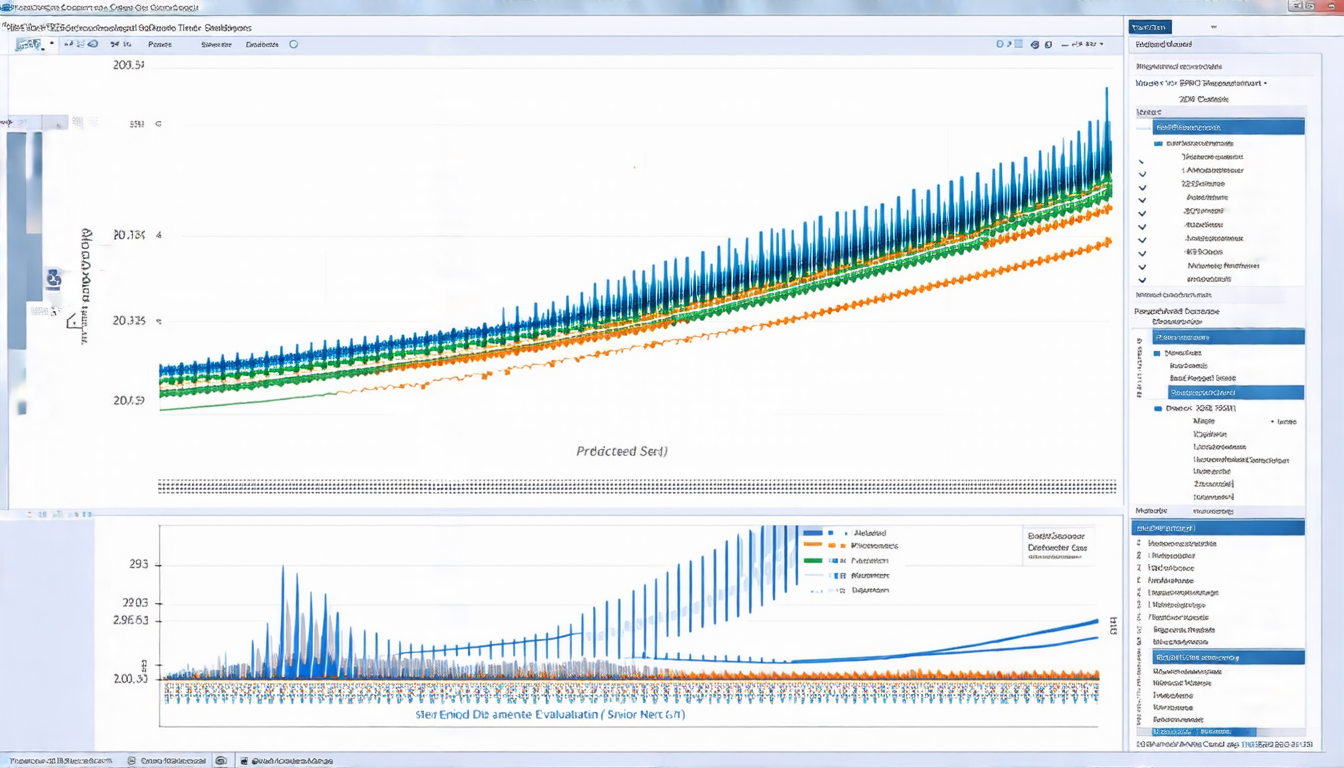
The study analyzed 14 popular time series datasets and trained over 3,500 networks using various architectures and hyperparameters. The results showed that slight changes to experimental setups or evaluation metrics can drastically alter the common belief that newly published results represent a significant improvement over existing models.
One of the primary concerns is that many benchmarking practices prioritize model complexity over simplicity and accuracy. This means that researchers may be favoring intricate models with high-dimensional feature spaces, even if they don’t necessarily provide better predictions. Additionally, the use of overly optimistic evaluation metrics can create a false sense of accomplishment, leading to an overestimation of a model’s capabilities.
The study also highlighted the importance of reproducibility in time series forecasting research. Without standardized and transparent experimental protocols, it becomes challenging for other researchers to replicate and verify the findings of a given study. This lack of transparency can lead to inconsistent results and a waste of resources as researchers pursue seemingly promising but ultimately flawed approaches.
To address these concerns, the authors propose several measures to improve benchmarking practices in time series forecasting research. These include using more realistic evaluation metrics, implementing stricter reproducibility standards, and promoting the sharing of code and data to facilitate collaboration and verification.
The findings of this study have significant implications for various fields that rely heavily on time series forecasting. By acknowledging the limitations and pitfalls of current benchmarking practices, researchers can refocus their efforts on developing more accurate and robust models that better serve real-world applications. Ultimately, this will lead to more reliable predictions and improved decision-making in industries where precise forecasting is critical.
The study’s authors emphasize the need for a shift away from pursuing ever-more complex models and towards enhancing benchmarking practices through rigorous evaluation methods and standardized protocols. By doing so, researchers can ensure that time series forecasting research remains a driving force behind innovation and progress in various fields.
Cite this article: “Time Series Forecasting: Flawed Benchmarking Practices Undermine Confidence in Model Performance”, The Science Archive, 2025.
Time Series, Forecasting, Machine Learning, Benchmarking, Reproducibility, Accuracy, Simplicity, Evaluation Metrics, Complexity, Robustness.





