

Thursday 27 March 2025
The pursuit of autonomous racing has long been a holy grail for tech enthusiasts, and researchers have been working tirelessly to crack the code on how to make it a reality. One such team at Purdue University has made significant strides in this area by introducing RoRaTrack, an open-source dataset designed specifically for road racing scenarios.
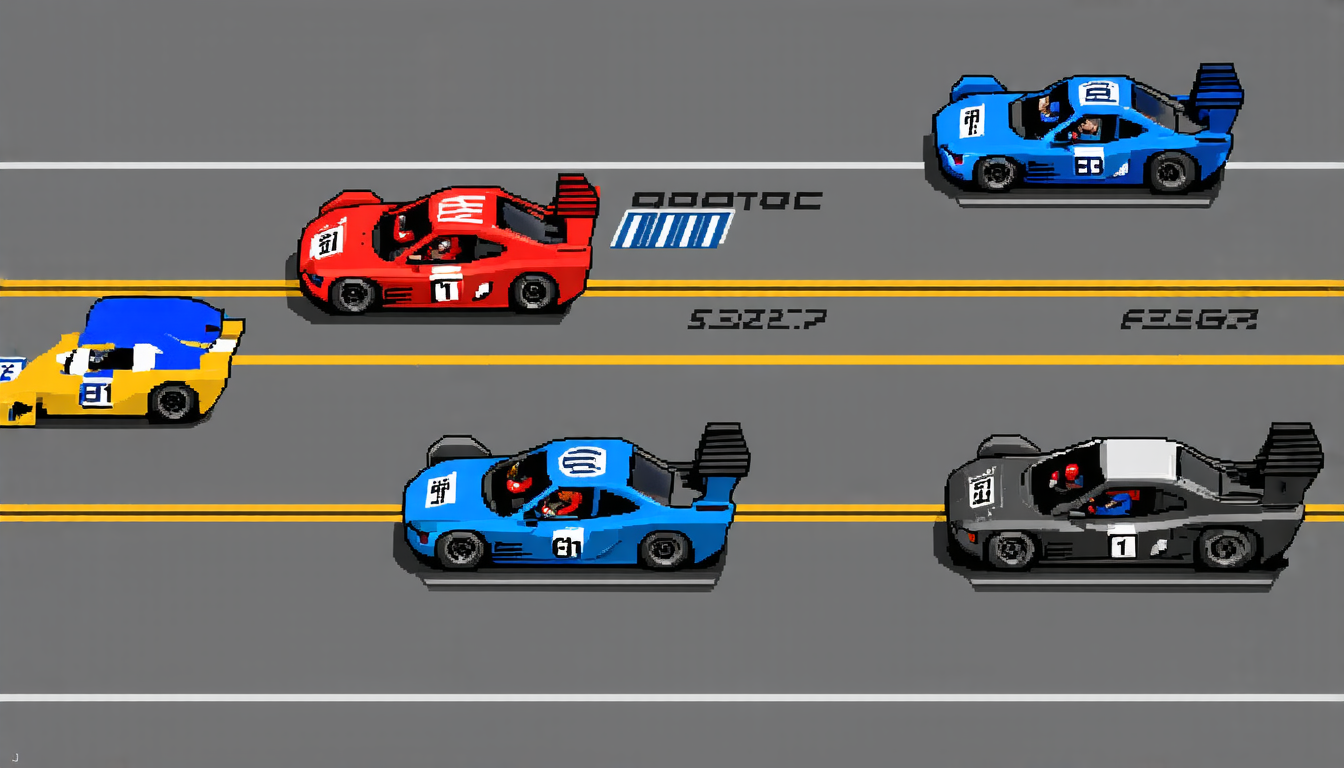
RoRaTrack is a comprehensive collection of images, each carefully curated to showcase various racing environments and challenges. The dataset includes scenes with normal lighting conditions, as well as those with dazzling light effects or color imbalance, making it a valuable resource for researchers seeking to develop models that can handle the unique demands of autonomous racing.
The team behind RoRaTrack has also developed a novel GAN-based approach, dubbed RaceGAN, specifically designed to tackle the complexities of track detection in road racing. Unlike traditional lane detection algorithms, which often struggle with the nuances of racing environments, RaceGAN is capable of accurately identifying lane markings and boundaries even in the most challenging scenarios.
The key to RaceGAN’s success lies in its ability to generate realistic images that mimic real-world racing conditions. By leveraging a generative adversarial network (GAN), the model learns to produce high-quality images that are virtually indistinguishable from those captured by cameras on actual racecars. This allows researchers to train their models on a vast array of diverse scenarios, greatly increasing the chances of developing a robust and reliable autonomous racing system.
One of the most impressive aspects of RoRaTrack is its sheer scale. With over 10,000 images in its dataset, it offers an unparalleled level of diversity and complexity for researchers to work with. This has already yielded promising results, as models trained on RoRaTrack have demonstrated significant improvements in track detection accuracy compared to those trained on traditional traffic datasets.
Of course, the development of autonomous racing technology is not without its challenges. One of the primary concerns is ensuring that these systems can operate safely and reliably in a wide range of environments, from sunny days to pouring rain and everything in between. Another challenge lies in addressing the unique demands of racing scenarios, such as high-speed turns and rapid lane changes.
Despite these hurdles, the potential rewards are undeniable. Autonomous racing has the potential to revolutionize the world of motorsports, offering fans a more immersive and engaging experience while also providing valuable insights into the capabilities of autonomous vehicles.
Cite this article: “Purdue Universitys RoRaTrack Dataset Advances Autonomous Racing”, The Science Archive, 2025.
Autonomous Racing, Roratrack, Racegan, Gan, Lane Detection, Track Detection, Road Racing, Motorsports, Autonomous Vehicles, Computer Vision.





