

Thursday 27 March 2025
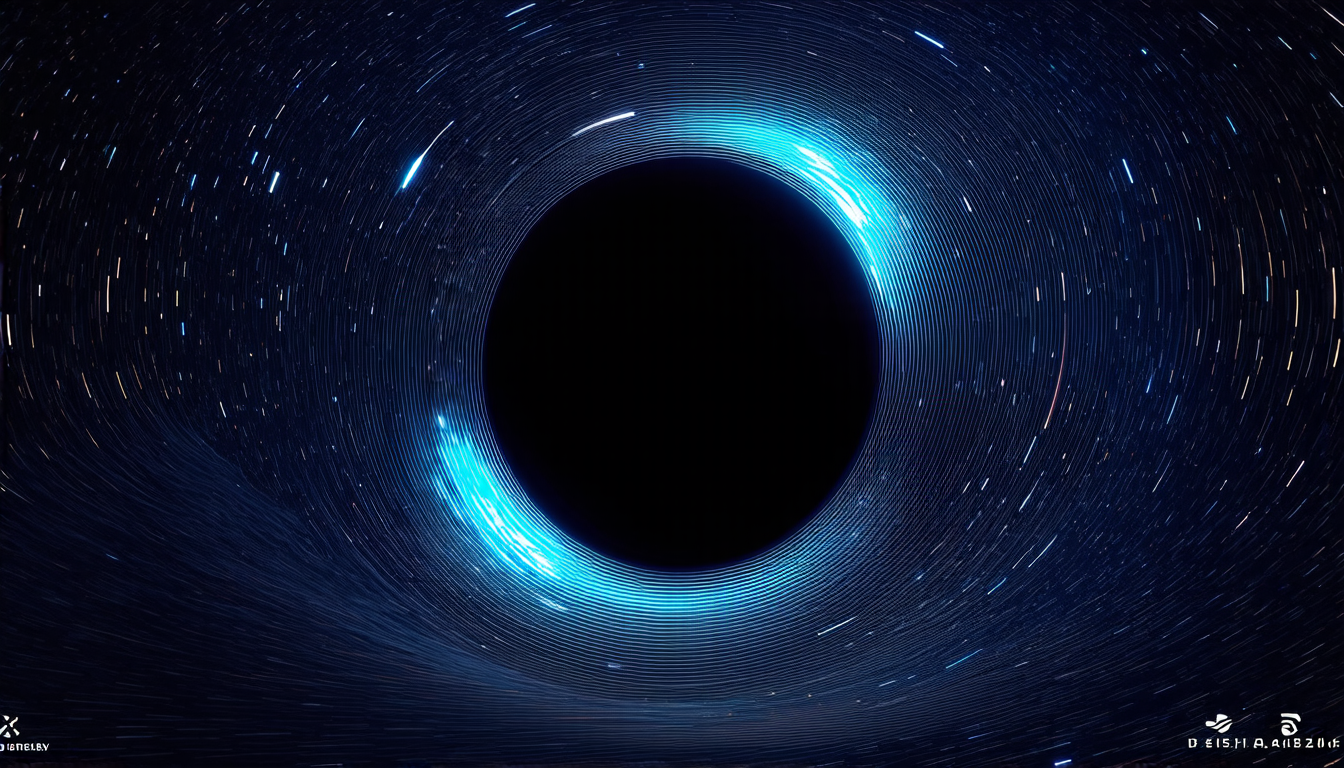
The mysteries of black holes continue to captivate scientists and the public alike. These cosmic enigmas have been the subject of intense research, leading to a greater understanding of their behavior and properties. A recent paper has shed new light on the phenomenon of gravitational lensing, which occurs when the gravity of a massive object, such as a black hole, bends and distorts the light passing near it.
Gravitational lensing is a well-known effect in astrophysics, but its study has been limited by the difficulty in observing the effects of strong gravity on light. The recent paper tackles this challenge by developing new methods for analyzing the gravitational lensing of gravitational waves, which are ripples in the fabric of spacetime produced by massive cosmic events.
The researchers used a combination of theoretical and computational techniques to model the behavior of gravitational waves as they pass near a black hole. They found that the strong gravity of the black hole causes the waves to be distorted and amplified, leading to complex patterns of light and shadow. These patterns can provide valuable information about the properties of the black hole and the nature of spacetime itself.
One of the key findings of the paper is the discovery of a new type of gravitational lensing effect, which occurs when the gravity of the black hole bends and focuses the gravitational waves in a specific direction. This effect could be used to detect the presence of black holes and study their properties in greater detail than ever before.
The researchers also found that the strong gravity of the black hole causes the gravitational waves to be affected by the curvature of spacetime, leading to complex patterns of light and shadow. These patterns can provide valuable information about the nature of spacetime itself and the behavior of massive cosmic objects.
The study of gravitational lensing is an important area of research in astrophysics, as it has the potential to reveal new insights into the properties of black holes and the nature of spacetime. The recent paper represents a significant step forward in this field, and its findings have the potential to revolutionize our understanding of these cosmic enigmas.
The researchers used advanced computational techniques to model the behavior of gravitational waves as they pass near a black hole. They found that the strong gravity of the black hole causes the waves to be distorted and amplified, leading to complex patterns of light and shadow. These patterns can provide valuable information about the properties of the black hole and the nature of spacetime itself.
Cite this article: “Unlocking the Secrets of Gravitational Lensing”, The Science Archive, 2025.
Black Holes, Gravitational Lensing, Gravitational Waves, Spacetime, Astrophysics, Cosmic Events, Strong Gravity, Curvature, Patterns Of Light And Shadow, Computational Techniques.





