

Thursday 27 March 2025
The intricate dance of magnetic forces in spinel oxides has long fascinated physicists, offering a tantalizing glimpse into the mysteries of quantum mechanics. Spinel oxides, with their complex crystal structures and rich magnetic properties, have been the subject of intense study for decades. Now, researchers have made significant strides in understanding the behavior of these materials, shedding new light on the intricate relationships between spin, lattice, and magnetism.
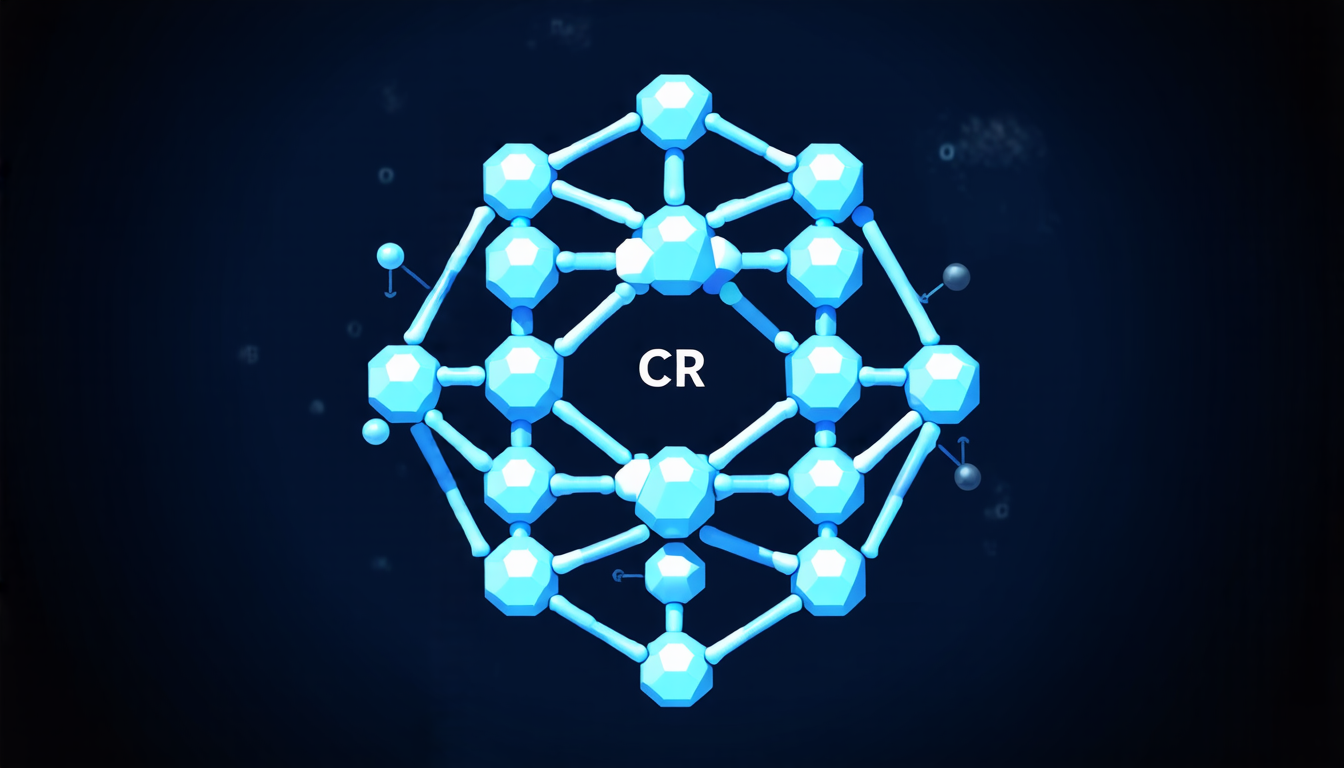
At the heart of this research lies the concept of breathing pyrochlore lattices, a type of crystal structure characterized by alternating large and small tetrahedra. These lattices have been found to exhibit a range of fascinating properties, from superconductivity to magnetism. In particular, the spinel oxides LiGaCr4O8 and LiInCr4O8, featuring A-site ordered breathing pyrochlore structures, have been the focus of intense study.
Researchers used a combination of theoretical modeling and experimental techniques to investigate the magnetic properties of these materials. By employing density functional theory (DFT) calculations, they were able to simulate the behavior of the Cr ions within the crystal lattice, revealing the intricate dance of spin forces that govern their behavior. These simulations allowed researchers to identify key factors influencing the formation and stability of the breathing pyrochlore structure.
Experimental studies using techniques such as neutron scattering and infrared spectroscopy provided further insight into the magnetic properties of these materials. By analyzing the energy spectra of the Cr ions, researchers were able to determine the strength and direction of the spin exchange interactions between neighboring Cr ions. This information was used to refine theoretical models of the material’s behavior.
The findings of this research have significant implications for our understanding of magnetism in complex oxides. The study demonstrates the importance of considering both spin and lattice degrees of freedom when modeling magnetic behavior, highlighting the need for a more nuanced approach to understanding these materials. Furthermore, the results suggest that breathing pyrochlore lattices may be engineered to exhibit novel magnetic properties, potentially leading to the development of new technologies.
In addition to its fundamental scientific significance, this research has practical applications in fields such as materials science and condensed matter physics. By better understanding the behavior of spinel oxides, researchers can design new materials with tailored magnetic properties, enabling the creation of advanced devices and technologies. The study’s findings also shed light on the complex interplay between spin, lattice, and magnetism, providing a deeper understanding of the intricate relationships governing these phenomena.
Cite this article: “Unveiling the Intricate Dance of Magnetic Forces in Spinel Oxides”, The Science Archive, 2025.
Spinel Oxides, Magnetic Forces, Quantum Mechanics, Pyrochlore Lattices, Crystal Structure, Magnetism, Density Functional Theory, Neutron Scattering, Infrared Spectroscopy, Condensed Matter Physics





