

Thursday 27 March 2025
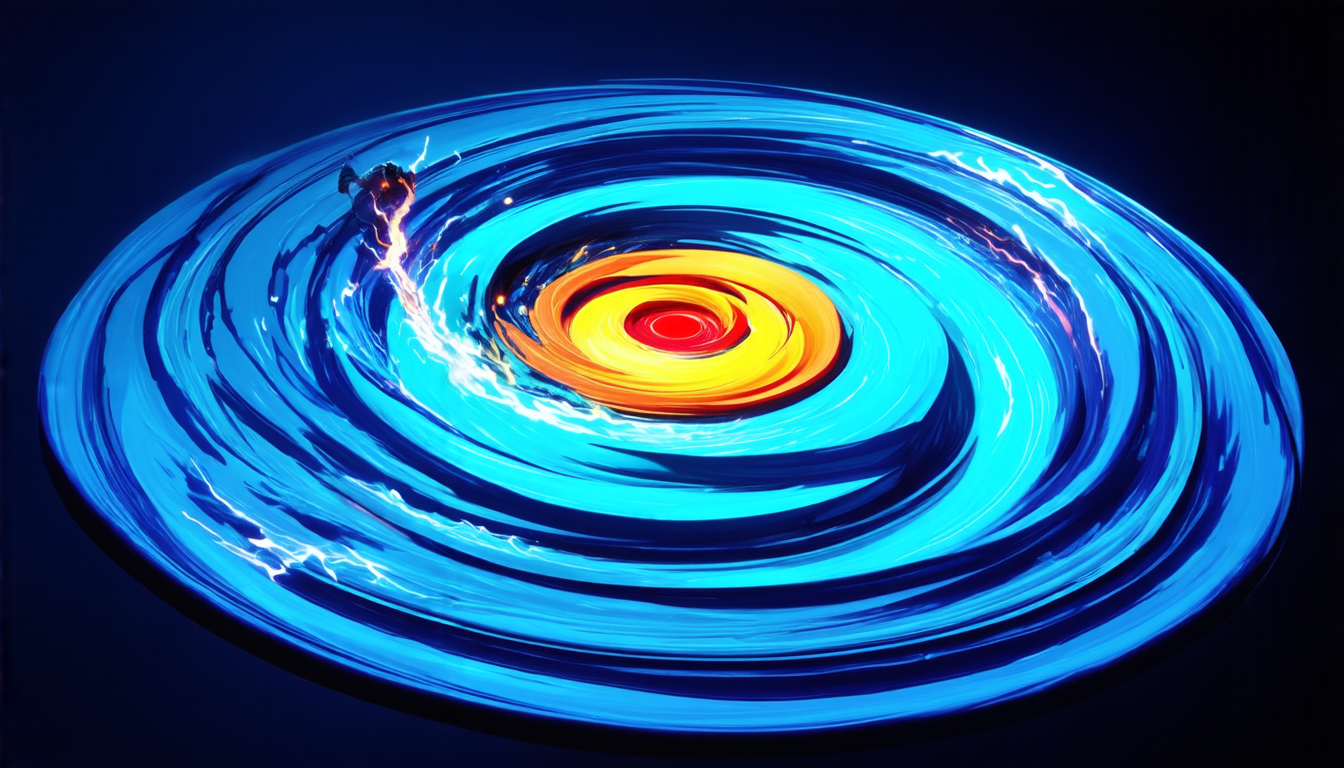
Scientists have made a major breakthrough in understanding how to control and manipulate tiny, swirling patterns of electric charge within materials known as ferroelectrics. These patterns, called topological solitons, are like tiny vortices that can be harnessed for a range of applications, from advanced electronics to energy storage.
To create these solitons, researchers used a special type of light, called structured light, which is able to manipulate the electric charges within the material. This light has an unusual property called orbital angular momentum, which allows it to twist and turn in complex ways as it travels through space.
By carefully controlling the properties of this light, scientists were able to create specific patterns of topological solitons within the ferroelectric material. These solitons can be thought of as tiny, swirling vortices that are made up of electric charges that are arranged in a specific way.
One of the key benefits of these solitons is their ability to store energy. By harnessing and controlling them, scientists believe it may be possible to create new types of energy storage devices that are more efficient and effective than current technologies.
The discovery also has implications for the development of advanced electronic devices, such as memory chips and sensors. These devices rely on the manipulation of electric charges within materials, and the ability to control topological solitons could lead to significant improvements in their performance.
To create these solitons, researchers used a combination of theoretical modeling and experimental techniques. They first developed computer simulations that predicted how the light would interact with the ferroelectric material, and then used specialized equipment to create the structured light and observe its effects on the material.
The results were striking – by carefully controlling the properties of the light, scientists were able to create complex patterns of topological solitons within the material. These patterns could be manipulated and controlled in a variety of ways, allowing researchers to explore their properties and behavior.
This breakthrough has significant implications for our understanding of ferroelectric materials and their potential applications. By harnessing and controlling topological solitons, scientists believe it may be possible to create new types of devices that are more efficient, effective, and powerful than current technologies.
The discovery also highlights the importance of interdisciplinary research, where scientists from different fields come together to tackle complex problems. In this case, researchers from materials science, physics, and optics worked together to develop a deeper understanding of the properties and behavior of topological solitons.
Cite this article: “Scientists Harness Power of Tiny Electric Vortices for Energy Storage and Electronics Advancements”, The Science Archive, 2025.
Ferroelectrics, Topological Solitons, Structured Light, Orbital Angular Momentum, Energy Storage, Advanced Electronics, Memory Chips, Sensors, Materials Science, Physics, Optics





