

Thursday 27 March 2025
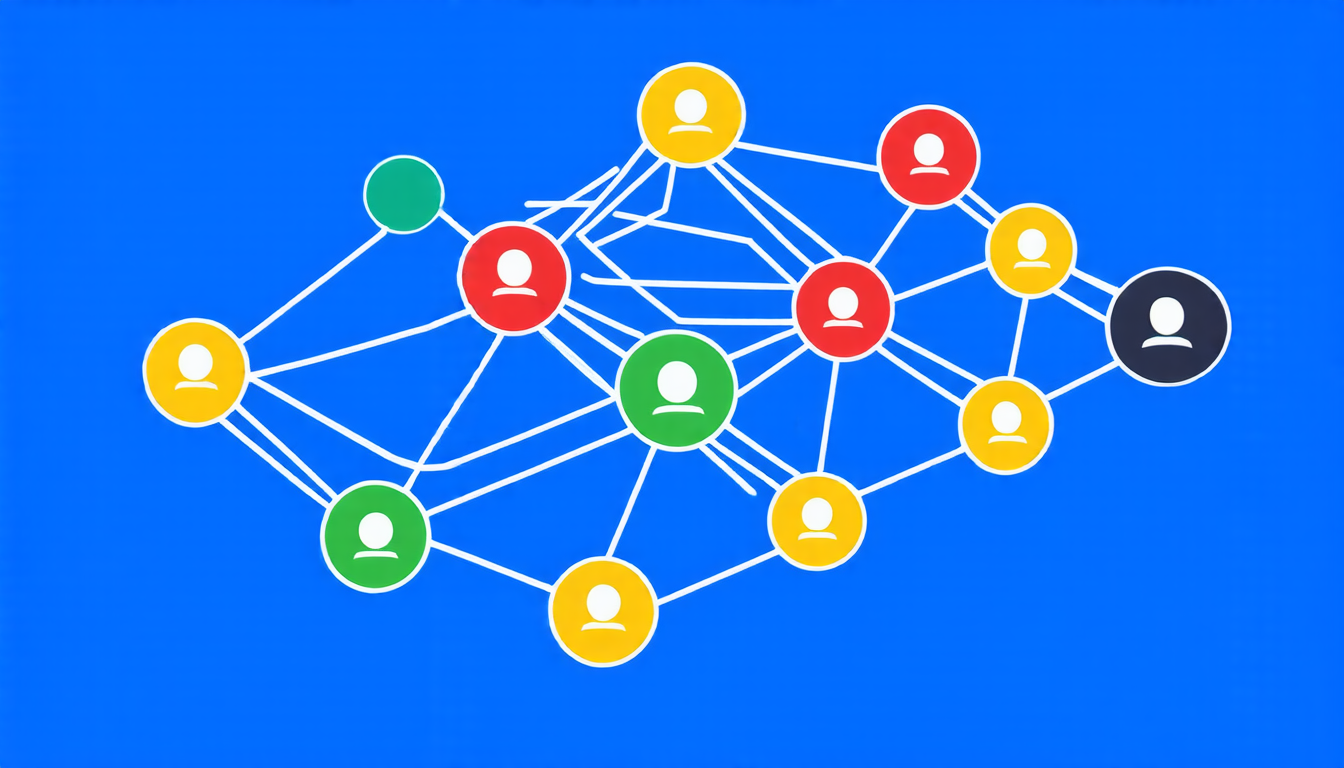
A team of researchers has made a significant breakthrough in the field of community detection, a crucial task in understanding complex networks such as social media, biological systems, and even the internet. For years, scientists have struggled to accurately identify communities within these networks, which are often characterized by thousands or even millions of nodes and edges.
The traditional approach to community detection has been to rely on pre-defined labels or attributes associated with each node. However, this method is limited in its ability to uncover hidden patterns and relationships within the network. To overcome this limitation, researchers have turned to machine learning algorithms, which can learn complex patterns from large datasets.
In recent years, deep learning-based methods have emerged as a promising approach to community detection. These methods use neural networks to learn representations of nodes and edges in the network, allowing for more accurate identification of communities. However, these methods often require extensive tuning of hyperparameters, making them difficult to apply in practice.
The researchers behind this new paper have developed a novel deep learning-based method that addresses these limitations. Their approach, called DAG (Deep Adaptive and Generative), uses a combination of attention mechanisms and generative models to learn representations of nodes and edges in the network. This allows the algorithm to adapt to the specific characteristics of each dataset and generate communities that are more accurate and meaningful.
One key innovation of the DAG method is its ability to learn community structures without prior knowledge of the number of communities or their characteristics. This makes it particularly well-suited for real-world applications, where the number and nature of communities may be unknown in advance.
The researchers tested the DAG method on five public datasets, including social networks, biological systems, and online communities. In each case, the algorithm was able to accurately identify community structures that were consistent with human intuition. The results show that the DAG method is not only more accurate than traditional methods but also more robust and adaptable to different types of data.
The implications of this research are far-reaching, with potential applications in fields such as social network analysis, biology, and cybersecurity. By enabling more accurate identification of communities within complex networks, the DAG method could help scientists better understand the behavior and dynamics of these systems, ultimately leading to new insights and discoveries.
In the future, the researchers plan to extend their work by applying the DAG method to even larger and more complex datasets. They also hope to explore new applications for the algorithm, such as identifying communities within online forums or social media platforms.
Cite this article: “Deep Learning-Based Community Detection Algorithm Yields Breakthrough Results”, The Science Archive, 2025.
Complex Networks, Community Detection, Deep Learning, Neural Networks, Attention Mechanisms, Generative Models, Social Media, Biological Systems, Cybersecurity, Network Analysis





